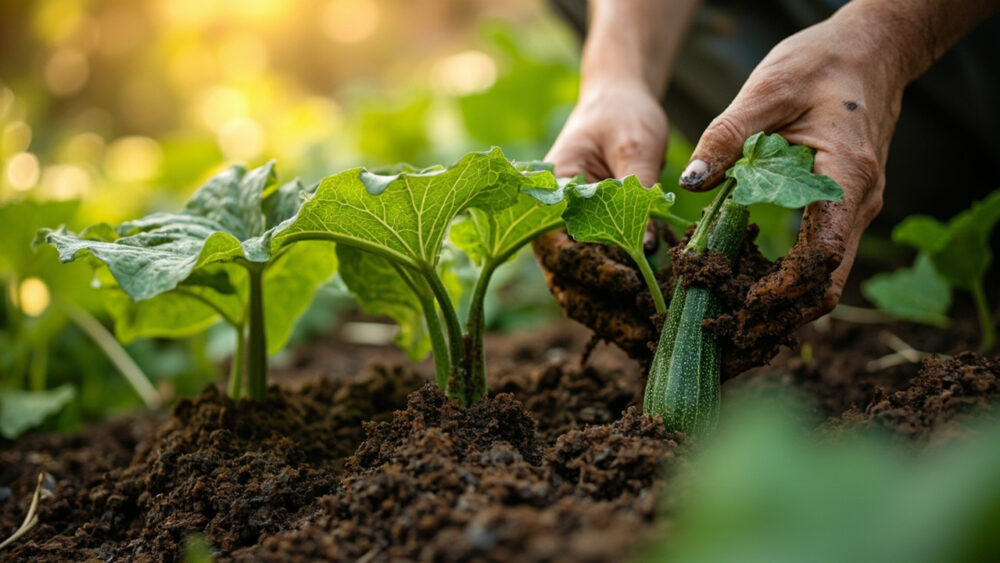
Plant zucchini 24 to 36 inches apart within the row, with rows themselves 3 to 4 feet apart, and sow seeds about 1 inch deep in warm soil. If you’re setting out transplants instead of seeds, same spacing applies, just don’t bury the stem any deeper than it was in the pot. That range isn’t arbitrary, and how far apart to plant zucchini matters more than almost any other decision you’ll make with this crop.
Here’s the part most people get wrong: they plant zucchini like lettuce, tight and tidy, because one seedling looks so small and harmless in May. By July it’s a 4-foot-wide monster elbowing its neighbors, and you’re wondering why half your squash are rotting on the vine.
Stick with me. I’ll cover the exact numbers for rows, raised beds, hills, and containers, the specific way overcrowding sabotages your harvest, and how to rescue a planting you already jammed too close together. The full spacing cheat sheet is waiting at the bottom, save it before you head out to the garden.
The Exact Numbers, and Why Zucchini Needs Them
A mature zucchini plant isn’t a vine, it’s a sprawling bush, often 3 to 4 feet across and nearly as tall. That size is the whole reason for the spacing math. Give each plant 24 to 36 inches of open space in every direction and its leaves get full sun, air moves freely through the canopy, and you can actually find the fruit before it turns into a baseball bat.
Depth is simpler and less forgiving of shortcuts. Seeds go 1 inch deep, no deeper, in soil that’s already warmed to at least 60°F, ideally closer to 70°F.
Cold, wet soil is where direct-sown zucchini rots before it ever sprouts.
Rows, Raised Beds, or the Old-Fashioned Hill
Traditional garden rows: space plants 24 to 36 inches apart within the row, and leave 4 to 5 feet between rows so you can walk through, water, and harvest without wading into prickly leaves. In a raised bed, tighten that up slightly, 24 inches between plants is fine since beds already limit how many you’ll fit.
Hills are the classic zucchini method for a reason. Mound soil into a raised circle about 12 inches across, plant 2 to 3 seeds per hill, then thin to the strongest single seedling once true leaves appear. Space hills 3 to 4 feet apart, center to center.
Hills warm faster in spring and drain better, which matters if your soil holds water.
Layout decided, the next question is what happens if you ignore it.
What Actually Goes Wrong When Plants Are Too Close
If you assumed cramped zucchini just means a slightly smaller harvest, that’s the guess that costs people their whole squash patch. Overcrowding doesn’t shrink the problem, it multiplies it. Leaves that can’t dry out after watering or rain sit damp for hours, and that damp, still air is exactly what powdery mildew and bacterial wilt are waiting for.
Pollinators struggle too. Zucchini needs bees moving between male and female flowers, and a solid wall of leaves hides the blossoms and blocks the flight path in.
The sneaky failure is fruit you never see. A zucchini can go from perfect to a baseball-bat-sized seed factory in two or three days once it’s hidden under a dense canopy, because you simply stop spotting it during harvest walks.
Too far apart has its own quieter cost: wasted bed space and weeds filling the gaps, but it never threatens the plant itself the way crowding does.
Airflow and visibility, that’s the whole game, and it’s about to explain the fix too.
The Mistake Almost Everyone Makes
Here’s the honest answer to the question you’re probably already forming: no, you can’t just plant a little closer because you’re short on space and “thin them out later.” Zucchini doesn’t transplant well once it’s established, the taproot resents disturbance, and by the time crowding is obvious the roots are already tangled.
The real mistake isn’t spacing math, it’s planting too many zucchini plants at all. Two or three plants, properly spaced, will out-produce most households and still overwhelm your kitchen counter by August.
One healthy, well-spaced zucchini plant can put out 6 to 10 pounds of fruit over a season.
Four plants crammed into a 4-by-4 bed is not abundance, it’s a mildew farm with a harvest problem attached.
Growing Zucchini in Containers
Zucchini works fine in containers if you size the pot right: minimum 18 inches wide and deep for a bush variety, 5-gallon buckets are too small long term even though seedlings look happy in them early on. One plant per container, always. There’s no container spacing trick that lets you double up.
Set multiple containers 24 to 36 inches apart from each other, same logic as garden spacing, so leaves aren’t overlapping and trapping moisture.
Containers dry out faster than garden soil, so check moisture daily once temperatures climb into the 80s.
Good container spacing still can’t save a planting that started too dense in the ground, so let’s fix that next.
How to Fix an Overcrowded Planting
If your zucchini is already jammed in too tight, don’t try to transplant survivors, you’ll lose most of them to root shock. Instead, pick the strongest, healthiest-looking plant per 24 to 36 inch stretch and remove the rest at the soil line with pruners.
Cutting rather than pulling avoids disturbing the roots of the plant you’re keeping.
Do this early, ideally when plants have 3 to 4 true leaves and before they’ve tangled roots underground. Wait until they’re full-sized and bushy and thinning does almost nothing, the damage to airflow and light is already locked in for the season.
After thinning, prune away any leaves touching the soil or a neighboring plant to restore some airflow immediately.
That single pass, done at the right week, can save a mildew-headed season.
Zucchini at a Glance
- When to plant: after your last frost, once soil is at least 60°F, ideally 70°F for fastest germination.
- Spacing between plants: 24 to 36 inches apart, in rows, beds, or hills.
- Spacing between rows: 4 to 5 feet, enough room to walk and harvest comfortably.
- Planting depth: 1 inch deep for seeds, transplants set at the same depth they grew in the pot.
- Hill method: 2 to 3 seeds per 12 inch hill, thinned to one plant, hills 3 to 4 feet apart.
- Container size: at least 18 inches wide and deep, one plant per container, containers 24 to 36 inches apart.
- How many plants you need: 2 to 3 for most households, each can yield 6 to 10 pounds over a season.
Give each zucchini room to spread and breathe, and you’ll spend the summer harvesting instead of fighting mildew.
When in doubt, plant fewer, space them wider, and let the plant earn its footprint.