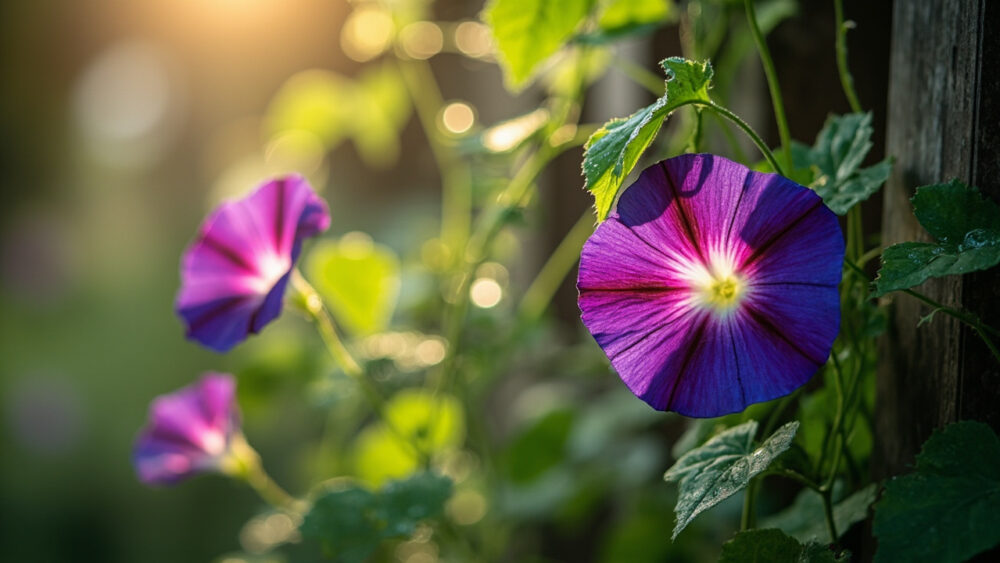
Morning glories are perennial in USDA zones 9 through 11, and everywhere colder they behave as annuals that die at the first hard frost. But here is the part most gardeners never get told: even where they die as a plant, they often come back anyway, because morning glories self-seed with real enthusiasm. So the honest answer depends less on the plant’s official hardiness and more on what happens to the seeds it already dropped in your bed this year.
That single fact changes everything else about how you plan next season. It means the vine you have right now might return from its own roots, from its own seeds, or not at all, and your yard is telling you which one it will be if you know where to look.
Below, I will walk through what actually happens over winter, how to read your own zone and your own soil, and the one move that decides whether you get volunteers back or a bare patch. Then there is a save-able quick-reference card at the bottom with the core answer and every caveat that qualifies it, worth bookmarking before you go dig around your bed.
The Plain Answer, By Zone
In zones 9 through 11, morning glory (Ipomoea purpurea and its close relatives) is a true perennial. The roots survive mild winters and the vine resprouts from the same crown in spring, often growing back thicker and blooming earlier than a first-year plant.
In zones 8 and colder, freezing temperatures kill the top growth and the roots do not survive in the ground. The plant itself is finished for the season once a hard freeze hits.
That does not mean the bed is empty next spring, and this is the part that trips people up.
Morning glories drop hundreds of seeds before frost, and those seeds are tough enough to overwinter in soil that kills the parent plant outright.
So a cold-zone gardener can watch the vine die completely and still see morning glories climbing the same trellis in June, grown from seed rather than root.
Whether that happens in your yard depends on what the bed looked like in autumn, not on the calendar.
What Actually Happens Over Winter
If you garden in zone 9 or warmer, expect the vine to go dormant-ish rather than fully dead. Leaves may thin out and growth slows, but the base often stays green or at least alive at the crown through a mild winter.
In zones 8 and colder, the frost that blackens and collapses the leaves overnight is the end of that individual plant. There is no reviving it, and pruning it back or mulching the crown will not save roots that were never built to survive freezing soil.
What you are really managing over winter in a cold zone is the seed bank, not the plant. Seed pods that matured and dried on the vine before frost will have already shattered and scattered into the soil around the base.
Those seeds need very little protection. They shrug off freezing temperatures that would kill the parent vine several times over.
That toughness is exactly why so many gardeners assume their morning glory “came back” when what actually happened is a full generational reset.
How to Get Yours to Return, On Purpose
If you want volunteers next year and you garden in a frost zone, the move is to let some seed pods mature and drop instead of deadheading every spent bloom. The pods start green, dry to brown and papery, and split open on their own when ready.
Leave a patch of vine undeadheaded in late summer specifically so it can go to seed before your first frost date.
In zone 9 and warmer, helping a perennial vine return is simpler: cut it back hard after bloom, keep the root zone mulched over winter, and skip heavy watering while it is dormant, since wet cold roots rot faster than dry cold ones.
If you want to guarantee where next year’s seedlings show up rather than leaving it to chance, collect a handful of dried pods, store the seeds somewhere cool and dry over winter, and hand-sow them where you actually want vines after your soil warms in spring.
Either path gets you morning glories again, but only one of them gives you any control over the layout.
When Treating It As an Annual Is Honestly Smarter
If you assumed a perennial habit is always the better deal, that is not quite right here. Morning glory reseeds so readily that in many gardens it becomes the thing you are trying to control rather than encourage.
In mild zones especially, an established vine plus its own dropped seed can turn into a vine that returns in places you never planted it, climbing into shrubs, fences, and neighboring beds. Some morning glory relatives are considered invasive in parts of the warm South and West.
If that sounds like more vine than you want, treat it deliberately as an annual: deadhead faithfully all season so seed never sets, pull the whole plant at first frost, and start fresh from new seed or a new nursery plant next spring.
That gives you full control over where it grows and how much of it you get, which a self-seeding perennial patch simply will not offer.
Which approach fits depends entirely on whether you want more morning glory or a manageable amount of it.
Morning Glories: Quick Reference
- Core answer: perennial in zones 9 through 11, annual (killed by frost) in zones 8 and colder.
- Cold-zone comeback: even where the plant dies, self-sown seed often produces new vines the following year without any replanting.
- Winter survival, warm zones: roots stay alive at the crown through mild winters, especially with a hard pruning after bloom and a dry root zone.
- Winter survival, cold zones: top growth is killed outright by the first hard frost, no amount of mulch or care brings that plant back.
- To encourage return: let some seed pods mature and drop before frost, or collect and hand-sow dried seed the following spring.
- To prevent spread: deadhead all season so no seed sets, and pull the whole plant at first frost; some relatives are considered invasive in mild climates.
Whichever way it comes back, morning glory rewards very little fuss once it is established.
Decide now whether you want more of it or less, and this season’s deadheading habit will make that call for you.