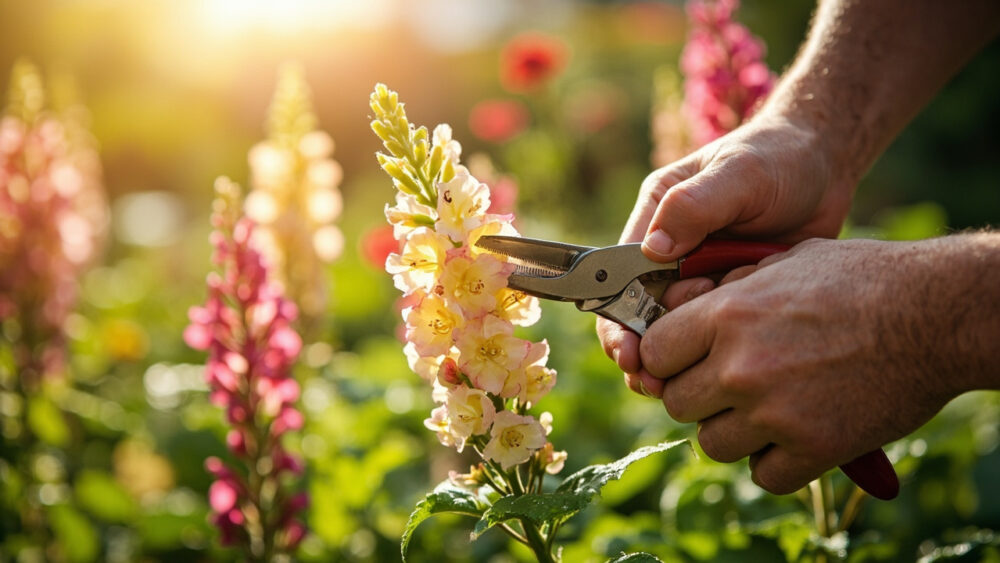
Here’s how to prune snapdragons: once the first flower spike is about two-thirds finished blooming, cut it back to just above a healthy set of side leaves, not all the way to the ground. Do this through the growing season every time a spike fades, and pinch young plants once early on to force branching. That combination, early pinch plus repeated deadheading cuts, is what turns one skinny stalk into a bushy plant loaded with spikes.
Most people either skip the pruning entirely and get one round of flowers before the plant quits, or they hack the whole plant down at once and wonder why nothing comes back for weeks. There’s also a timing mistake that catches almost everyone with fall snapdragons, and an honest answer about whether cutting them back really does mean more blooms or just a longer wait.
Stick around for the Snapdragons at a Glance card at the bottom. It’s the save-to-your-phone version of everything below, worth screenshotting before you head back out to the garden bed.
When to Prune, and When to Leave Them Alone
Snapdragons get two kinds of cuts at two different life stages, and mixing them up is where most trouble starts. The first cut happens when seedlings are 3 to 4 inches tall, still young and soft, weeks before the first bloom. The second kind, deadheading spent flower spikes, happens all season long, starting once the first spikes begin fading.
Do not prune a snapdragon that hasn’t bloomed yet, other than that early pinch. And don’t deadhead in the first hard frost window of fall if you’re hoping for a rebloom, since a plant that just got cut back needs a couple weeks of decent growing weather to push new growth.
In most climates, that means your last real pruning push should happen 4 to 6 weeks before your average first fall frost.
The One Prep Step Everyone Skips
You need clean, sharp bypass pruners or snips, nothing fancier than that. But the step that actually matters is wiping the blades with rubbing alcohol between plants, especially if any of your snapdragons have shown spotty or fuzzy leaves.
Snapdragons are prone to rust and other fungal issues, and dirty blades move disease from one plant to the next faster than wind or water does. If you see orange-brown pustules on the undersides of leaves, that’s rust, and it spreads fast in cool, damp weather. For a real fungal outbreak, remove and trash the infected material and follow a labeled fungicide if it keeps recurring, rather than improvising a treatment.
A clean cut heals faster than a crushed one, and a clean blade doesn’t hand the next plant a problem it didn’t have.
How to Prune Snapdragons Step by Step
Step 1: The Early Pinch
When seedlings reach 3 to 4 inches tall, pinch or snip off the top inch of growth, just above a pair of leaves. This forces the plant to send up side shoots instead of one single spike, and it’s the difference between a plant with one flower stalk and a plant with six or eight.
Step 2: Deadheading the First Spikes
Once a flower spike is mostly spent, meaning most of the blooms on it have faded or dropped, follow the stem down to the first set of full, healthy leaves below the flowers. Cut there, at an angle, leaving that leaf pair intact.
Don’t cut down to bare stem or soil level. The plant needs those leaves to fuel the next round of growth.
Step 3: Repeat All Season
Every 2 to 3 weeks, walk the bed and cut back whatever spike has finished. Snapdragons rebloom in flushes, not continuously, so you’ll have a week or two of nothing dramatic after each cut before new spikes push up.
That gap is normal, and it’s the part that makes people think they cut too hard.
What to Expect After You Cut
If you guessed that cutting a spike back means an empty, ugly plant for a while, you’re right, but not for as long as it looks. Expect 10 to 14 days of a quieter-looking plant, mostly foliage, before new side shoots start showing buds.
The plant isn’t sulking, it’s rebuilding energy into new stems rather than into a spike that had already given everything it had. In warm weather, that turnaround is faster, closer to 7 to 10 days. In cool spring or fall conditions, give it the full two weeks before you worry.
What you should not see is wilting, blackened stems, or no new growth at all after three weeks. That points to a root problem, not a pruning problem, usually soggy soil or a stem that got crushed instead of cleanly cut.
A patient plant rewards you, an impatient gardener who cuts again out of frustration usually sets it back further.
The Mistakes That Cost You a Season of Blooms
The single biggest mistake is cutting the entire plant down to a few inches all at once, thinking harder pruning means faster reblooming. Snapdragons don’t work that way. Take spikes one at a time as they fade, staggered, so the plant always has some leaves and some energy reserve working.
The second mistake is skipping the early pinch entirely. Skip it and you’ll get one tall, floppy stalk that blooms once and looks thin all season, instead of a full, rounded plant.
- Cutting too low: removing all the leaves below a spike leaves nothing to regrow from.
- Cutting too late in fall: a hard prune with no warm weeks left behind it just leaves a bare plant going into frost.
- Ignoring rust or mildew: pruning a diseased plant with dirty tools spreads the problem across the whole bed.
- Deadheading instead of letting a few go to seed: if you want self-sown snapdragons next year, let one or two spikes finish and drop seed before you cut everything.
Get the timing and the depth of the cut right, and the mistakes mostly take care of themselves.
Snapdragons at a Glance
- When to pinch young plants: once seedlings reach 3 to 4 inches tall, remove the top inch above a leaf pair.
- When to deadhead: as soon as a flower spike is mostly spent, roughly every 2 to 3 weeks through the growing season.
- Where to cut: just above the first healthy leaf pair below the spent flowers, never down to bare stem or soil.
- Last safe pruning date: 4 to 6 weeks before your average first fall frost, so new growth has time to establish.
- Recovery time: 7 to 14 days before new buds appear, faster in warm weather, slower in cool spring or fall conditions.
- Tools needed: clean, sharp bypass pruners or snips, wiped with rubbing alcohol between plants.
- Biggest mistake to avoid: cutting the whole plant back hard at once instead of staggering cuts spike by spike.
Prune a little, often, and always above a leaf pair. That single habit is what keeps snapdragons blooming from late spring clear through fall.