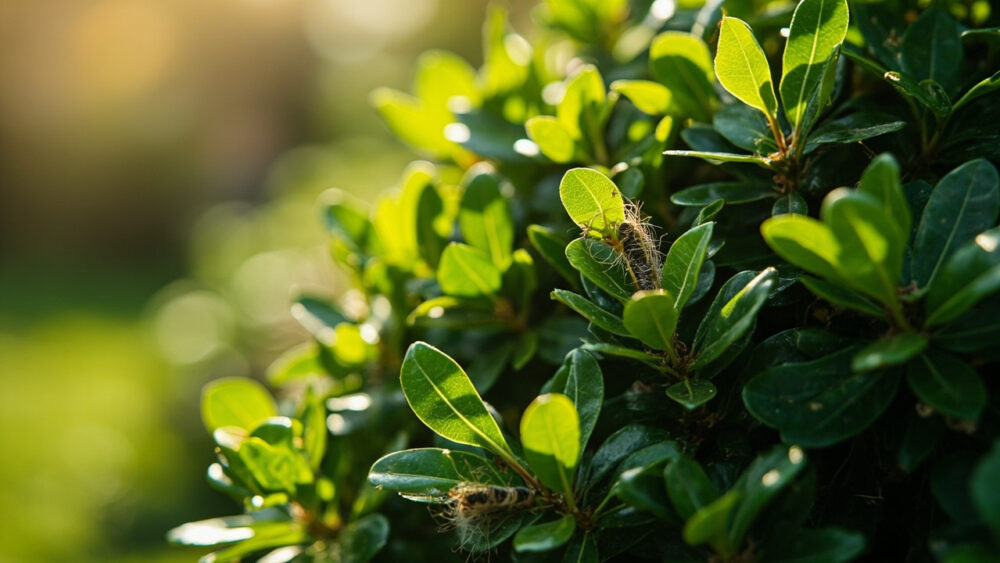
If your boxwood has pale, stippled, or bronzed patches on the leaves along with tiny flecks of black debris, you’re most likely dealing with boxwood psyllid or boxwood mite, and the fix is a combination of pruning out the damaged tips and a targeted horticultural oil or miticide applied per the label. But those two aren’t the only suspects, and boxwood pests get misdiagnosed constantly because half a dozen problems produce nearly identical bronzing and cupped leaves.
Most people blame “leafminer” the second they see damage, because it’s the most talked-about boxwood pest online. Often that’s wrong. The real cause is usually something quieter, like psyllid, mites, or plain winter sun scorch that has nothing to do with insects at all.
There’s one detail on the plant, where the damage starts and which leaves it hits first, that tells you exactly which pest or non-pest cause you’re actually looking at. Stick with this to the end and you’ll find a two-minute diagnosis checklist you can run right at the shrub, plus an honest read on whether this boxwood bounces back.
Most Likely Causes, Ranked
1. Boxwood Psyllid
Confirm it: look at the newest growth tips. Psyllid damage shows up as cupped, curled leaves at the shoot tips with a white, waxy, fuzzy residue tucked inside the cup. Unfold a curled leaf and you may find a small, flattened, greenish nymph hiding inside.
This is the single most common boxwood insect complaint in spring, especially on American boxwood varieties.
Fix it: prune out and discard the cupped tips, which removes most of the population in one pass. A horticultural oil spray in early spring, timed to when new growth is just emerging, applied per the product label, knocks back the rest.
Psyllid damage looks alarming but rarely kills a plant outright.
2. Boxwood Mite
Confirm it: check older, interior leaves, not just the tips. Mite feeding leaves a fine, silvery or bronze stippling, almost like the leaf surface has been scratched with sandpaper.
Hold a white sheet of paper under a branch and tap it hard. If you see specks moving, that’s your confirmation.
Fix it: a strong water spray knocks numbers down fast and is worth trying first. For heavier infestations, a labeled miticide or horticultural oil applied to the point of coverage, following the label’s timing and reapplication interval, is the next step.
Mites thrive in hot, dusty, dry conditions, which matters later when we get to prevention.
3. Boxwood Leafminer
Confirm it: hold a leaf up to the light. Leafminer damage shows as blistered, translucent blotches inside the leaf itself, not on the surface. Peel the blotch open and you’ll often find a small orange or yellow larva inside.
Damage tends to concentrate on English and American boxwood and shows up most clearly in late spring as adult flies emerge and lay eggs.
Fix it: prune and destroy heavily mined leaves and stems. A systemic insecticide applied in spring when adults are active, exactly per label directions, is the standard control for repeat infestations.
Leafminer is the pest most likely to actually weaken a boxwood over several seasons if it’s left unchecked.
4. Boxwood Spider Mite Look-Alike: Winter Sun and Wind Scorch
Confirm it: this one isn’t a pest at all. Look at which side of the plant is affected. If the bronzing is concentrated on the south or west-facing side, or the side exposed to winter wind, and there’s no stippling or webbing under a hand lens, you’re looking at desiccation, not insects.
Fix it: nothing to spray. Water deeply before the ground freezes in fall, and if scorch is a recurring problem, a burlap windbreak on the exposed side for winter helps.
This is the cause everyone skips past because they assume every off-color boxwood has bugs on it.
5. Boxwood Blight or Volutella Blight (Disease, Not a Pest)
Confirm it: look for dark brown or black leaf spots with a lighter halo, black streaking on stems, and leaves dropping quickly rather than staying attached and bronzed. This spreads in wet, humid conditions and often follows a rainy stretch.
Fix it: prune out and destroy affected branches, disinfecting tools between cuts. Improve airflow, avoid overhead watering, and use a labeled fungicide preventively next season if blight has hit this plant before.
Blight is the one cause on this list that can genuinely kill a boxwood, which is why telling it apart from insect damage matters so much.
How to Tell the Causes Apart
Where the damage starts is the fastest tell. Tip damage with curling and waxy residue points to psyllid. Stippling on older interior leaves points to mites. Blistered, translucent patches inside the leaf is leafminer, no other cause does that. One-sided bronzing with no insects present is winter scorch. Black streaking on stems plus fast leaf drop is blight, and that one needs action today, not next weekend.
New growth versus old growth is the second clue. Pests that attack tender new shoots, like psyllid, look very different from problems that show up on mature interior foliage, like mites and scorch.
Once you know which pattern you’ve got, the recovery question gets a lot easier to answer honestly.
Will It Recover?
Psyllid and leafminer damage is cosmetic in year one. The plant usually pushes clean new growth the following spring once you’ve pruned the damaged tips and treated. Repeated untreated leafminer years, though, do thin the plant out permanently.
Mite damage reverses well once populations drop, especially with consistent watering through hot, dry spells that stop favoring them.
Winter scorch almost always grows out by midsummer. Don’t panic and don’t fertilize hard to “push” recovery, just water and wait.
Blight is the honest exception. Caught early and pruned aggressively, a plant can survive, but a boxwood with heavy stem cankers and repeated leaf drop over two seasons is a losing fight, and removal is often the responsible call to protect nearby boxwoods.
Knowing the prognosis only helps if you also stop the cycle from repeating, which is where prevention earns its keep.
How to Keep It From Happening Again
Water at the base, not overhead, and water deeply before ground freeze in fall to prevent winter desiccation. Overhead watering is one of the biggest drivers of blight spread.
Prune for airflow every year, thinning interior growth so leaves dry out fast after rain. Dense, unthinned boxwood hedges are where blight and mites both take hold hardest.
Inspect new growth each spring before you see obvious damage, since psyllid and leafminer are far easier to control when caught at the curling stage rather than after the whole shrub bronzes.
Prevention is mostly about airflow and water timing, not spraying on a schedule.
Diagnosis Checklist
- Check the newest shoot tips: if leaves are cupped with white waxy fuzz inside, that’s psyllid, prune tips and treat with horticultural oil.
- Check older interior leaves for sandpaper-like stippling: tap a branch over white paper, if specks move, that’s mites, hose them off or use a labeled miticide.
- Hold a leaf to the light: if you see a translucent blistered blotch, that’s leafminer, prune affected leaves and consider a systemic treatment next spring.
- Note which side of the plant is discolored: one-sided bronzing with no insects present under a hand lens means winter or wind scorch, water deeply and consider a windbreak.
- Look for black stem streaking and fast leaf drop: if present, suspect blight, prune and disinfect tools immediately and isolate the plant from healthy boxwood.
- Check watering method: overhead sprinklers keep foliage wet longer and favor blight, switch to base watering if you’re using them.
- Check plant density: if you can’t see light through the interior branches, thin it this season regardless of which cause you found.
Run through these seven checks and you’ll know within two minutes whether you’re treating an insect, a disease, or just sunburn.
Most boxwood problems are fixable once you know which one you’re actually looking at.