Radishes go from seed to harvest in 21 to 30 days for most round varieties, which makes them the fastest payoff in the vegetable garden. Learning how to grow radishes from seed is mostly about two things: sowing direct in the ground rather than fussing with transplants, and thinning them so they actually have room to swell. Almost everyone skips one of those two steps, and it costs them the whole crop.
There is one mistake that ruins more radish plantings than anything else, and it is not watering or soil quality. It is crowding. There is also a sign most gardeners misread completely, mistaking it for disease when it is actually just the plant telling you it is too hot to bother forming a root.
Stick with me through the sowing steps, the germination timeline, and the honest answer to why some radish patches grow all leaf and no bulb. The save-able Radishes at a Glance card is waiting at the bottom, with every number in one place for your phone.
When to Start Radish Seeds
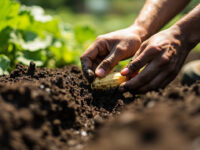
Radishes are a direct-sow crop, full stop. They do not transplant well because disturbing that young taproot deforms the radish it’s trying to grow, so skip the seed trays entirely.
Sow your first round 3 to 4 weeks before your last spring frost, as soon as soil can be worked and isn’t waterlogged. Radish seeds germinate in soil as cool as 40°F, though 50 to 65°F gets you faster, more even sprouting.
Keep sowing every 7 to 10 days through spring for a steady harvest instead of one big glut. Stop when daytime temps push past 75 to 80°F, then pick it back up 6 to 8 weeks before your first fall frost.
Get the timing right and the rest of this is almost foolproof.
Sowing Radish Seed, Step by Step
This is the part where crowding does its damage, so pay attention to the spacing numbers as much as the depth.
Depth and spacing
- Sow seeds 1/2 inch deep. Any shallower and they dry out before sprouting; any deeper and emergence slows down.
- Space seeds 1 inch apart in rows 6 to 12 inches apart, or scatter and thin.
Soil and light
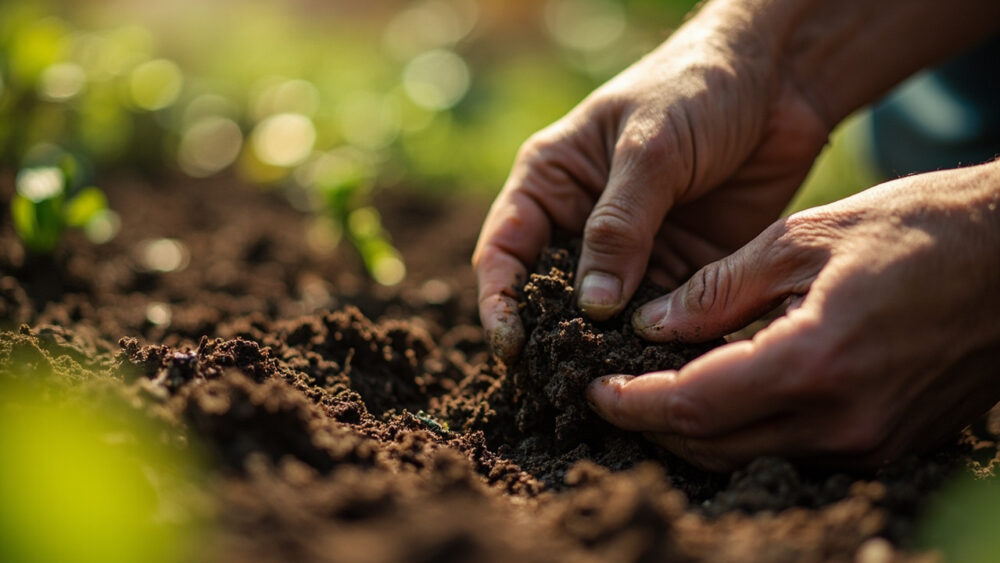
Loose, well-draining soil free of rocks and clumps matters more for radishes than for almost any other root crop, because a compacted or rocky patch forces the root sideways or splits it. Work the top 6 to 8 inches loose before sowing.
Full sun is ideal, 6 or more hours a day. Radishes will tolerate light afternoon shade, especially in warmer climates, but less light means slower bulbing and milder flavor turning bland.
Keep the soil surface consistently moist until seeds sprout, usually watering daily in dry weather.
Get them in the ground right and you’ll see green in under a week.
Germination: What to Expect and When to Worry
Radish seeds sprout fast, typically in 3 to 7 days at soil temps of 50°F or warmer. If you’re at the cool end of that range, closer to 40°F, give it up to 10 to 12 days before you assume failure.
You’ll see the seed leaves, two small rounded cotyledons, pop up first, followed quickly by the true leaves that look more like a mini leaf of arugula.
If nothing shows after two weeks in warm soil, the seed likely rotted from staying too wet, or a crust formed on the surface and physically blocked the sprout. Both are worth a re-sow rather than more waiting.
Once they’re up, the clock starts on the step almost everyone gets wrong.
Thinning: The Step That Makes or Breaks the Crop
If you assumed radishes just need decent soil and sun to bulb up, that guess is what leaves people with a bed of leafy tops and no radish underneath. The real culprit is almost always crowding.
Thin seedlings to 2 to 3 inches apart once they have their first true leaves, usually 7 to 10 days after sprouting. Snip unwanted seedlings at the soil line with scissors instead of pulling, since pulling disturbs the roots of the ones you’re keeping.
Left unthinned, radishes compete for root space and you get skinny, elongated roots or none at all, just a tuft of greens. This single step matters more than fertilizer, more than watering schedule, more than variety choice.
Thin them properly and you’ve already done the hardest part of growing radishes.
Hardening Off and Transplanting
Here’s the honest answer to the question you might be about to ask: no, radishes don’t need hardening off or transplanting at all, because they were never started indoors in the first place.
If you started a tray anyway out of habit from other vegetables, know that radish transplants rarely bulb properly. The taproot gets bent or broken during the move, and a bent taproot means a forked or stunted radish instead of a clean round one.
The one exception is very short-season climates starting seeds indoors 2 weeks before transplant, moving them out at the first true leaf stage while the root is still tiny, and handling the rootball with extreme care. It works, but it’s fussier than just waiting a week or two and direct sowing outside.
Skip this whole complication and your radishes will thank you with straighter roots.
Caring for Radishes Through the Season
Consistent moisture is the single biggest lever you control. Radishes need about 1 inch of water per week, and irregular watering, drought followed by a soak, is what causes cracked roots and a harsh, overly hot flavor.
Skip heavy nitrogen fertilizer. It pushes lush green tops at the expense of the root, which is exactly backward from what you want. A balanced, light feeding at sowing is plenty for a crop this fast.
Watch for flea beetles peppering leaves with small holes, and root maggots if roots come up tunneled. Floating row cover laid down at sowing prevents both without needing any spray. If pressure is heavy, a product labeled for the specific pest is the next step, applied exactly per the label.
Feed and water steadily, and radishes mostly take care of themselves from here.
Bolting: The Sign Everyone Misreads
Here’s the sign most people misdiagnose. When a radish patch suddenly shoots up a tall flowering stalk instead of a fat root, that’s not disease and it’s not a pest. It’s bolting, triggered by heat, long daylight, or both.
A bolted radish stops investing in the root and pours energy into flowers and seed instead, leaving you with a tough, woody, often hollow root that’s usually too hot-flavored to enjoy.
You can’t reverse it once it starts. The fix is entirely about timing the next planting for cooler weather, not doctoring this one.
When bolting isn’t a risk, harvest timing becomes the only thing left to get right.
When Radishes Are Ready to Harvest
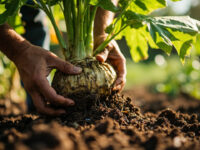
Most round varieties mature in 21 to 30 days; long French Breakfast types and daikon-style radishes can take 30 to 60 days. Check by feel: brush soil away from the shoulder of the root and look for it pushing up 1/2 to 1 inch above the surface.
Round types are ready around 3/4 to 1.5 inches across. Don’t wait for bigger, since oversized radishes turn spongy, cracked, and sharp-tasting fast.
Pull a test radish once you hit the low end of the maturity window. If it’s small, leave the rest a few more days and check again.
That’s the full loop closed, and everything you need to remember is right below.
Radishes at a Glance
- When to plant: direct sow 3 to 4 weeks before your last spring frost, then every 7 to 10 days until temps top 75 to 80°F, resuming 6 to 8 weeks before first fall frost.
- Depth and spacing: sow 1/2 inch deep, 1 inch apart, thin to 2 to 3 inches apart once true leaves appear.
- Soil temperature: germinates from 40°F, ideal range 50 to 65°F, sprouts in 3 to 7 days.
- Light and soil: full sun, 6 or more hours daily, loose rock-free soil worked 6 to 8 inches deep.
- Water: about 1 inch per week, kept consistent to avoid cracking and hot flavor.
- Days to harvest: 21 to 30 days for round types, 30 to 60 days for daikon and long types.
- Watch for: bolting in heat or long days, flea beetles, root maggots, all managed by timing and row cover.
Thin on time, water evenly, and pull them while they’re still small. That’s the entire skill set, and radishes reward you with a harvest faster than almost anything else you’ll grow.