The window for planting sweet potatoes opens once your soil hits a consistent 65 F and all frost danger has passed, which usually lands two to three weeks after your last spring frost date. That is not a typo. Sweet potatoes want warmer soil than tomatoes, warmer soil than corn, and they sulk hard if you rush them into cold dirt. Get the timing right and you get a wheelbarrow of tubers in October. Get it wrong and you get a patch of pretty vines and almost nothing underground.
Here is the part most guides skip: the calendar date matters less than what the soil is actually doing, and there is a specific mistake that wrecks more sweet potato patches than any pest ever will. There is also a sign gardeners misread every single year, one that looks like success and is actually the opposite of it.
Stick with me through the details and I will hand you a save-able Sweet Potatoes at a Glance card at the very bottom, the kind of thing you screenshot before you walk out to the garden this weekend.
The Real Planting Window
Sweet potatoes go in from slips, not seed potatoes, and slips are tender young shoots that die fast in cold soil. The safe window starts two to three weeks after your last expected frost, once nighttime lows are reliably staying above 55 F.
Soil temperature is the number that actually runs this show. You want 65 F at a 4-inch depth, measured in the morning before the sun has warmed things artificially.
In most of the country that lands somewhere in late May through mid June. Gulf Coast and Deep South growers can often start in April; northern growers in zones 3 through 5 are frequently waiting until early or mid June, sometimes later in a cool spring.
A calendar date is a guess. A soil thermometer is an answer.
How to Find Your Actual Window, Not the Textbook One
Buy a cheap soil thermometer or use an instant-read kitchen thermometer you do not mind getting dirty. Check the same spot at the same time of morning for three or four days in a row.
If it holds at 65 F or better without dipping back down after a cool night, you are in business. One warm afternoon does not count, since the soil four inches down lags well behind the air.
Raised beds and sandy soil warm up a week or two ahead of heavy clay in a low spot, so two gardeners ten miles apart can have genuinely different windows. Trust your own dirt over your neighbor’s start date.
Your soil, your thermometer, your actual start date, and none of it comes from a seed packet.
The Mistake That Ruins Most Attempts
If you assumed the risk is planting too late, that guess is backwards. The mistake that costs people their whole crop is planting too early into cold, wet soil, not planting a little later than they’d like.
Slips set into soil under 60 F stall out. They do not die outright most of the time, which is the trap. They just sit there, stunted, while the plant burns weeks recovering instead of growing.
A sweet potato slip that stalls for three weeks in June never fully catches up by October. You end up harvesting a bed of skinny, undersized roots and blaming the variety when the real culprit was a planting date that was two weeks too optimistic.
Cold soil doesn’t kill the plant, it just quietly steals your harvest, and that theft is invisible until dig day.
The Sign Everyone Misreads
Here’s the misread: big, lush, sprawling vines look like a thriving patch. Often it means the opposite.
Sweet potatoes planted a bit late, or fed too much nitrogen, will throw enormous vine growth while putting almost no energy into the roots. Vine size is not a proxy for tuber size, and that surprises a lot of first-time growers who assume more green means more potato.
The plants that quietly look modest above ground, with a good deep-green color but not runaway vine length, are usually the ones bulking up roots efficiently below. Judge the patch by planting date and care, not by how much it has taken over the bed.
Which raises the honest follow-up question: what actually happens if you miss the window on either side.
What Too Early or Too Late Really Costs You
Plant too early and slips sit stunted in cold soil, sometimes rotting outright if a wet cold spell hits right after transplant. That’s the expensive mistake, and it’s largely unrecoverable for that batch of slips.
Plant too late and you run out of the warm season before the roots have time to size up. Sweet potatoes need roughly 90 to 120 days of warm weather depending on variety, and tuber bulking happens mainly in the hot months.
A late planting, say a full month past your ideal window, can still produce a harvest, just a smaller one, with more small and medium roots and fewer of the big ones you were hoping for.
Late is disappointing. Early is often fatal to the slips. If you have to lean one direction, lean late.
What to Do Before the Window Opens
Order or start slips 6 to 8 weeks ahead so they’re ready right when soil hits temperature, not two weeks after. Slips are cheap insurance against a wasted window.
Warm the soil actively if your spring runs cool: black plastic mulch laid over the bed for a couple weeks before planting can push soil temperature up several degrees and buy you an earlier, safer start.
Build ridged rows or mounds about 8 to 12 inches high. Sweet potatoes want loose, well-drained soil, and mounding solves drainage while also warming faster than flat ground.
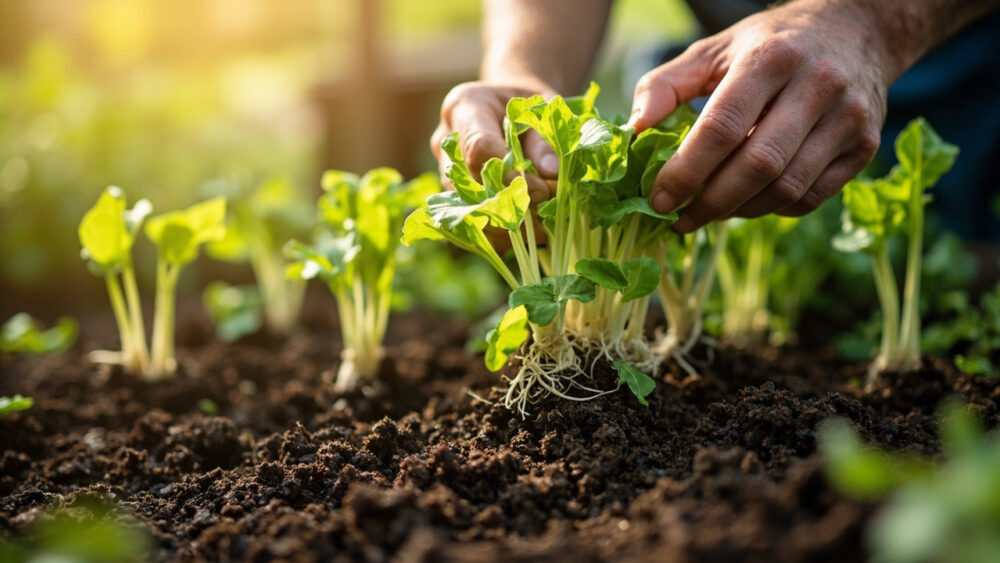
Space slips 12 to 18 inches apart within the row, rows 3 to 4 feet apart, planted about 3 to 4 inches deep with at least two leaf nodes buried.
Get the bed ready before the thermometer says go, and you won’t lose a single day of the short warm season you’re working with.
Regional Notes That Actually Change Your Date
In the Deep South and Gulf Coast, zones 8 and up, soil often hits 65 F by mid to late April, and a second planting in early summer is sometimes possible for a fall harvest in the mildest areas.
In the mid Atlantic and lower Midwest, zones 6 to 7, late May through early June is typical. In the Upper Midwest and Northeast, zones 3 to 5, you’re frequently waiting until early or mid June, and choosing a shorter-season variety matters more for you than for southern growers.
Coastal and Pacific Northwest gardeners deal with cool summer soil even in July, and often do best with black plastic mulch the entire season plus a short-season variety to get any real size on the roots.
Wherever you garden, the thermometer overrules the zone map every time.
Sweet Potatoes at a Glance
- When to plant: two to three weeks after your last frost, once soil is a steady 65 F at 4 inches deep.
- Typical window by region: mid to late April in zones 8 and up, late May to early June in zones 6 to 7, early to mid June in zones 3 to 5.
- Spacing: slips 12 to 18 inches apart, rows 3 to 4 feet apart.
- Planting depth: 3 to 4 inches, burying at least two leaf nodes.
- Biggest mistake: planting too early into cold, wet soil, which stalls or rots slips.
- Days to harvest: roughly 90 to 120 days of warm weather from slip to dig day, depending on variety.
- Misleading sign: huge vine growth does not mean big roots, judge by planting date and care instead.
If you remember one thing, remember the thermometer, not the calendar. Sixty five degrees at four inches deep beats any date printed on a seed rack.