If your garlic has yellowing tips, stunted growth, or leaves that flop over before they should, the most common culprit is simple: too much water, not enough drainage. Garlic rots fast in soggy soiland wet feet cause more dead garlic than every pest and disease combined. The fix is usually backing off irrigation and making sure water actually drains away from the bed within a few hours of rain.
But that is just the most common answer, not necessarily yours. Everyone blames nitrogen first when garlic looks pale, and that guess is wrong more often than it is right. The real tell is usually somewhere you have not looked yet: the base of the stem, the exact leaf that is yellowing, or the smell of the soil around the roots.
Below is every likely cause, ranked by how often it is actually the problem, with the specific test that confirms it and the fix that works. Stick with it to the bottom and you will find a two-minute diagnosis checklist you can run right now, standing next to the plant.
Most Likely Causes, Ranked
1. Overwatering or poor drainage
Confirm it: dig down 3 to 4 inches next to a bulb. If the soil is dark, cool, and clumps into a mudball rather than crumbling, drainage is your problem. Bulbs may feel soft or the roots may smell sour or rotten.
Fix it by holding off on water until the top 2 inches of soil dry out, and improve drainage long-term by raising the bed or mixing in coarse compost. Garlic wants about 1 inch of water a week total, less during the last month before harvest.
Get the water right and half your garlic problems disappear on their own.
2. Nitrogen deficiency (the real kind, not the assumed kind)
Confirm it: look at the oldest, lowest leaves first. True nitrogen shortage shows as uniform pale yellowing that starts at the leaf tip and moves down, on the bottom leaves specifically, while new growth at the center stays green.
If soil is soggy, fix drainage first, because wet roots cannot take up nitrogen even if plenty is present. If drainage is fine, feed with a balanced or nitrogen-forward fertilizer in early spring, then stop feeding nitrogen once bulbing starts in early summer, since late nitrogen delays maturity and hurts storage.
Nitrogen and water problems look nearly identical, which is exactly why this mistake keeps happening.
3. Planted too shallow, too late, or in spring instead of fall
Confirm it: gently brush back mulch or soil at the base of a stalk. If cloves are sitting less than 2 inches deep, or if you planted in spring in a cold-winter climate, timing is likely your issue. Spring-planted garlic in short-season regions often forms small, weak bulbs with thin, floppy tops.
There is no fixing timing after the fact this season. Note it, and next time plant cloves 2 to 3 inches deep, 4 to 6 inches apart, about 4 to 6 weeks before your ground freezes hard, so roots establish before winter dormancy.
If timing is the cause, the plant in front of you is telling you about last fall, not this week.
4. White rot or basal rot (fungal disease)
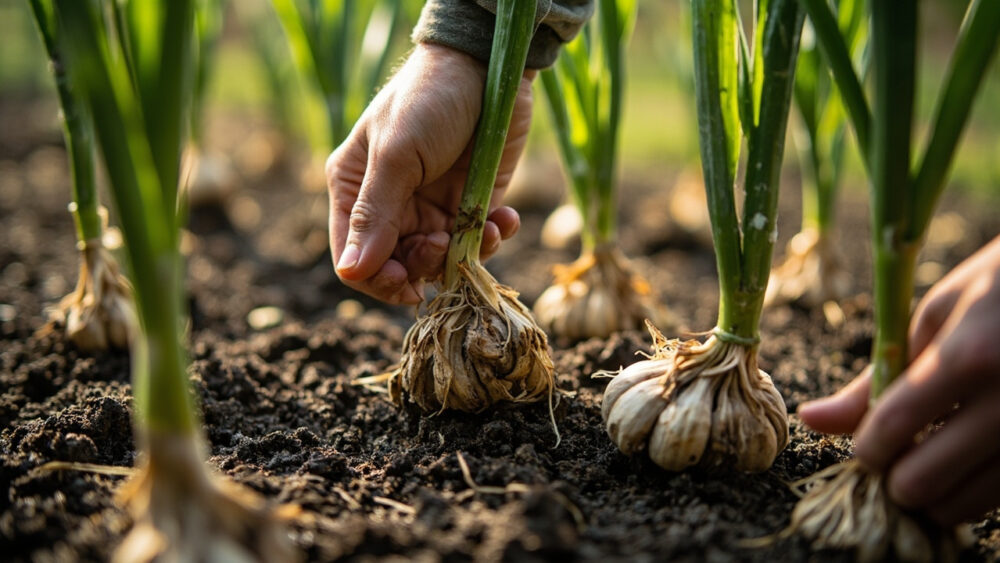
Confirm it: pull one struggling plant. Look at the base of the bulb for fluffy white fungal growth, or small black specks (sclerotia) the size of poppy seeds. Roots may be mushy and the whole bulb may pull free with almost no resistance.
There is no effective home cure for white rot. Pull and discard (do not compost) affected plants, and do not plant garlic, onions, or leeks in that soil for at least 4 years, since the fungus persists in soil that long.
This is the one cause where the fix is entirely about next season, not this one.
5. Thrips or onion maggot damage
Confirm it: look for silvery streaking or small white scarring along the leaves (thrips), or check for tunneling and soft rot right at the base near soil level (maggots). Thrips show up in hot, dry weather; maggots favor cool, wet spring soil.
For thrips, a strong water spray knocks down populations, and reflective mulch helps deter them; for a heavier infestation, an insecticidal soap or labeled pesticide applied per the product label is the next step. For maggots, remove and destroy affected plants and avoid planting garlic in the same spot the following year.
Pests are the least common cause of overall poor growth, but they are also the easiest to misread as disease.
6. Heat or drought stress late in the season
Confirm it: this shows up as leaf tips browning and curling from the top down, on the newest leaves, during a stretch of hot, dry weather, with soil that is bone dry 2 inches down.
Water deeply and consistently, and add mulch to buffer soil temperature and moisture. If this happens in the final 2 to 3 weeks before harvest, ease off water instead, since garlic naturally dries down as it matures and you do not want to push new growth right before curing.
Timing in the season changes whether this symptom means “water it” or “leave it alone.”
How to Tell the Causes Apart
Where the symptom starts on the plant is your best clue. Old, lower leaves yellowing first points to nitrogen or overwatering. New, inner leaves browning or curling points to heat, drought, or pest feeding.
Pattern matters too. Uniform yellowing across the whole bed suggests a soil or water issue affecting everyone equally. A few random plants collapsing while neighbors look fine points to disease or pest damage moving plant to plant.
Smell and feel at the base settle it when leaves alone will not.
The base-of-plant test
Sour, mushy, or foul-smelling roots mean rot. Firm white roots with visible fuzzy fungus or black specks mean white rot specifically. Dry, intact roots with just pale top growth usually mean a nutrient or water issue, not disease.
Once you know which category you are in, the recovery outlook gets a lot more honest.
Will It Recover?
Overwatering and nitrogen issues caught early usually bounce back within 2 to 3 weeks of correcting water or feeding, with new growth coming in green. Timing mistakes cannot be reversed this season. The bulbs will mature small, and that is simply the ceiling for spring-planted or shallow-planted garlic.
White rot has no recoveryfor that plant or that soil, for years. Cut your losses immediately and remove the whole plant, roots and all.
Pest damage recovers fine once the pest is controlled, though a heavily maggot-damaged bulb often will not size up to a usable harvest.
Heat stress right before harvest is rarely worth treating since the plant is nearly done anyway.
Knowing which of these you are dealing with changes not just the fix, but whether it is even worth fixing.
How to Keep It From Happening Again
Plant in fall, 4 to 6 weeks before hard frost, 2 to 3 inches deep, in soil that drains well after a hard rain within a few hours. Raised beds or mounded rows solve most drainage problems before they start.
Rotate your bedskeeping garlic, onions, and leeks out of the same soil for 3 to 4 years, which is your best defense against white rot and maggots both.
Feed nitrogen in early spring, then stop by early summer as bulbing begins, and taper water in the final weeks before harvest so bulbs cure properly instead of staying wet.
Get those three habits right and most of the causes above simply stop showing up.
Diagnosis Checklist
- Dig 3 to 4 inches next to the bulb: if soil clumps and smells sour, suspect overwatering or drainage, ease off water immediately.
- Check which leaves are yellow: oldest, lowest leaves point to nitrogen or water, newest leaves point to heat or pests.
- Pull one struggling plant and check the base: fuzzy white growth or black specks means white rot, remove the plant and do not compost it.
- Check the roots for smell and texture: mushy and foul means rot, firm and dry with pale tops means nutrient or water stress.
- Check leaves for silvery streaking or scarring: this points to thrips, treat per an insecticidal soap or labeled product’s instructions.
- Recall planting depth and date: shallow or spring-planted garlic in a cold climate explains stunted growth with no disease present.
- Check the calendar against the season: browning tips in the final weeks before harvest is often normal dry-down, not a problem to fix.
Most garlic problems trace back to water and timing, not some rare disease. Get those two right and the rest mostly takes care of itself.