The right way to preserve garlic depends on how you plan to use it, but for most home growers, the answer is curing whole bulbs and storing them cool, dry, and dark, which keeps garlic in good shape for six to ten months without any canning, freezing, or fridge space at all. If you want it to last even longer, or you have a bulb starting to sprout on the counter, freezing chopped or roasted garlic is your backup plan. Learning how to preserve garlic really means learning two different skills: curing for long-term whole-bulb storage, and freezing or oil-packing for the garlic you’ve already broken into.
Here’s what trips people up. Most gardeners either skip curing entirely because they’re impatient, or they wash their garlic clean like a carrot because it seems like the tidy thing to do. Both mistakes cut your storage life by months, and one of them creates a real food safety risk you need to know about, not just a shorter shelf life.
There’s also a sign of spoilage almost everyone misreads as garlic just “sprouting,” and a freezing shortcut that skips a step most instructions leave out. Stick around and I’ll give you the save-able Garlic at a Glance card at the bottom with every timing and number in one place.
Curing: The Method That Actually Makes Garlic Last
Curing is not optional if you want garlic to last past a few weeks. It’s the process that dries down the wrapper leaves and neck into a papery seal that locks moisture out.
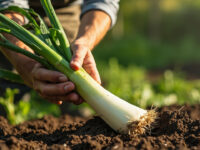
Pull your garlic when the lower five or six leaves have browned and the top leaves are still green, usually early to mid summer depending on your climate. Don’t wash it. Brush off loose soil with your hand or a dry cloth.
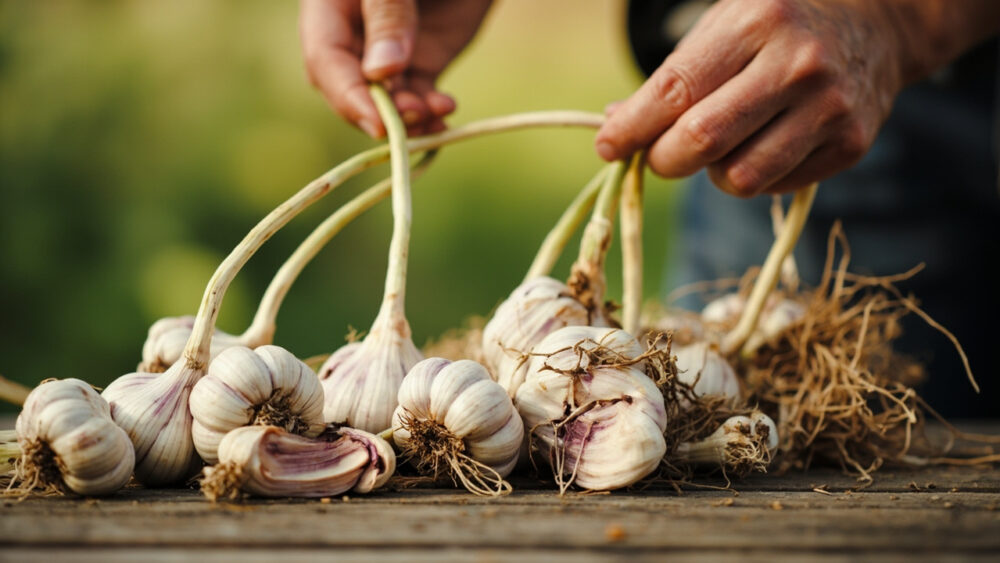
Lay or hang the bulbs somewhere warm, dry, and out of direct sun, with good airflow, for three to four weeks. A garage, covered porch, or shed works better than a kitchen counter. You’ll know it’s cured when the outer wrappers are papery and the neck above the bulb is tight and dry, not soft or green.
Once cured, trim roots close and cut stems to about an inch, or braid softneck varieties for hanging.
That papery seal is doing more work than it looks like, and cutting curing short is where most storage problems start.
How Long Each Storage Method Actually Keeps Garlic
Cured whole bulbs, stored cool and dry between 60 and 65°F with low humidity, keep six to eight months for softneck varieties and four to six months for hardneck. Hardneck garlic simply doesn’t store as long, no matter how well you cure it, and that’s just the nature of the type, not a mistake on your part.
Peeled cloves in the fridge last only about one to two weeks, since they’re exposed to moisture and air the moment you peel them.
Frozen garlic, whether whole peeled cloves, minced, or roasted, holds quality for ten to twelve months.
Garlic in oil is the risky one. Refrigerated homemade garlic oil should be used within about a week and treated as a short-term convenience, not a long-term preserve, because garlic in oil at room temperature can support the growth of the bacteria that causes botulism.
Each method has its own decay clock, and the mistake that shortens all of them starts before storage even begins.
Do You Wash Garlic Before Storing It? Here’s the Honest Answer
If you assumed a quick rinse makes garlic cleaner and therefore safer to store, that instinct is backwards. Washing garlic before curing traps moisture under the wrapper skins, and trapped moisture is exactly what invites mold and rot during storage.
Dry cleaning only is the rule. Brush soil off with your hands, a soft brush, or a dry cloth once the bulb is out of the ground.
If a bulb is really caked in mud, a very quick dunk and immediate air-drying in full sun for an hour is the exception, not the routine, and that bulb should go into your kitchen-use pile first rather than long-term storage, since it’s already at a disadvantage.
The same logic applies to blanching, which people sometimes assume garlic needs before freezing. It doesn’t, and blanching before freezing raw garlic actually softens texture and dulls flavor for no real gain.
Skip both, and your garlic keeps its bite and its skin intact, which matters more than you’d think for what comes next.
Freezing Garlic the Way That Actually Works
Whole peeled cloves freeze well in a freezer bag with the air pressed out, good for tossing straight into a hot pan.
Minced or pressed garlic freezes best portioned into an ice cube tray, then popped out and bagged once solid, so you’re not hacking at a frozen block later.
Roasted garlic, mashed or left in cloves, freezes beautifully and thaws with almost no texture loss, which makes it the best option if you already know most of your garlic is headed for sauces and spreads anyway.
Frozen garlic gets softer than fresh once thawed, so it’s better added early in cooking rather than saved for a raw garnish.
None of this replaces curing for your main harvest, it’s simply what to do with the extra you’ve already peeled or the bulbs starting to soften.
The Sign Everyone Misreads as “Just Sprouting”
A green shoot pushing up through a clove is not automatically spoilage, and plenty of gardeners toss good garlic over it. Sprouted garlic is still edible, just milder and slightly bitter, and it’s a sign the clove is past its storage prime, not dangerous.
What actually means spoiled is different: a soft, mushy, or hollow clove, a musty or sour smell instead of sharp garlic scent, visible blue-green or black mold, or a bulb that feels damp and yields when squeezed.
A bulb with one bad clove usually still has good cloves inside it. Check each one individually before you toss the whole head.
Sprouting means use it soon, mold and mush mean throw it out, and mixing up those two signals is how good garlic gets wasted for no reason.
The Mistakes That Ruin a Whole Batch
Curing too briefly is the single biggest cause of early rot, since an undercured neck lets moisture and bacteria straight into the bulb.
Storing garlic in the fridge whole and uncured is a close second. Cold, humid fridge air actually triggers sprouting and softening faster than a cool pantry shelf would.
Stacking bulbs in a sealed plastic bag or airtight container traps humidity and speeds rot, so mesh bags, paper bags, or open baskets always beat plastic for whole bulb storage.
And storing garlic near onions or potatoes sounds harmless, but potatoes especially release moisture and ethylene that shorten garlic’s storage life.
Fix the curing and the container, and most storage failures disappear before they start.
Garlic at a Glance
- Best method: cure whole unwashed bulbs, then store cool, dry, and dark.
- Curing time: three to four weeks in a warm, airy, shaded spot until necks are tight and skins papery.
- Ideal storage conditions: 60 to 65°F, low humidity, good airflow, out of direct light.
- How long it keeps: softneck cured bulbs six to eight months, hardneck cured bulbs four to six months.
- Peeled cloves in the fridge: use within one to two weeks.
- Frozen garlic: minced, whole, or roasted, holds quality ten to twelve months.
- Garlic oil: refrigerate and use within about a week, never store at room temperature.
- Throw it out if: mushy, hollow, musty smelling, or showing blue-green mold.
Cure it right the first time, and storage takes care of itself for months.
Everything else, freezing, oil, sprout checks, is just backup for the garlic that gets away from you.