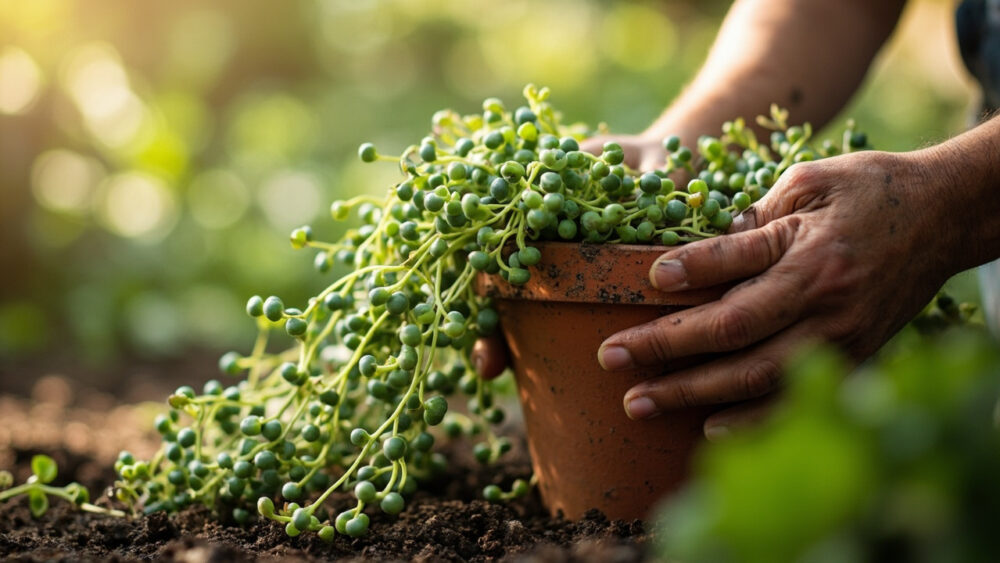
String of pearls grows best in a fast-draining succulent mix, bright indirect light, and water only when the soil is bone dry an inch down. Plant the cuttings shallow, about a quarter inch deep, in a wide shallow pot, and keep them out of direct hot afternoon sun until they’re established. That’s how to grow string of pearls without losing half the strand in the first month, which is exactly what happens to most people.
Here’s what nobody tells you before you buy that first hanging pot: the number one killer isn’t underwatering, it’s the opposite, and the plant gives you a warning sign that almost everyone reads backwards. There’s also a light mistake that looks like it’s helping for a few weeks before it quietly kills the whole strand from the inside out. And if you’re wondering whether this thing actually flowers, the honest answer surprises most first-time growers.
Stick with me through the sections below and I’ll walk you through timing, soil, planting depth, watering rhythm, the real threats, and what “harvest” even means for a plant you grow for its trailing pearls. Save-able facts are in the String of Pearls at a Glance card at the very bottom, worth screenshotting before you head to the nursery.
When to Plant String of Pearls
String of pearls (Curio rowleyanus, formerly Senecio rowleyanus) is almost always started from cuttings or a nursery plant, not seed, so “planting” really means potting up or propagating. Do that any time indoors, but if you’re moving it outdoors or repotting, wait until nighttime temperatures stay above 50°F and frost risk has fully passed.
This is a warm-climate succulent at heart, hardy outdoors year-round only in USDA zones 10 to 11. Everywhere else it’s a houseplant that can summer outside in a shaded spot.
Spring through early summer is the best propagation window because the plant is actively growing and roots form faster in warm soil.
Get the timing right and the next decision, where you actually put the pot, matters just as much.
Choosing the Spot and Prepping the Soil
String of pearls wants bright, indirect light, several hours of it daily. An east-facing windowsill or a spot a couple feet back from a bright south or west window works well. Direct, intense afternoon sun through glass can scorch the pearls, leaving them shriveled and translucent on one side.
Here’s the light mistake almost everyone makes: they assume more sun is always better for a succulent, so they push it right into a hot south window with zero transition. The plant looks fine for two or three weeks, then the pearls facing the glass start going soft and papery, and by the time you notice, that whole side is done. Succulents still need to be acclimated to intense light gradually, string of pearls more than most.
Soil has to drain fast. Use a cactus or succulent mix, or make your own with equal parts potting soil, coarse sand, and perlite. Regular potting soil alone holds too much water and rots the roots within weeks.
A pot with a drainage hole is non-negotiable here, and the container shape matters more than you’d think.
Steps to Plant String of Pearls
- Pick a shallow, wide container: the roots are shallow, so a low pot or hanging basket 6 to 8 inches across suits it better than a deep pot.
- Fill with succulent mix: leave about half an inch of headspace below the rim.
- Take 4 to 6 inch cuttings: snip healthy strands just below a node with clean scissors.
- Let cut ends callus: set cuttings somewhere dry and shaded for 1 to 2 days so the wound seals over.
- Lay or lightly bury the stems: coil the strand on top of the soil or bury just the bottom quarter inch, nodes touching soil for rooting.
- Space cuttings 1 to 2 inches apart: this gives a full-looking pot without overcrowding.
- Water lightly once, then wait: don’t water again until the soil is fully dry, usually 5 to 7 days.
Get the cuttings settled and the next few weeks come down almost entirely to how you water.
Watering and Feeding Through the Season
Now here’s the sign almost everyone misreads. Shriveled, deflated-looking pearls read as “needs water” to nearly every new grower, so they water more, and that’s usually the mistake that kills the plant. Wrinkled pearls from underwatering feel soft but bounce back fast once you water. Wrinkled pearls from overwatering come with mushy, translucent, or blackening stems near the soil line, and that damage does not reverse.
The rule that actually works: water deeply, then let the top 1 to 2 inches of soil go completely dry before watering again. In spring and summer that’s roughly every 10 to 14 days. In fall and winter, stretch to every 3 to 4 weeks.
Feed monthly during spring and summer with a diluted succulent or cactus fertilizer, at about half the label’s recommended strength. Skip feeding entirely in fall and winter when growth slows way down.
Get the water rhythm right and most of the disease and pest problems below never show up at all.
Problems That Actually Show Up (and How to Head Them Off)
Root rot is the big one, caused almost entirely by soggy soil or a pot with no drainage. Mushy black stems at the base mean the damage is done there; cut above the rot and start fresh cuttings rather than trying to save the original.
Shriveled pearls with no new growth for weeks usually means too little light, not too little water, especially in winter. Move it somewhere brighter before you reach for the watering can.
Mealybugs show up as tiny white cottony clusters tucked between pearls. Dab them with rubbing alcohol on a cotton swab, or treat with an insecticidal soap following the product label, and isolate the plant from other houseplants until it’s clear.
Leggy, sparse strands with long gaps between pearls mean insufficient light, and the fix is more brightness plus a light trim to encourage fuller regrowth.
String of pearls is mildly toxic to cats and dogs if ingested, and can cause mouth or stomach irritation; if you suspect a pet has eaten some, call your veterinarian rather than waiting to see what happens.
Keep the light bright and the water sparse, and this plant is genuinely low-maintenance from here on.
When and How to “Harvest” String of Pearls
You don’t harvest string of pearls the way you’d harvest a vegetable, since it’s grown for its trailing foliage and occasional bloom. But here’s the honest answer to the question you’re probably about to ask: yes, it can flower, small white blooms with a scent some people describe as cinnamon-y and others find unpleasant, usually appearing in late winter to early spring on a mature, well-lit plant. Plenty of houseplant specimens never bloom at all, and that’s normal, not a failure.
What you’re really harvesting is cuttings, once strands reach 12 to 24 inches, which typically takes 6 months to a year of steady growth. Snip healthy strands anytime during active growing season to start new pots or fill in bare spots.
A mature, well-grown plant will have dense, plump, round pearls with no shriveling, trailing evenly over the pot’s edge. That’s the visual sign it’s thriving, not any particular date on the calendar.
Everything you need to keep it that way from here is in the quick-reference card below.
String of Pearls at a Glance
- When to plant or repot: spring through early summer, once nighttime temps stay above 50°F.
- Light: bright, indirect light for several hours daily, acclimate slowly before any direct sun.
- Soil: fast-draining cactus or succulent mix, never plain potting soil.
- Planting depth and spacing: cuttings buried a quarter inch deep or laid on soil, spaced 1 to 2 inches apart.
- Watering: let the top 1 to 2 inches dry completely, then water deeply, roughly every 10 to 14 days in warm months, every 3 to 4 weeks in winter.
- Feeding: diluted succulent fertilizer monthly in spring and summer, none in fall and winter.
- Hardiness: outdoors year-round only in zones 10 to 11, houseplant everywhere else, mildly toxic to pets if eaten.
If you remember one thing, remember that shriveled pearls mean check the soil before you water, not water on sight.
Get the light and the drainage right, and string of pearls forgives almost everything else.