If your hawthorn has orange-rust spots on the leaves or a leaf drop that started weeks earlier than it should have, you’re most likely looking at rust or leaf blightand both are fixable with better airflow, cleanup, and a fungicide applied at the right time next spring, not this week. Hawthorn trees diseases almost always trace back to wet leaves staying wet too long, and once you know which one you’ve got, the fix is straightforward.
Most people blame the tree’s soil or its age first. That’s usually wrong. Hawthorns are tough, long-lived trees, and the vast majority of the diseases that hit them are fungal, weather-driven, and treatable if you catch them before the tree defoliates twice in one season.
The detail that tells you which cause you’re dealing with is where the damage shows up first: on the leaves, the twigs, or the fruit. Whether your tree bounces back this year or needs a season or two to recover depends on which one it is and how far it’s already gone. Stick with me through the causes, then grab the two-minute diagnosis checklist at the very bottom so you can confirm it on the spot.
Most Likely Causes, Ranked
1. Cedar-Hawthorn Rust
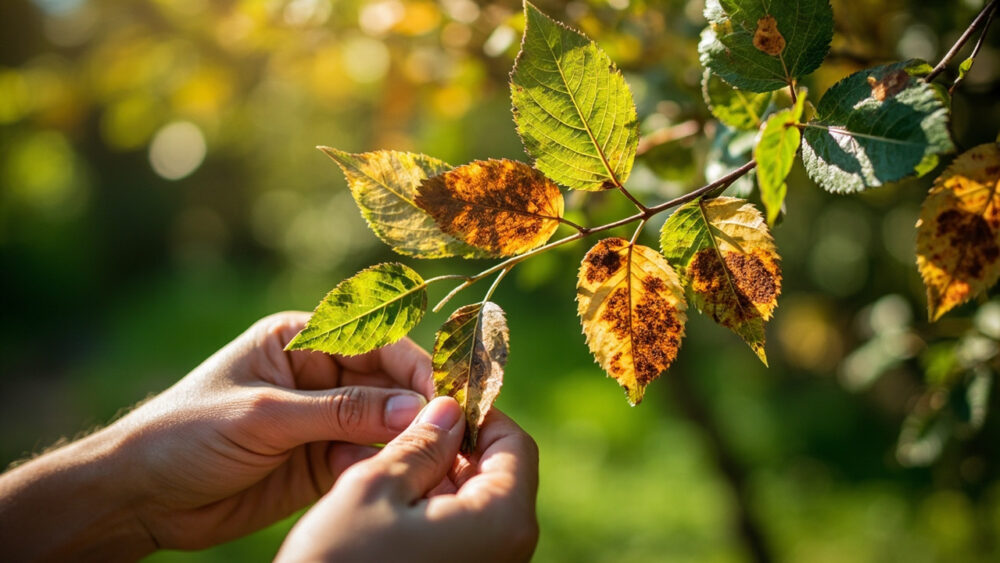
Confirm it: look for bright orange-yellow spots on the upper leaf surface, often with a raised, spiky or tube-like structure on the underside. This disease needs a juniper or eastern redcedar within a few hundred yards to complete its cycle, so check for one nearby.
Fix: rake and destroy fallen infected leaves in autumn, and if a nearby juniper is the obvious host, removing it (yours or a neighbor’s, if possible) breaks the cycle for good. A protectant fungicide labeled for rust, applied starting at bud break and repeated per the label through spring, prevents new infections but won’t clear existing spots.
That orange rust is dramatic looking, but there’s a quieter leaf disease that does more long-term damage.
2. Leaf Blight (Fabraea or Entomosporium Leaf Spot)
Confirm it: small purple-to-brown circular spots on leaves, often with a yellow halo, that merge and cause early leaf drop, worst on the lower and inner canopy where air is stillest. In wet springs this one can strip half a tree’s leaves by midsummer.
Fix: rake and dispose of fallen leaves, thin crowded branches to open airflow, and avoid overhead watering. A fungicide labeled for leaf spot, applied at first leaf emergence and repeated on the label’s schedule during wet weather, keeps new growth clean.
If your tree looks fine in the leaves but rough in the bark, you’re dealing with something different entirely.
3. Fire Blight
Confirm it: shoot tips that blacken and curl over like a shepherd’s crook, often with a wilted, scorched look that spreads fast in warm, wet spring weather. Cankers on branches may ooze slightly and look sunken or discolored.
Fix: prune out infected shoots well below the visible damage, cutting into clean wood, and sanitize pruning tools between cuts with rubbing alcohol or a diluted bleach solution. Avoid heavy nitrogen fertilizer, which pushes soft new growth that fire blight loves. Severe cases benefit from a copper-based spray during bloom, applied per label directions, but pruning is the real fix.
Fire blight moves through the wood, but there’s a rot that works on wood from the inside out.
4. Cankers and Dieback
Confirm it: sunken, discolored patches of bark on branches or the trunk, sometimes cracked, with the wood beyond the canker dying back. These usually follow stress: drought, winter injury, or a wound from mowers or trimmers.
Fix: prune out dead or cankered branches back to healthy wood, and improve the tree’s overall vigor with consistent watering during dry spells and mulch to protect roots. There’s no spray that cures an existing canker; management is entirely cultural.
All of the above are fungal or bacterial, but hawthorns have one common insect problem that mimics disease damage.
5. Hawthorn Lace Bug or Spider Mite Stippling
Confirm it: a fine, pale stippling or bronzing across the leaf surface rather than distinct spots, with tiny insects or fine webbing visible if you flip the leaf and look closely. This isn’t a disease at all, but it gets mistaken for one constantly.
Fix: a strong hose spray dislodges light infestations, and insecticidal soap applied per label directions handles heavier ones. Keeping the tree watered during hot, dry stretches reduces mite outbreaks significantly.
Now that you’ve got the list, here’s how to tell them apart fast without second-guessing yourself.
How to Tell the Causes Apart
Rust shows up on upper leaf surfaces first, bright orange, unmistakable once you’ve seen it once. Leaf blight starts as small dark spots on lower, inner leaves and spreads outward and up as the season goes on.
Fire blight hits new growth at the shoot tips, turning it black and hooked, while the rest of the tree still looks normal. Cankers show up on bark and wood, never on leaves directly, though the branch beyond a canker will show wilted or stunted leaves.
Insect stippling is diffuse and pale rather than spotted, and a hand lens or close look at the leaf underside settles it in seconds.
Once you’ve matched the pattern, the next question is the one that actually matters: does the tree come back.
Will It Recover?
Rust and leaf blight rarely kill a hawthorn outright. A single bad season of either, even with significant leaf drop, is usually followed by a full recovery the next year once you clean up fallen leaves and improve airflow.
If you assumed heavy leaf drop this year dooms the tree, that’s the wrong read: hawthorns push a fresh flush of leaves the following spring and often look completely different by early summer.
Fire blight is more serious. Caught early with aggressive pruning, most trees recover fully, but repeated yearly infections that keep killing back new growth will eventually weaken the tree’s structure and shorten its life.
Cankers are the honest bad news category. A canker on a major limb or the trunk that girdles the wood will kill everything beyond it, and a tree with multiple trunk cankers is in decline that pruning alone won’t reverse.
Insect stippling causes no lasting harm once the pests are knocked back; the damaged leaves stay ugly for the season but the tree itself is fine.
Recovery is realistic for most of these, but prevention is what keeps you from doing this diagnosis again next spring.
How to Keep It From Happening Again
Rake and remove fallen leaves every autumn without exception. Nearly every fungal disease on this list overwinters in leaf litter and reinfects the tree from the ground up each spring.
Prune for airflow every winter while the tree is dormant, opening up the crown so leaves dry quickly after rain instead of staying damp for days.
Water at the soil line, never overhead, and water deeply during dry spells rather than a light daily sprinkle that keeps foliage perpetually damp.
If juniper or eastern redcedar nearby is feeding a rust problem year after year, removing it is the only permanent fix. Spraying around it just manages symptoms forever.
Keep this checklist handy for the next time something looks off, because with hawthorns, something usually does eventually.
Diagnosis Checklist
- Check the upper leaf surface for bright orange-yellow spots: if present, look for a juniper or redcedar nearby, this is cedar-hawthorn rust.
- Check the underside of spotted leaves for raised, tube-like orange structures: if present, confirms rust, plan a rust fungicide next spring at bud break.
- Check lower, inner leaves for small purple-brown spots with yellow halos: if present, this is leaf blight, rake and destroy fallen leaves this fall.
- Check shoot tips for blackened, curled, shepherd’s-crook growth: if present, this is fire blight, prune well below the damage and sanitize tools between cuts.
- Check bark and branches for sunken, discolored, cracked patches: if present, this is canker, prune dead wood and focus on overall tree vigor.
- Check leaves for pale, fine stippling with no distinct spots: flip a leaf over and look for tiny insects or webbing, this is lace bug or mite damage, not disease.
- Note how much of the canopy is affected: scattered spotting means watch and clean up, more than half the leaves affected means treat now and expect a slower recovery.
- If you see multiple cankers on the trunk or main limbs, get a certified arborist to assess the tree in person before deciding whether to remove it.
Most hawthorn problems look worse than they are once you know the pattern. Clean up, prune for airflow, and give it a season, and this tree has a good chance of proving you right.