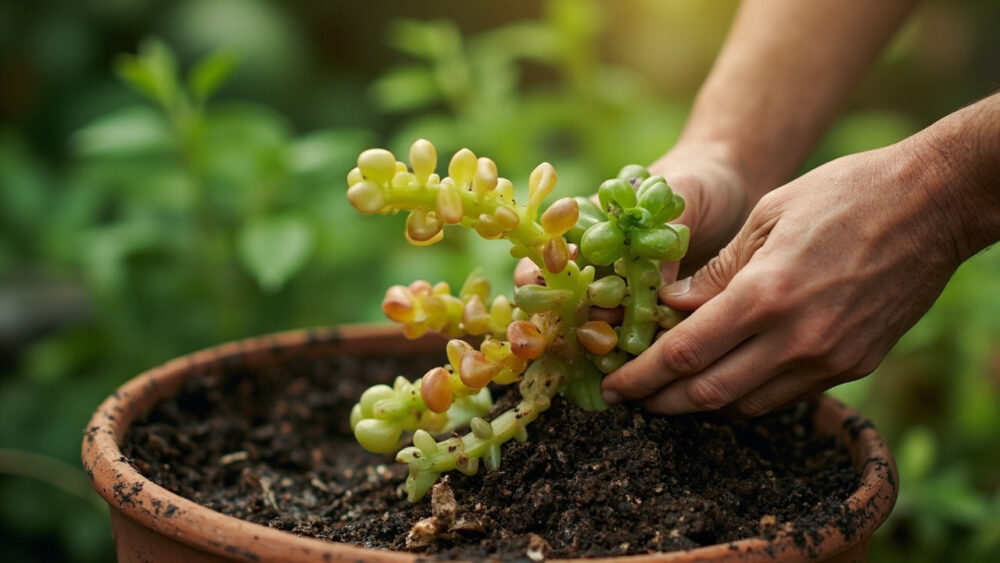
If your jade plant has soft, translucent, mushy leaves that drop at the slightest touch, and the soil has stayed wet for days at a time, you’ve got an overwatered jade plant, and the fix starts with stopping the watering entirely and checking the roots before you do anything else. Pull it from the pot. If the roots are black, brown, or slimy instead of firm and pale, you’re dealing with rot, not just excess water, and that changes the fix.
Here’s the thing almost everyone gets backwards: they see mushy, yellowing leaves and assume the plant is thirsty, so they water again. That single guess kills more jade plants than actual drought ever does. The plant that looks the most pitiful is usually the one that needed water the least.
There’s one detail on the plant right now that tells you exactly which stage you’re in and whether this is fixable in a week or a slow goodbye. Stick around, because the diagnosis checklist at the bottom will walk you through confirming it in about two minutes, no guessing required.
Causes Ordered by Likelihood
1. Watering too often for the pot and season
This is the cause behind most overwatered jades, and it’s rarely one big soaking. It’s a schedule, watering every few days on a fixed calendar instead of checking the soil.
Confirm it: stick a finger two inches down. If it’s still damp and the last watering was under a week ago, you’ve found your cause.
Fix it: stop watering completely until the top two to three inches are bone dry, then water deeply and walk away for two to three weeks minimum, longer in winter.
The schedule is the easy fix, but the pot underneath it might be working against you too.
2. No drainage hole or a pot that’s too large
A pot without a drainage hole traps water at the bottom no matter how careful you are with the watering can. An oversized pot does something similar: too much soil volume stays wet long after the roots have taken what they need.
Confirm it: check the pot bottom for a hole, and compare pot width to the root ball. If the roots only fill the center third of the pot, it’s too big.
Fix it: repot into a container with drainage, sized so roots fill most of the pot with an inch or two to spare.
Even a good pot can’t save a jade sitting in the wrong dirt.
3. Regular potting soil instead of a fast-draining mix
Standard potting soil holds moisture for days, which is exactly what a succulent’s roots can’t tolerate. This cause often hides behind cause one, making a normal watering schedule act like overwatering.
Confirm it: squeeze a handful of the soil. If it clumps like a mud pie instead of falling apart loosely, it’s too dense.
Fix it: repot into a cactus or succulent mix, or cut regular potting soil with an equal amount of coarse sand, perlite, or pumice.
Sometimes the soil and schedule are both fine, and the real problem is what’s living in that wet soil.
4. Root rot from a past overwatering episode
Once rot sets in, the damage keeps progressing even if you’ve already corrected your watering. This is the cause that turns “a little too much water” into a genuine emergency.
Confirm it: unpot the plant and look at the roots directly. Black, brown, mushy, or foul-smelling roots confirm rot; firm white or tan roots rule it out.
Fix it: cut away every rotted root and any blackened stem tissue with a clean blade, let the cut surfaces dry for a day or two, then repot into fresh dry succulent mix and hold off watering for a week.
Cold, dim conditions can make even correct watering act like too much.
5. Low light or cold temperatures slowing water use
A jade plant in low light or a cold room uses far less water than one in bright conditions, so a watering amount that’s fine in summer becomes excessive in a dim corner or a chilly winter windowsill.
Confirm it: think about where the plant sits. Under 4 to 6 hours of bright light, or temperatures consistently below 55°F, both slow water uptake noticeably.
Fix it: move it to a brighter spot, ideally a south or west window, and cut watering frequency further until light and temperature improve.
Once you’ve got a suspect, the next step is telling it apart from the others with confidence.
How to Tell the Causes Apart
Where the symptom starts matters. Overwatering usually hits the lower and inner leaves first, they go soft, glassy-looking, and yellow-brown before dropping. Underwatering, by contrast, shrivels and wrinkles leaves from the outside in while they stay attached.
Check the stem base too. A base that’s dark, soft, or collapsing under gentle pressure points to rot, not just wet soil.
New growth tells its own story. Stunted or translucent new leaves alongside mushy old ones usually mean the rot has reached the roots already.
Now for the question you actually clicked for: does it come back from here.
Will It Recover?
A jade plant caught at the early, soggy-soil stage with firm roots almost always recovers fully once you dry it out, often within two to four weeks of new firm growth.
If rot has taken a third or less of the root system, cutting away the damage and repotting usually saves the plant, though it may drop leaves and look rough for a month or two while it rebuilds roots.
If rot has reached the main stem and it’s soft all the way through, or more than half the roots are gone, the honest call is to take healthy leaf or stem cuttings and start over rather than fight for the original plant.
Jade is forgiving up to a point, but that point is the stem, not the leaves.
How to Keep It From Happening Again
Water only when the soil is fully dry at least two inches down, not on a fixed schedule. In most homes that’s every two to four weeks, less in winter.
Always use a pot with a drainage hole and a fast-draining succulent mix, and size the pot to the roots rather than leaving room to grow.
Give it bright light, several hours of direct or strong indirect sun, since well-lit plants use water at a rate that matches typical watering habits far better than shaded ones do.
Get those three things right and overwatering stops being a recurring problem instead of a one-time scare.
Diagnosis Checklist
- Touch the soil two inches down: if damp and watered within the last week, mark watering frequency as the likely cause.
- Check the pot for a drainage hole: if there is none, mark drainage as a contributing cause.
- Squeeze a handful of soil: if it clumps into a dense mud ball, mark soil mix as a contributing cause.
- Unpot the plant and inspect the roots: firm and pale means no rot, black or mushy means rot confirmed.
- Press the base of the main stem gently: soft or collapsing confirms rot has reached the stem, not just the roots.
- Note which leaves are affected: lower and inner leaves soft and yellow point to overwatering, outer leaves shriveled and wrinkled point to underwatering instead.
- Estimate daily light exposure: under 4 hours of bright light means move the plant before adjusting watering further.
- Based on root condition, choose the fix: dry out and wait if roots are healthy, trim and repot if rot is limited, or take cuttings and restart if the main stem is compromised.
Run through that list once and you’ll know exactly which jade problem you’re actually holding.
Fix the cause, not just the symptom, and this plant will outlast the pot it’s sitting in.