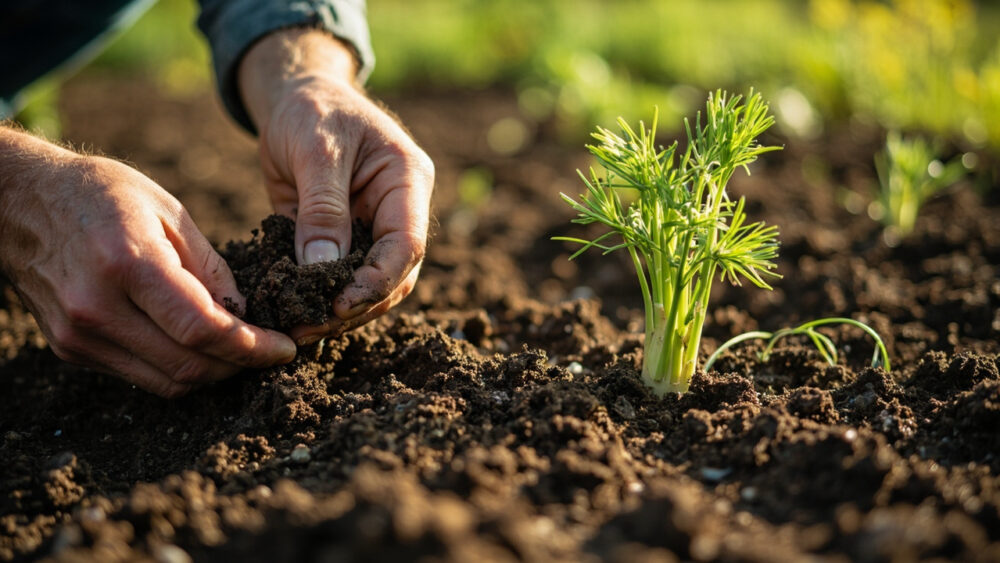
Sow fennel seed a quarter inch deep, direct into the garden once soil hits 60 to 65 F, and you will see bulbs or fresh feathery foliage in 65 to 90 days depending on whether you are growing the bulb type (Florence fennel) or the leafy herb type. That is the whole answer to how to grow fennel from seed in one line. The details are where most people trip up.
Here is what nobody tells you upfront: fennel bolts to flower fast when it gets stressed, and the thing that stresses it is usually the exact thing gardeners do on purpose, transplanting it. There is a specific temperature swing that ruins bulb formation before you even notice a problem, and a very common way people misread a bulting fennel plant as “almost ready” when it has actually already quit on them.
I will walk through starting, sowing, germination, and the season ahead, and I will flag the mistake that costs people their bulbs before they cost them anything else. Save-able specifics, timing, spacing, depth, all of it, are waiting in the Fennel at a Glance card at the bottom once you have read the why behind each number.
When to Start Fennel Seeds
Direct sowing wins with fennel, and this is not the usual “either works” answer you get with tomatoes or peppers. Fennel, especially Florence fennel grown for the bulb, resents having its taproot disturbed. Transplant shock frequently sends it straight into bolting, where it throws up a flower stalk instead of swelling a bulb.
If you want to start indoors anyway, do it 4 to 6 weeks before your last frost date, in deep cells or soil blocks, and move it out while it is still small, under 3 inches tall, before that taproot coils.
For direct sowing, wait until soil temperature is reliably at least 60 F, which usually lands 1 to 2 weeks after your last frost in most zones. Fennel germinates and grows fine into cooler fall soil too, and many gardeners get their best bulbs from a late-summer sowing timed to mature in cool autumn weather, since fennel bulbs up best when nights are mild, not hot.
Get the timing right and the next decision, how you actually sow it, gets a lot more forgiving.
Sowing Fennel Step by Step
Fennel seed is small but not fussy. It wants consistent moisture and a loose, well-drained bed more than it wants any particular fertility boost at this stage.
Depth and spacing
- Sow seeds about a quarter inch deep, no deeper. Buried too deep, fennel seed struggles to push through.
- Space seeds 2 inches apart, or scatter thinly in a row, and plan to thin later.
- Final spacing should land at 8 to 12 inches between plants for bulb fennel, since bulbs need room to swell without crowding.
Medium, temperature, and light
- Use loose garden soil amended with compost, or a standard seed-starting mix if starting in cells indoors.
- Ideal germination temperature is 60 to 70 F. Below 50 F, germination slows dramatically or stalls.
- Fennel wants full sun, at least 6 hours a day, once it is up and growing. Indoors before transplant, a sunny window is usually too weak, a grow light is worth it.
Keep the seedbed evenly moist, not soggy, until you see germination, which is where the waiting game starts.
Germination: What to Expect and When to Worry
Expect sprouts in 7 to 14 days at the right soil temperature. Thin, grass-like first leaves are normal, the feathery, fennel-scented foliage shows up a bit later as the plant matures.
If you assumed slow germination means bad seed, that guess is wrong more often than it is right. Cold soil is the far more common culprit. Fennel seed that sits in soil under 55 F can take 3 weeks or more, or simply rot before it sprouts, especially in a wet spring.
Check soil temperature with a simple soil thermometer an inch down before blaming the seed packet. If nothing has emerged after 3 full weeks in soil that is genuinely warm enough, then it is fair to re-sow.
Thin seedlings to their final spacing once they have 2 to 3 true leaves, snipping extras at soil level rather than pulling, which protects the roots of the ones you keep.
Thinning feels wasteful the first time you do it, but skipping it is the second mistake that quietly ruins bulb size later.
Hardening Off and Transplanting, If You Started Indoors
This is the step where the real mistake lives, the one I flagged in the intro. Fennel started indoors needs a gentle transition, and it needs to go into the ground small and young, not root-bound and lush.
Harden off over 5 to 7 days, setting seedlings outside in a sheltered, part-shade spot for a couple hours the first day and building up to a full day outdoors before the final transplant.
Transplant on an overcast day if you can, or in the evening, to reduce shock. Handle the taproot as little as possible, and go in at the same soil depth the seedling was growing at, not deeper.
A sudden cold snap right after transplant, or several days of stress from wind and heat, is the specific trigger that sends young fennel into premature bolting. That is the temperature swing to actually watch for, not just an average cold night, but a sharp jarring change right when the roots are already compromised.
Get plants through this window without stress, and the rest of the season is mostly about steady maintenance.
Caring for Fennel Through the Season
Fennel is low-maintenance once established, but it does have real preferences. Water consistently, about 1 inch per week, more in hot or dry spells. Irregular watering is another common bolt trigger, right alongside transplant shock and temperature swings.
Mulch around the base to keep soil temperature even and cut down on weeding, since fennel does not love competition for water and nutrients.
Feed lightly, a balanced fertilizer once or twice through the season is plenty. Too much nitrogen pushes leafy growth at the bulb’s expense.
As bulbs start to swell, some gardeners mound soil or mulch up around the base, which blanches the bulb slightly and keeps it tender. It is optional, not required.
Watch the base of the plant now, because that swelling is your real countdown clock to harvest.
Harvest Timing, and Reading Bolted Fennel Correctly
Bulb fennel is ready when the bulb at the base reaches 3 to 4 inches across and feels firm, not spongy. That is usually 65 to 90 days from direct sowing, cut it at the base with a knife just above soil level.
Leafy herb fennel can be snipped continually once plants are 12 to 18 inches tall, no need to wait for a bulb that will not form on that type anyway.
Here is the follow-up question you were probably about to ask: is a tall flowering stalk a sign the fennel is finally finishing up? No, it is the opposite. A flower stalk means the plant has bolted and abandoned bulb production entirely, redirecting its energy into seed.
Once that stalk shoots up, the bulb below stays small, gets fibrous, and will not improve with more time in the ground. Harvest what is there, or let it flower and collect fennel seed instead, but do not wait on a bolted plant expecting a bulb that is not coming.
That is the whole cycle, and the numbers worth keeping are collected right below.
Fennel at a Glance
- When to plant: direct sow once soil is 60 to 65 F, about 1 to 2 weeks after last frost, or start indoors 4 to 6 weeks before frost and transplant young.
- Depth and spacing: sow a quarter inch deep, thin to 8 to 12 inches apart for bulb types.
- Germination: 7 to 14 days at 60 to 70 F soil temperature, slower or unreliable below 55 F.
- Sunlight and water: full sun, at least 6 hours daily, and about 1 inch of water per week, kept consistent.
- Days to harvest: 65 to 90 days from direct sowing for bulbs, continual harvest for leafy types once 12 to 18 inches tall.
- Harvest sign: bulb reaches 3 to 4 inches wide and feels firm, cut at soil level.
- Bolt warning: a flowering stalk means bulb growth has stopped for good, harvest now or save it for seed.
Fennel rewards patience with timing more than it rewards fussing over it once it is growing.
Get the sowing window and steady water right, and the bulb takes care of itself.