The window for planting a lemon tree is when nighttime temperatures reliably stay above 50°F and daytime highs sit in the 70s to 80s, which for most growers means mid to late spring after the last frost, or in true citrus climates like coastal and southern California, Florida, and the Gulf Coast, either spring or fall. If you are container growing anywhere else, that window matters less because you can move the pot indoors, and timing becomes about giving the tree a full warm season to establish before its first cold snap.
That part is simple. Here is what trips people up: when to plant lemons is really two different questions depending on whether you are planting in the ground or in a pot, and most guides answer only one of them.
There is also a mistake that costs an entire growing season and nobody warns you about it until the tree is already sulking, plus a sign in your own yard that tells you more than any calendar date ever will. Stick around, because the Lemons at a Glance card at the bottom is the one worth screenshotting before you dig anything.
The Real Planting Window, Anchored to Frost and Soil
Lemon trees are frost-tender. A young tree can be damaged at 32°F and killed outright in a hard freeze, so the ground-planting window opens two to four weeks after your last expected frost, once nighttime lows are dependably staying above 50°F.
Soil temperature matters as much as air temperature. Roots barely grow below 55°F, so even a mild, frost-free stretch is not enough if the ground is still cold from winter. Wait until soil at 6 inches down feels closer to room temperature than to refrigerator temperature.
In zones 9 through 11, where lemons can live outdoors year-round, fall planting works too, giving roots a full mild winter to settle in before summer heat arrives. In zones 8 and colder, treat lemons as container plants that summer outside and winter indoors near a bright window.
Get the window right and the rest of this gets a lot easier.
How to Read Your Own Yard, Not Just the Calendar
If you assumed you just need to check your average last frost date and plant that weekend, that guess is close but it skips the step that actually protects the tree. Average frost dates are averages, meaning half the time the real last frost comes later than the date on the chart.
Watch your own microclimate instead. A south-facing wall, a spot against the house, or a slope where cold air drains away can run five to ten degrees warmer than an open patch of yard just thirty feet away.
The honest test: check a ten-day forecast before you plant. If nighttime lows are staying above 50°F with nothing colder on the horizon, you are in the window. If there is even one night dipping toward freezing in that forecast, wait.
Your yard will tell you the truth faster than any chart will, if you know where to look.
What Too Early or Too Late Actually Costs You
Plant too early and a late frost can defoliate or kill a young lemon outright, especially one still in a nursery pot’s worth of root mass with no established root system to buffer the cold. Even a non-lethal cold snap sets the tree back for the entire season, since it will drop leaves and stall growth instead of pushing new roots.
Plant too late, into real summer heat, and the tree faces transplant stress and high heat at the same time. Roots disturbed by planting cannot pull enough water to keep up with a 90°F day, so leaves scorch and drop even though the cold is long gone.
The mistake that actually ruins most attempts is not frost at all. It is planting a tree that was hardened off in a shaded nursery greenhouse directly into full sun with no transition, which sunburns the bark and stresses the tree regardless of what the thermometer says. Give a new tree a few days of dappled or morning-only sun before its first full day exposed.
Timing the season is half the job, the other half is prepping the tree and the hole so it actually takes.
The Prep That Should Happen Before the Window Opens
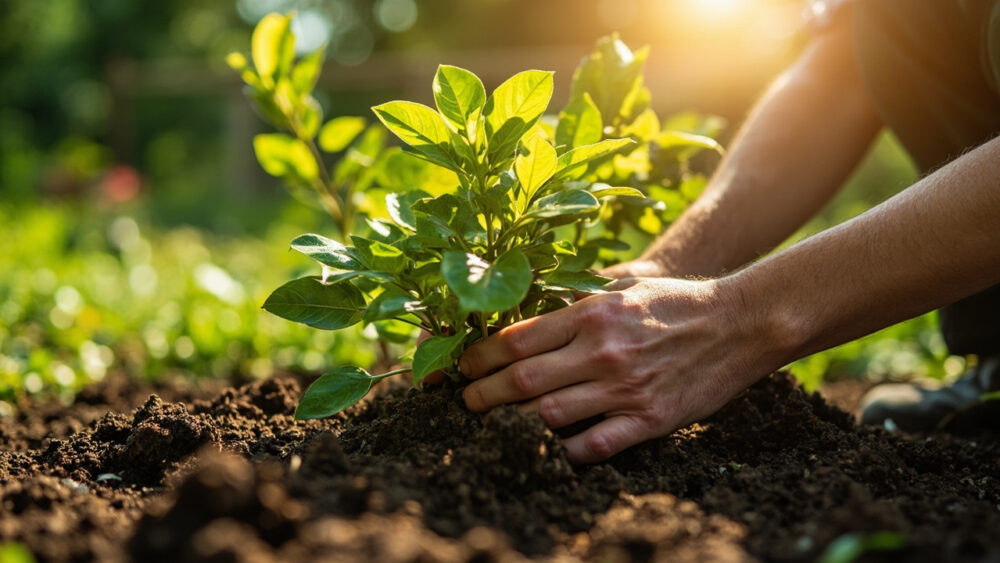
Dig the hole before you need it, not the day you bring the tree home. You want a hole roughly twice as wide as the root ball and no deeper, since lemons planted too deep are prone to trunk rot at the base.
Soil drainage is the single biggest predictor of a lemon tree’s long-term health. If water still sits in a test hole after an hour, either build a raised mound 12 to 18 inches high or plan on a large container instead, because lemons will not tolerate wet feet.
Space trees 10 to 15 feet apart for standard rootstock, or 6 to 10 feet for dwarf varieties, measured from trunk to trunk. Set the graft union, that visible knuckle low on the trunk, at least 2 inches above the final soil line.
For containers, start with one 15 to 20 gallons in size with drainage holes, using a fast-draining citrus or cactus mix rather than plain potting soil.
Once the hole is ready and the tree is hardened off, the actual planting takes fifteen minutes.
Region Notes Worth Knowing Before You Commit
In Florida and the Gulf Coast, humidity and rain mean drainage prep matters even more than frost timing, and fall planting often outperforms spring because the tree avoids establishing during the worst summer heat and thunderstorm deluges.
In coastal and inland Southern California and Arizona’s low desert, spring and fall both work, but inland desert growers should avoid planting right before a heat spike, since young roots cannot keep pace with 100°F-plus days.
Everywhere north of zone 9, stop thinking about a planting window in the ground at all and think in terms of a container schedule instead: move outside once nights hold above 50°F, bring back in before the first fall frost.
Wherever you garden, the same short list of facts decides whether this works.
Lemons at a Glance
- When to plant in ground: two to four weeks after your last frost, once nights stay above 50°F and soil at 6 inches feels warm, not cold.
- When to plant in containers: anytime spring through early summer, since you control the climate by moving the pot indoors before frost.
- Zones for outdoor, year-round growing: 9 through 11, with fall planting also viable in these zones.
- Spacing: 10 to 15 feet apart for standard rootstock, 6 to 10 feet for dwarf varieties.
- Planting depth: hole as deep as the root ball, twice as wide, graft union at least 2 inches above the soil line.
- Container size to start: 15 to 20 gallons, fast-draining citrus or cactus mix.
- Biggest early threat: not frost itself but sun stress from skipping the hardening-off period.
Get the soil warm and the drainage right, and the calendar date matters far less than people think.
When in doubt, wait one more week rather than one week too soon.