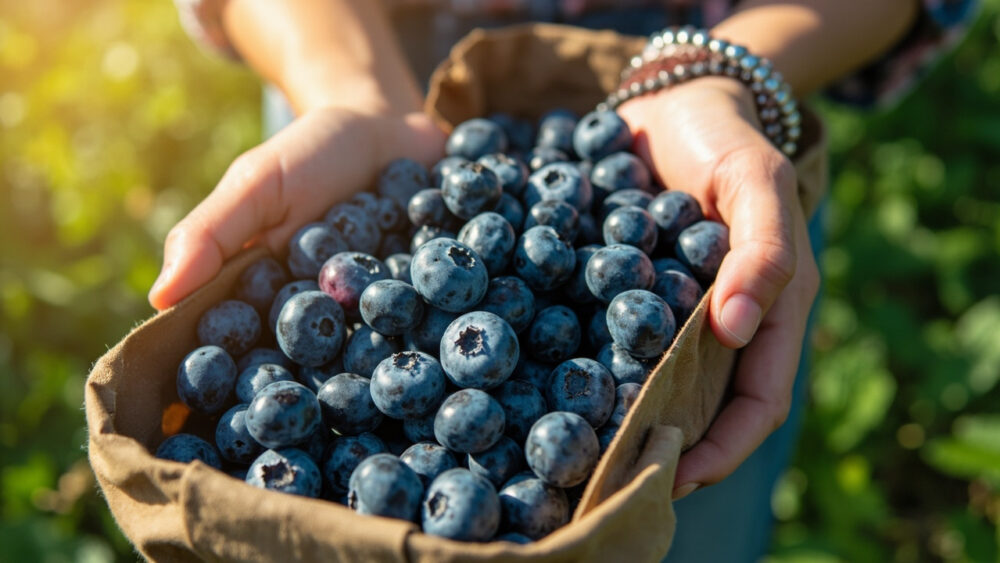
The right way to store blueberries is to leave them unwashed and dry in a shallow, uncovered or loosely covered container in the fridge, where they will hold for 10 to 14 days. Do not rinse them until you are ready to eat or bake with them. Rinse first and you can cut that window down to just a couple of days before mold shows up.
That is the short version, but most people who ask how to store blueberries are about to make one of a handful of mistakes that quietly wreck a good batch within 48 hours. There is a washing mistake almost everyone makes without realizing it, a moldy-berry cue people misread as “still fine, just soft,” and a freezer mistake that turns a bag of loose berries into one solid brick.
Stick with this and you’ll get the full breakdown: how long blueberries actually last on the counter, in the fridge, and in the freezer, the prep steps that matter more than people think, and the exact signs that tell you a berry is done. There’s also a save-able Blueberries at a Glance card at the very bottom you’ll want to screenshot before you put the carton away.
The Right Way to Store Fresh Blueberries
Start by sorting. Pick through the carton and pull out any berries that are shriveled, split, or already fuzzy. One bad berry touching good ones speeds up spoilage for the whole batch.
Do not wash the berries yet. Water on the skin invites mold, and blueberries already carry a light, dusty-looking natural coating called the bloom that actually helps protect them.
Line a shallow container, a wide bowl, or their original vented carton with a paper towel. Spread the berries in a single layer or no more than two layers deep. Depth matters here.
Cover loosely, not airtight. Blueberries need a little airflow or condensation builds up and softens them fast. Set the container toward the back of the fridge, where it is coldest and most stable, ideally around 32 to 36 F.
Next up: how long that actually buys you, and where people lose days without realizing it.
How Long Blueberries Actually Last, Method by Method
On the counter, blueberries hold up for maybe a day, sometimes less in a warm kitchen. Room temperature is really just a holding zone before you eat them or move them to the fridge.
In the fridge, unwashed and dry, expect 10 to 14 days from fresh, plump berries. Berries that were already a few days old at purchase will run shorter, closer to a week.
Washed and stored wet, that window collapses to 2 to 4 days before soft spots and mold start showing up.
In the freezer, done right, blueberries keep 8 to 12 months with barely any quality loss. Texture softens once thawed, which is fine for baking and smoothies, less fine if you wanted them for snacking whole.
Freezing is where most of the real mistakes happen, and that is worth its own section.
The Prep Step Everyone Gets Backward
Here is the mistake almost everyone makes: they wash the berries right after buying them, thinking clean equals fresh. It is the opposite.
Washing early adds moisture that sits against the skin for days, softening berries and feeding mold long before you’re ready to eat them. Wash only the portion you’re about to use, right before you use it.
If you do wash a batch you plan to store, dry it aggressively. Rinse in a colander, then spread the berries on a clean towel or paper towels and let them air dry fully, 15 to 20 minutes, patting gently. Any lingering surface moisture going into the fridge or freezer undoes the whole effort.
For freezing specifically, that dry-before-you-freeze step is not optional, and skipping it causes the next problem entirely.
Freezing Blueberries Without Ending Up With One Giant Clump
The freezer mistake that ruins convenience is dumping wet or damp berries straight into a bag. They freeze together into a single brick, and then you’re chipping off a chunk with a knife instead of pouring out a handful.
The fix is a flash freeze. Wash if you want to, dry thoroughly, then spread the berries in a single layer on a baking sheet lined with parchment. Freeze uncovered for 1 to 2 hours until each berry is solid on its own.
Only then transfer them to a freezer bag or airtight container, pressing out excess air. Label with the date. Frozen this way, they stay loose and scoopable for 8 to 12 months.
Skip the flash freeze and you’ll still have edible berries, just a frustrating mass of them.
Knowing how long they last is only half the job, the other half is catching the point where they’ve actually turned.
The Sign Everyone Misreads as “Still Fine”
If you assumed soft, mushy blueberries just mean slightly overripe, that guess is what leads people to eat berries well past the point they should have been tossed. Softness alone is a texture change, not necessarily spoilage, but it is almost always the first warning sign, not something to ignore.
The real signs a blueberry has turned are visual and textural together: white or gray fuzz on the skin, a sour or fermented smell instead of the normal sweet-tart scent, leaking juice that stains the container, or a collapsed, wrinkled skin that feels slimy rather than just soft.
One moldy berry can pass mold spores to berries touching it even if they look clean. When you spot fuzz, remove that berry and anything within direct contact, then check the rest closely before deciding the batch is salvageable.
When in real doubt, especially with any sour smell, toss the batch rather than pick around it.
Most spoiled batches, though, were not doomed by time. They were doomed by one of a few avoidable habits.
The Mistakes That Ruin a Batch Early
- Washing too early: introduces moisture that speeds up mold well before you’re ready to eat the berries.
- Storing in a deep, crowded container: berries at the bottom get crushed and bruised, and bruised fruit spoils faster than the rest.
- Sealing the container airtight while damp: traps humidity against the skins and accelerates softening.
- Skipping the sort: one moldy or split berry left in the batch contaminates its neighbors within a day or two.
- Freezing without the flash-freeze step: berries clump into a solid mass instead of staying loose for easy scooping.
- Keeping them on the counter “to ripen more”: blueberries don’t ripen further once picked, they only soften and decline.
Avoid these six and almost any storage method will get you close to the full window blueberries are capable of.
Blueberries at a Glance
- Best storage method: unwashed, dry, in a shallow container with loose airflow, kept toward the back of the fridge.
- Fridge life: 10 to 14 days unwashed, only 2 to 4 days if washed and stored wet.
- Counter life: about 1 day, treat it as a holding spot only, not real storage.
- Freezer life: 8 to 12 months, provided you flash freeze on a tray before bagging.
- Wash timing: right before eating or using, never right after buying.
- Signs it’s turned: white or gray fuzz, sour smell, slimy or leaking skin, collapsed texture.
- Biggest mistake: washing early and sealing the container airtight while any moisture remains on the skins.
Dry, loose, and cold is the whole secret, everything else is just protecting that setup.
Get that part right and a carton of blueberries will outlast most people’s expectations by a full week or more.