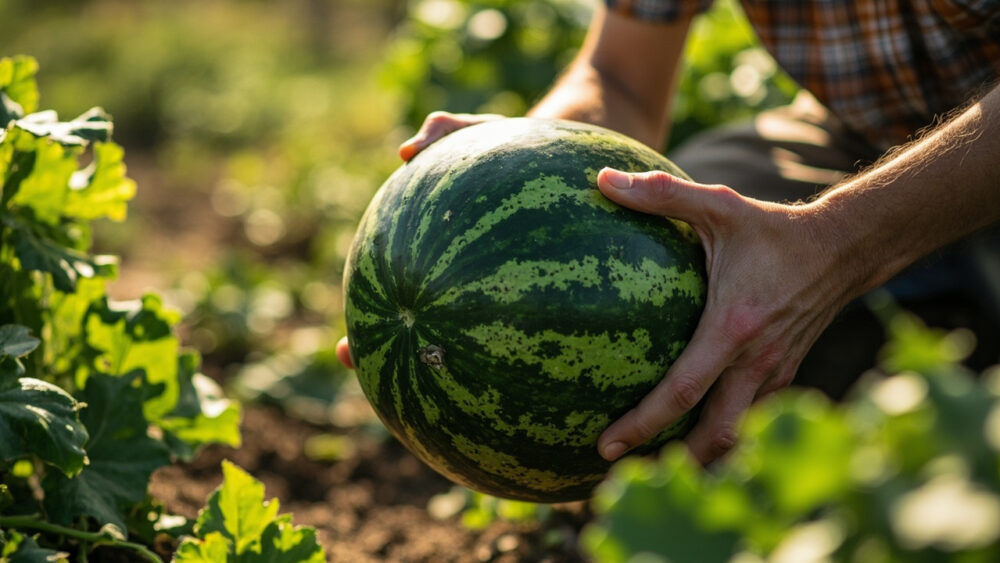
A whole, uncut watermelon keeps best at room temperature, not in the fridge. Sit it on the counter or in a cool pantry, out of direct sun, and it holds for 7 to 10 days, sometimes two weeks if the rind is thick and unblemished. Once you cut into it, the clock speeds up fast: cut watermelon needs to go into the fridge in an airtight container and gets eaten within 3 to 5 days.
That part is simple. Where people mess up how to store watermelon is everything around it: whether to refrigerate a whole melon at all, how to handle the cut surface so it doesn’t turn slimy or sour, and how to tell the difference between watermelon that’s still fine and watermelon that’s quietly gone over.
There’s also a freezer question nobody expects to have, and a mistake with plastic wrap that ruins texture in a single afternoon. Stick around, because the save-able Watermelon at a Glance card at the bottom has every timing number in one place for your phone.
Storing a Whole, Uncut Watermelon
Leave it out. A whole watermelon is still a living fruit with an intact rind doing its job, and refrigeration below about 41°F for an extended stretch actually degrades its antioxidant content and can dull the flesh over time.
Room temperature, out of direct sun, is correct for the first week to ten days after harvest or purchase. A cool garage, mudroom, or pantry around 55 to 70°F is ideal.
If you know you won’t cut it for a while and want to slow things down, refrigerating a whole melon for the last 1 to 2 days before you plan to eat it is fine and makes it colder and crisper for serving. Just don’t park it in the fridge for two weeks straight.
Once you slice it, the storage rules change completely.
Storing Cut Watermelon (This Is Where It Actually Goes Wrong)
Cut watermelon is mostly water and sugar sitting exposed to air, and that’s a fast track to mushy texture and off flavors. Get it into the fridge within two hours of cutting, sooner if your kitchen is warm.
Cube it or slice it, pack it into a shallow airtight container, and press a layer of plastic wrap or a lid directly against the cut surfaces if you can. Less air contact means less moisture loss and less flavor pickup from other food in the fridge.
Stored this way, cut watermelon is good for 3 to 5 days. After that it softens, weeps more liquid into the container, and the flavor turns flat.
If you assumed wrapping the whole cut melon tightly in plastic wrap is the safest move, that’s actually one of the mistakes that ruins texture fastest.
The Plastic Wrap Mistake Almost Everyone Makes
Wrapping a half or quarter melon rind-and-all in plastic wrap traps condensation against the flesh. That trapped moisture speeds up bacterial growth right at the cut surface, the opposite of what you’re trying to do.
The better move is to cut the flesh away from the rind first, cube or slice it, and store just the fruit in a sealed container. If you must store a half melon intact, pat the cut face dry, wrap it snugly, and use it within 2 to 3 days, not five.
Containers beat wrap almost every time because they control moisture instead of just sealing it in.
That same moisture problem is exactly why washing habits matter more than people think.
Prep That Makes or Breaks Storage Life
Wash the whole rind under running water and scrub it lightly before you ever cut into it, even if you’re not eating the rind. Your knife drags whatever is on that surface, dirt, garden soil, produce-bin residue, straight into the flesh as it passes through.
Do this before cutting, never after, since wet cut flesh stores worse.
Watermelon does not need blanching or curing the way some vegetables do. There’s no dormant skin to toughen and no enzyme activity you’re trying to shut down.
Curing does matter for winter squash and onions, but applying that logic to watermelon is a mismatch; it’s a fruit meant to be eaten fresh, not stored long-term in any cured state.
Skip curing, skip blanching, just wash, dry the outside, and cut clean.
Can You Freeze Watermelon? The Honest Answer
Yes, but the texture changes permanently. Watermelon is over 90 percent water, and freezing ruptures the cell walls, so thawed watermelon comes out soft, grainy, and watery, never crisp again.
Freeze it anyway if you’re using it for smoothies, sorbet, or frozen fruit pops, where texture doesn’t matter and only flavor does. Cube it, spread pieces on a tray so they freeze separately, then bag them once solid. Frozen this way it holds good flavor for 8 to 12 months.
Don’t freeze watermelon expecting to eat it thawed as fresh fruit later. That’s the follow-up disappointment most people run into after freezing a whole melon they couldn’t finish.
Knowing what frozen watermelon is good for is half the battle, the other half is recognizing when fresh watermelon has already turned.
Signs Watermelon Has Gone Bad
A whole melon that’s turned smells sour or fermented at the stem end, feels soft or mushy when you press the rind, or has developed dark, wet-looking, sunken spots. Any of those means toss it.
Cut watermelon that’s gone off gets a slimy film on the surface, smells sour instead of sweet, and often pools noticeably more liquid in the container than it did the day before. A little liquid is normal; a lot, combined with sliminess, is not.
If you assumed a slightly grainy or mealy texture means it’s spoiled, that’s usually just an overripe or past-peak melon, still safe, just less enjoyable. Sliminess and sour smell are the real red flags.
- Sour or fermented smell, especially at the stem end
- Soft, mushy, or sunken spots on the rind
- Slimy film on cut flesh
- Excess liquid pooling with a sour smell
- Grayish or dull, wet-looking flesh color instead of bright pink or red
When any of those show up, the fruit gets tossed, but most storage failures happen well before it ever gets that bad.
The Mistakes That Actually Ruin a Batch
Cutting it too early and letting it sit out. Cut watermelon left on the counter for more than two hours, especially in a warm kitchen, starts breeding bacteria fast. This is the single biggest mistake, more common than any storage-container error.
Storing it uncovered in the fridge. Exposed cut watermelon dries at the edges, absorbs onion and garlic smells from everything else in there, and spoils faster than covered fruit.
Refrigerating a whole melon for too long before cutting. Extended cold storage before you ever slice it dulls flavor and softens texture, so buy or harvest with a realistic timeline in mind.
Not checking the container daily. Liquid buildup is your early warning system. Drain it off when you see it and the fruit lasts longer.
Get those four things right and the rest of watermelon storage is genuinely easy.
Watermelon at a Glance
- Whole melon storage: room temperature, out of direct sun, 7 to 10 days, up to 2 weeks for thick-rind, unblemished fruit.
- Cut melon storage: airtight container in the fridge, 3 to 5 days.
- Refrigerate whole melon: only for the last 1 to 2 days before serving, not longer term.
- Freezing: texture goes soft and watery, fine for smoothies or sorbet, keeps 8 to 12 months.
- Prep: wash and scrub the rind before cutting, no blanching, no curing needed.
- Spoilage signs: sour smell, slimy cut surface, soft or sunken rind spots, excess liquid with off odor.
- Biggest mistake: leaving cut watermelon out more than 2 hours before refrigerating.
Whole melon on the counter, cut melon sealed in the fridge within two hours: that’s the entire system.
Everything else is just knowing the difference between overripe and actually spoiled.