The best time to plant boxwood is early fall, about six to eight weeks before your ground freezes, with early spring right after the soil thaws and works easily as your second-best window. Both give roots time to settle before summer heat or winter cold puts them under stress. Summer planting is possible but it’s the riskiest of the three, and it’s also the one most people default to because that’s when they’re at the nursery looking at healthy green shrubs.
Here’s what almost nobody tells you: the shrub can look perfectly fine for months after a bad planting date and still be doomed. Boxwood is slow enough that root failure doesn’t show up in the leaves until a full season later, when it’s too late to fix cheaply. There’s also a soil-temperature check most guides skip entirely, and a spacing mistake that looks fine for three years and then turns into a wall of tangled, dying interiors.
Stick with this and you’ll get the actual window for your yard, the prep that matters more than the date, and a save-able Boxwood at a Glance card at the bottom with everything worth keeping on your phone.
The Real Planting Window, Anchored to Frost and Soil
Fall planting works because boxwood roots keep growing even after top growth stops, as long as soil temperature stays above roughly 45°F. That gives you a stretch that starts once summer heat breaks and runs until about six weeks before your ground typically freezes solid. In most temperate regions that’s a window somewhere between early September and mid October.
Spring planting opens once the soil is workable, not once the calendar says spring. Wait until you can dig a hole without hitting a frozen or soupy mess, usually a few weeks after your last hard frost. Planting into cold, waterlogged soil stalls roots before they start.
Both windows beat the deep freeze and the deep heat on either side of them.
How to Tell Your Actual Window, Not the Calendar’s
Forget the date on the tag. Two checks tell you more than any calendar.
- Soil temperature: push a soil thermometer 4 inches down. Plant when it reads between 45°F and 75°F, spring or fall.
- Soil texture: grab a handful from planting depth. It should crumble loosely, not run through your fingers like dust and not clump into mud.
If you’re planting in fall, count backward from your area’s average first hard freeze and stop six weeks before it. That buffer is what separates a boxwood with established roots from one still trying to root when the ground locks up.
Your soil thermometer just told you more than the nursery tag ever will.
What Happens If You Plant Too Early or Too Late
If you guessed that planting too early just means a slightly slower start, that guess is what kills most of these shrubs. Too early, meaning mid summer in full heat, means the plant is trying to establish roots while also fighting transpiration stress from heat and sun. It often looks fine through August, then drops leaves and browns out the following winter when it had no root reserve to draw on.
Too late, meaning within a few weeks of your first hard freeze, means the roots never anchor before the ground freezes. The shrub sits loose all winter, gets heaved by frost cycles, and desiccates in cold wind because it can’t pull water from soil it never rooted into. This is the damage that shows up as bronze, scorched foliage in late winter, and by then the root system is usually too far gone to save with fertilizer or extra water.
Both mistakes are avoidable, but neither is fixable once the shrub is in the ground and the season has moved past you.
The Prep That Matters More Than the Date
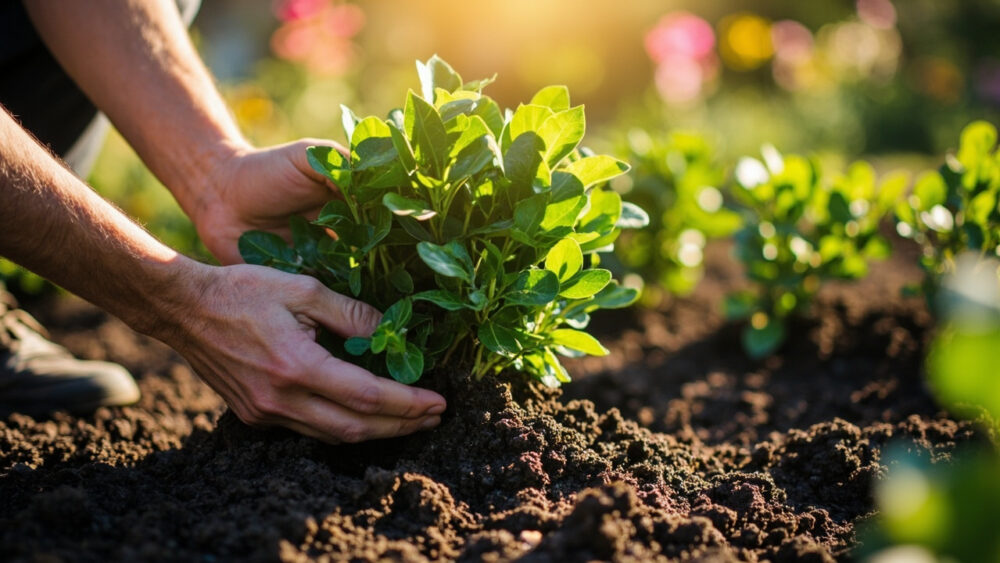
Getting the calendar right doesn’t help if the hole is wrong. Dig the hole wide, not deep: two to three times the width of the root ball, but no deeper than the root ball itself. Boxwood roots are shallow and wide, and a too-deep hole buries the root crown, which slowly suffocates the plant over a year or two.
Amend for drainage, not richness. Boxwood tolerates average soil fine but hates wet feet, so if your yard holds water after rain, work in some compost and consider raising the planting area slightly rather than digging a bowl that collects runoff.
Space plants 2 to 3 feet apart for a hedge, closer for a tight formal line, wider if you want individual specimens with visible shape. Crowded boxwood looks great for the first few years and then develops dead, airless interiors that invite disease, which is the spacing mistake that doesn’t show its cost until it’s expensive to fix.
Get the hole and spacing right and the calendar date becomes the easy part.
Zone and Region Notes Worth Knowing
Boxwood is reliably hardy from about USDA zone 5 through 9, though which cultivar matters more the colder you go. In zones 5 and 6, favor fall planting only if you can hit that six-week buffer comfortably; if your fall is short or your first freeze is unpredictable, shift to spring planting instead and skip the gamble entirely.
In warmer zones, 7 through 9, fall is genuinely the better window because it avoids the brutal combination of new roots and summer heat. Gulf Coast and similar humid, hot-summer regions should treat summer planting as a last resort, not a convenience, since heat and humidity together stress new roots hard and also raise disease pressure.
Wherever you garden, winter wind exposure matters as much as zone number, since wind desiccation is often harder on new boxwood than cold itself.
Once you know your zone’s tendency, the last thing worth doing is locking in the specifics before you dig.
Boxwood at a Glance
- When to plant: early fall, six to eight weeks before first hard freeze, or early spring once soil is workable and above 45°F.
- Soil temperature target: between 45°F and 75°F at 4 inches deep, checked with a basic soil thermometer.
- Hole size: two to three times the width of the root ball, same depth as the root ball, never deeper.
- Spacing: 2 to 3 feet apart for hedging, wider for standalone specimen plants.
- Hardiness range: USDA zones 5 through 9, colder zones should favor spring over a risky short fall.
- Worst time to plant: peak summer heat or within six weeks of your first hard freeze.
- First-year care: consistent watering through the first growing season, mulch 2 to 3 inches deep, kept off the stem itself.
Get the soil temperature and the hole right, and the calendar date takes care of itself.
Everything else with boxwood is patience, this part is just physics.