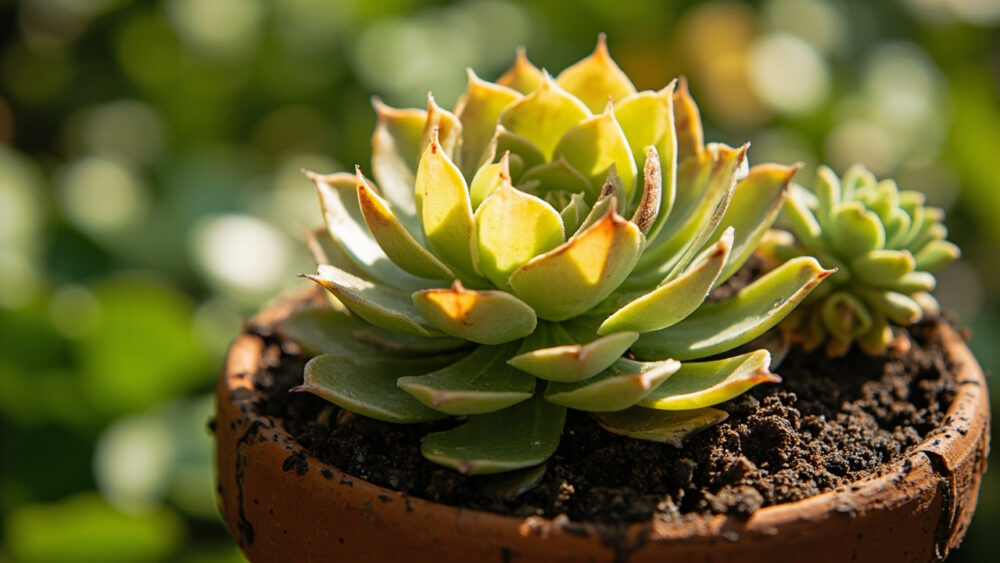
An overwatered aeonium almost always shows it first at the base: lower leaves turn translucent, mushy, and yellow-brown, and the rosette starts to feel loose or floppy on its stem instead of firm. The fix starts immediately: stop watering, pull the plant from wet soil or a soggy pot, let it dry out completely, and only resume once the top two inches of soil are bone dry to the touch. If the stem itself is soft and dark, that is a different, more serious problem than simply cutting back on the hose.
Here is the twist most people get backwards. They see mushy leaves and assume the plant is thirsty, so they water more, which is exactly the mistake that finishes the job. Overwatering and underwatering can look confusingly similar from three feet away, but they feel completely different up close, and there is one specific tell on the leaf that separates them every time.
You are also probably wondering if this plant is salvageable or if you should just start over with a cutting. The honest answer depends entirely on where the damage is, and I will walk you through exactly how to tell. Stick around for the two-minute diagnosis checklist at the bottom, it is the same sequence I run through on my own aeoniums before I decide whether to repot, prune, or propagate and move on.
What’s Actually Causing It, Ranked by Likelihood
1. Wrong soil holding water too long
This is the number one cause, by a wide margin. Aeoniums are succulents but they are not desert cacti, so they still need soil that drains fast, and straight potting soil or garden soil stays wet for days.
Confirm it: stick a finger two inches into the soil 24 hours after watering. If it is still damp, your mix is the problem.
Fix it: repot into a cactus or succulent mix cut with an equal part of perlite or pumice. Water only when the soil is fully dry.
That fixes the medium, but the pot itself can undo all of it.
2. No drainage hole, or a pot that’s too big
A decorative pot with no drainage hole traps every drop at the bottom, and oversized pots hold far more moisture than a rosette’s small root system can use before it turns sour.
Confirm it: lift the pot. If it is heavy and you can’t remember the last time water ran out the bottom, or there is no bottom hole at all, this is likely your culprit.
Fix it: repot into a container with drainage that is only a size or two larger than the root ball, terracotta if you can, since it wicks moisture out through the walls.
Even the right pot and soil won’t save a plant on the wrong schedule.
3. Watering on a calendar instead of by feel
Watering every Sunday regardless of conditions is the most common habit that quietly overwaters aeoniums, especially in cooler months when they use far less water.
Confirm it: think back. Did you water because the soil was dry, or because it was “time”?
Fix it: water only when soil is dry at least an inch or two down, and stretch intervals in fall and winter when growth slows.
Even a good schedule can fail if the season itself is working against you.
4. Low light slowing the plant down while watering stays the same
In dim conditions aeoniums stretch, grow slowly, and use much less water, but if watering doesn’t slow down to match, the soil stays wet far longer than the plant can tolerate.
Confirm it: check the rosette shape. Stretched, loose, pale rosettes reaching for light plus consistently damp soil point here.
Fix it: move to brighter light, ideally bright indirect to a few hours of gentle direct sun, and cut watering frequency to match the slower growth.
Sometimes the cause isn’t habit or light at all, but a run of bad weather.
5. Cool, wet, humid stretches with no drying-out window
Aeoniums actually grow through cool weather and can handle winter rain in mild climates, but a long stretch of overcast, humid, chilly days without any real drying period lets rot set in even without you touching the watering can.
Confirm it: has the soil stayed damp for a week or more from rain or humidity alone, with no sun or airflow to dry it?
Fix it: move potted plants under cover during extended wet spells and improve airflow with a fan or wider plant spacing.
All of this matters more once you know exactly where to look on the plant itself.
How to Tell the Causes Apart
Where the damage starts is the biggest clue. Root and soil problems show up as mushy, discolored lower leaves first, often with the whole rosette loosening on the stem.
Light-related overwatering shows a stretched, pale rosette alongside the wet-leaf symptoms, not just soggy leaves alone.
Environmental rot from a cold wet spell often hits several plants in the same tray or bed at once, not just one.
Check whether it’s isolated to one plant or spread across several before you diagnose.
Will It Recover?
If only the lowest one or two leaves are affected and the stem and center rosette are still firm, the outlook is good. Remove the mushy leaves, let the plant dry out, and it typically bounces back within a few weeks.
If the stem is soft, dark, or smells sour, that tissue is not coming back. At that point your best move is to cut the healthy rosette off above the rot, let the cut end callus over for two to three days, and root it as a fresh cutting.
If the entire rosette has gone translucent and collapsed, it’s honestly time to cut your losses on that specific plant and start over from a cutting or offset if any healthy tissue remains anywhere on it.
Knowing the prognosis is one thing, stopping the repeat is another.
How to Keep It From Happening Again
Almost every repeat case comes down to the same habit: watering on a schedule instead of checking the soil. Break that habit and most of the risk disappears.
Use a fast-draining mix every time you repot, and never reuse old, compacted potting soil for succulents.
Always choose pots with drainage holes, sized close to the root ball rather than roomy for future growth.
Water deeply but infrequently, letting soil dry out fully between waterings, and cut back hard in cooler, low-light months.
Give the plant bright light so it grows at a normal pace and actually uses the water you give it.
Get those five habits right and overwatering stops being a recurring problem instead of a one-time scare.
Diagnosis Checklist
- Touch the soil two inches down: if damp more than a day after watering, suspect the soil mix first.
- Check for a drainage hole: if there isn’t one, that alone can explain everything.
- Squeeze the lowest leaves: mushy and translucent means overwatering, shriveled and dry means underwatering.
- Press the main stem gently: firm means fixable, soft or dark means that section is not recoverable.
- Look at rosette shape: stretched and pale points to low light making overwatering worse.
- Check nearby plants: several affected at once points to weather or humidity, not your watering hand.
- Smell the soil near the base: a sour or rotten smell confirms advanced rot, act today.
- Decide based on the stem: firm stem, trim mushy leaves and let dry; soft stem, cut and reroot the healthy top.
Run through that list once and you will know exactly which fix applies to your plant, not a generic one.
Aeoniums forgive a lot, but soggy roots and patience for drying out are non-negotiable.