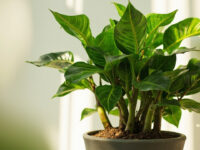
Growing monstera comes down to four things: bright indirect light, a chunky fast-draining soil, water only when the top few inches dry out, and something sturdy for it to climb once it starts throwing out those big split leaves. Get those right and a monstera deliciosa will hand you new leaves every four to six weeks through spring and summer. Skip any one of them and you get a plant that sits there sulking for a year, which is exactly what happens to most people who try this.
How to grow monstera successfully is less about a green thumb and more about breaking three specific habits that feel like good plant care but actually stall growth. There’s also a sign on the leaves that almost everyone misreads as a watering problem when it’s actually something else entirely. And the fenestrations, those dramatic splits everyone buys the plant for, don’t show up on the schedule you’d expect.
Stick with me through the sections below and you’ll get the real timeline, the mistake that stalls most monsteras before they ever climb, and the honest answer on when yours will actually start splitting. Save-able specifics are waiting in the Monstera at a Glance card at the very bottom.
When to Start or Repot a Monstera
Monstera is a tropical houseplant, so there’s no frost date to work around indoors, but timing still matters. The best window to pot up a new plant or repot an overgrown one is early spring through midsummer, when the plant is actively growing and can recover fast from root disturbance.
Outdoors, monstera only survives year-round in USDA zones 10 through 12. Everywhere else it’s a houseplant that can summer outside once nighttime temperatures stay above 60°F.
Repotting in late fall or winter, when growth naturally slows, often leaves the plant sitting in damp soil with no active roots to absorb the moisture. That’s how root rot starts.
Get the timing right and the next decision, where you actually put the pot, matters just as much.
Choosing the Spot and Mixing the Right Soil
Monstera wants bright, indirect lightclose to an east or west window, or a few feet back from a south window with the light filtered by a curtain. Direct afternoon sun scorches the leaves; deep shade gets you a plant that survives but never fills out or splits.
If you assumed more sun always means more growth, that’s the guess that burns leaf edges brown and crispy within days. Monstera wants light without direct rays hitting the leaf surface.
Soil is where most bagged potting mixes fail this plant. Straight potting soil holds too much water around the roots. Mix in perlite, orchid bark, or coarse chunks at roughly one part amendment to two parts potting soil, so water drains through in seconds, not minutes.
A pot with a drainage hole is non-negotiable here, decorative pots without one are a rot sentence.
Once the spot and soil are sorted, the actual planting takes five minutes.
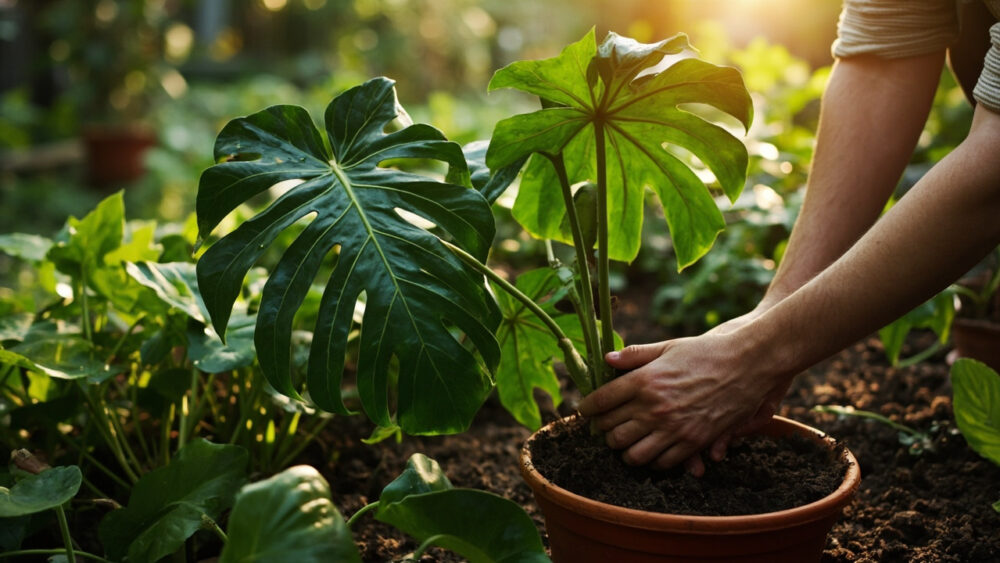
Planting a Monstera Step by Step
1. Pick a pot with room to grow
Choose a container 2 inches wider in diameter than the current root ball, no more. Oversized pots hold excess soil moisture the roots can’t use yet.
2. Layer in fresh mix
Add a few inches of your bark-and-perlite mix to the bottom before setting the plant in, so roots aren’t sitting directly on the drainage hole.
3. Set the depth
Plant it at the same soil depth it was growing at before. Burying the stem deeper invites rot at the base.
4. Backfill and firm gently
Fill in around the root ball, pressing just enough to remove big air pockets, not so much you compact the mix.
5. Water it in
Water thoroughly right after planting until it runs from the drainage hole, then let the top few inches dry before watering again.
With the plant in the ground, the real work, and the real mistakes, start with the watering can.
Watering and Feeding Through the Growing Season
Water monstera when the top 2 to 3 inches of soil feel dry to a finger poked in, which usually lands somewhere between every 7 and 14 days depending on light, pot size, and season. Water deeply until it drains out the bottom, then stop.
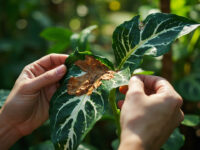
Yellow lower leaves get blamed on underwatering constantly, and that guess kills more monsteras than drought ever does. In most cases yellowing plus a heavy, wet-feeling pot means the roots are drowning, not thirsty.
Check the soil before you reach for the watering can every time.
Feed with a balanced liquid houseplant fertilizer diluted to about half strength, every 4 to 6 weeks from spring through early fall. Skip feeding in winter when growth slows on its own; fertilizer on a dormant plant just builds up salts in the soil.
Humidity above 50 percent and a wipe-down of dusty leaves every few weeks keeps growth pushing steadily.
Even with good watering habits, a few problems show up on almost every monstera sooner or later.
The Problems That Actually Show Up
Brown, crispy leaf edges usually mean too much direct sun or air that’s too dry, especially near heating vents. Move the plant back from the window a foot or two and see if new growth comes in clean.
No new fenestrationsmeaning the leaves stay solid and heart-shaped with no splits, is almost always a light problem, not a fertilizer problem. Mature, split leaves only form under genuinely bright light. In low light the plant just keeps producing smaller, unsplit leaves indefinitely.
Yellow leaves with mushy, dark stems point to root rot from overwatering or poor drainage. Pull the plant, trim any black or mushy roots with clean scissors, and repot into fresh dry mix.
Spider mites and scale both show up as fine webbing or small bumps along stems and leaf undersides. Wipe leaves down regularly and treat with insecticidal soap or neem, following the label exactly, catching it early is what keeps it from spreading to nearby plants.
Monstera is mildly toxic to pets and people if chewed, due to calcium oxalate crystals that cause mouth irritation, drooling, and swelling. If a pet or child chews on one, call a vet or poison control rather than waiting to see what happens.
Handle those four issues and the plant left standing is one that’s finally ready to climb and split the way you pictured it.
When a Monstera Actually Matures and Splits
There’s no single harvest moment with monstera, the real milestone is fenestration, when new leaves start splitting into the deep lobes the plant is known for. That typically starts once the plant is 2 to 3 years old and has put out roughly 8 to 10 leaves, not on any fixed calendar.
Younger leaves stay solid. Each new leaf usually splits a little more than the last one once the plant matures, given consistent bright light.
A moss pole or trellis pushed into the pot once the plant starts vining encourages larger, more deeply split leaves, because in nature monstera climbs trees to reach better light. Tie the aerial roots loosely to the pole as new growth appears.
Indoors, monstera essentially never flowers, that requires the growing conditions of its native tropical forest. The leaves themselves are the entire reward, and they keep getting better for years.
Everything above works together, and here’s the short version to keep on your phone.
Monstera at a Glance
- When to plant or repot: early spring through midsummer, during active growth.
- Light: bright, indirect light, no direct afternoon sun on the leaves.
- Soil: potting mix cut with perlite or bark, roughly two parts soil to one part amendment, in a pot with drainage.
- Watering: when the top 2 to 3 inches of soil are dry, roughly every 7 to 14 days.
- Feeding: balanced liquid fertilizer at half strength every 4 to 6 weeks, spring through early fall only.
- Support: moss pole or trellis once it starts vining, for bigger, more split leaves.
- Maturity: fenestrated leaves typically begin around 2 to 3 years old, given consistently bright light.
Light is the lever that fixes almost everything else on this plant.
Get that right, keep your hands out of the watering can until the soil actually asks for it, and the rest takes care of itself.