Most potatoes take 70 to 120 days from planting to harvest, depending on whether you’re growing an early, mid-season, or late variety. If you just want a handful of small “new potatoes” for dinner, you can start sneaking them out at 60 days. If you want full-size storage potatoes with tough skins that keep all winter, plan on the full stretch, sometimes closer to 4 months.
That range is honest, but it hides the part most first-time growers get wrong: how long does it take to grow potatoes in your yard, in your soil, this season. Two people planting the same variety on the same day can harvest three weeks apart depending on soil temperature, water, and how they read the plant instead of the calendar.
There’s also a mistake that costs people two to three weeks without them ever noticing it happened. Stick around, because the quick-reference card at the bottom lays out every stage with its timeframe so you can pin it to the fridge and stop guessing.
The Realistic Timeline, Start to Finish
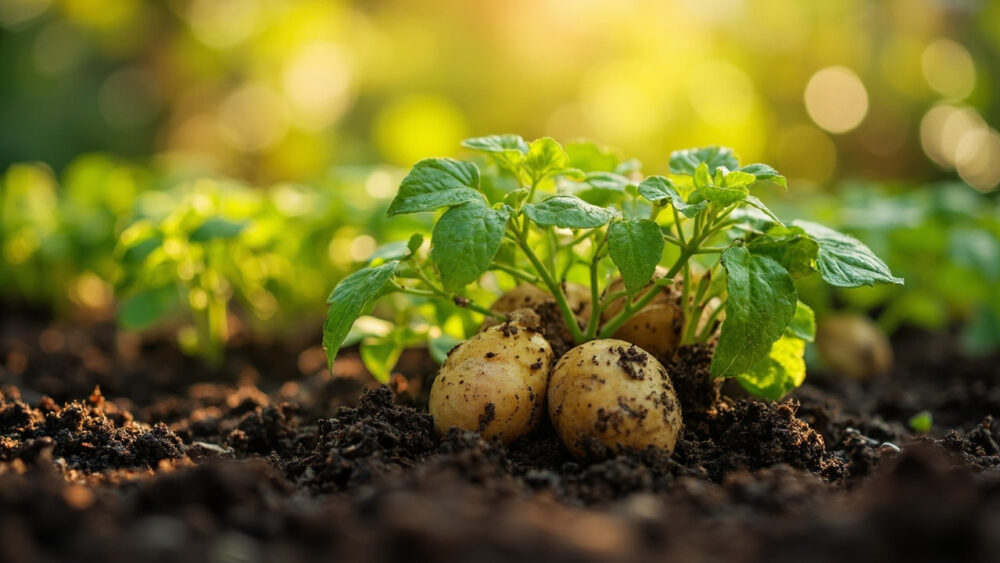
Count from the day you plant seed potatoes, not the day you buy them. Sprouts (called chits) take 1 to 2 weeks to emerge from the soil after planting, assuming soil temps are at least 45 to 50°F. From emergence, expect another 2 to 3 weeks of leafy top growth before flowering starts.
Flowering signals tuber formation is underway, and from there it’s 6 to 10 more weeks depending on variety. Early varieties like Norland or Yukon Gold finish around 70 to 90 days total. Late varieties like Kennebec or russets run 100 to 120 days.
Next up: the variables that actually decide which end of that range you land on.
What Actually Controls the Speed
Soil temperature matters more than air temperature. Potatoes planted in cold, wet soil just sit there. Nothing rots them faster than soggy ground below 45°F, and nothing stalls them like a cold snap right after planting.
Variety is the single biggest lever you control. Early varieties are bred to bulk up fast and get out of the ground before summer heat or disease pressure builds. Late varieties trade speed for size and storage life.
Water and nitrogen come next. Too little water during tuber set gives you small, stunted potatoes on schedule. Too much nitrogen gives you gorgeous foliage and a late, disappointing harvest, because the plant keeps investing in leaves instead of tubers.
Here’s the part that trips people up even when they do everything else right.
The Mistake That Adds Two to Three Weeks
Planting too early in cold, wet soil doesn’t save time, it costs time. Seed pieces sit dormant or rot slightly at the cut edges before they finally sprout, and you lose more days waiting than you would have by planting two weeks later into warm soil.
The fix is simple: wait until soil temperature at planting depth (about 4 inches down) holds steady at 45°F or warmer, which for most of the country lines up with 2 to 3 weeks before your last spring frost date. A soil thermometer costs little and removes all the guesswork.
If you already planted early and nothing has emerged after 3 weeks, don’t panic and don’t replant yet. Dig gently near one seed piece and check for softness or rot before assuming failure.
Once sprouts are up, the plant moves through a few visible stages worth recognizing.
Stage by Stage: What You’ll Actually See
- Weeks 1 to 2: nothing visible above ground, sprouts forming underground.
- Weeks 2 to 5: leafy top growth, this is when you hill up soil around the stems.
- Weeks 5 to 8: flowering begins, tubers start forming beneath the surface.
- Weeks 8 to 12: tubers bulk up in size, this is the longest and most important stretch.
- Final 1 to 3 weeks: foliage yellows and dies back, skins toughen for storage.
Read the plant, not the calendar. If your neighbor’s potatoes flowered two weeks before yours, that’s normal variation, not a sign of failure.
Now, the part everyone actually wants: how to get potatoes faster without wrecking the harvest.
How to Legitimately Speed Things Up
Pre-sprouting (chitting) seed potatoes indoors for 2 to 3 weeks before planting is the one trick that genuinely works. Set seed potatoes in a bright, cool spot until they grow half-inch sprouts, then plant. This can shave a week or two off total time to harvest because the plant skips the slow underground start.
Planting into soil that’s already warmed, using black plastic mulch or raised beds that heat up faster, also helps meaningfully. Consistent moisture during tuber bulking (weeks 8 to 12) speeds size gain more than almost anything else you can do.
What doesn’t work: extra nitrogen fertilizer late in the season, cutting seed pieces smaller to “stretch” your supply, or digging early out of impatience. Extra nitrogen delays maturity. Small seed pieces produce weaker plants and smaller yields. Digging early just gives you less potato, not a faster potato.
So how do you know if a slow-looking plant is actually a problem?
Slow Is Normal, Stalled Is Not
A potato plant that’s simply taking its time isn’t a problem. Cool springs, cloudy stretches, and heavy clay soil all slow things down by a week or two without anything being wrong.
What’s actually concerning is a plant that stops growing entirely for more than 3 weeks with no flowering and no new leaves, especially paired with wilting despite wet soil. That combination usually points to root or tuber rot from waterlogged soil, and it’s often not recoverable for that plant.
Yellowing lower leaves late in the season, on the other hand, is completely normal and means harvest is near, not a sign of disease.
If you’re unsure which one you’re looking at, the quick reference below settles it fast.
Potatoes: Quick Reference
- Total time: 70 to 120 days from planting to harvest, depending on variety.
- New potatoes: ready in as few as 60 to 70 days, small and thin-skinned.
- Early varieties: Norland, Yukon Gold, ready in 70 to 90 days.
- Late varieties: Kennebec, russets, ready in 100 to 120 days.
- Plant when: soil at 4 inches deep is 45°F or warmer, roughly 2 to 3 weeks before last frost.
- Harvest signal: foliage yellows and dies back, skins feel set and don’t rub off easily.
- Speed it up: pre-sprout seed potatoes indoors 2 to 3 weeks before planting, keep soil consistently moist during tuber bulking.
Print that list, tape it near your seed bin, and you’ll stop counting days and start reading the plant instead.
That’s the whole timeline, no guessing required.