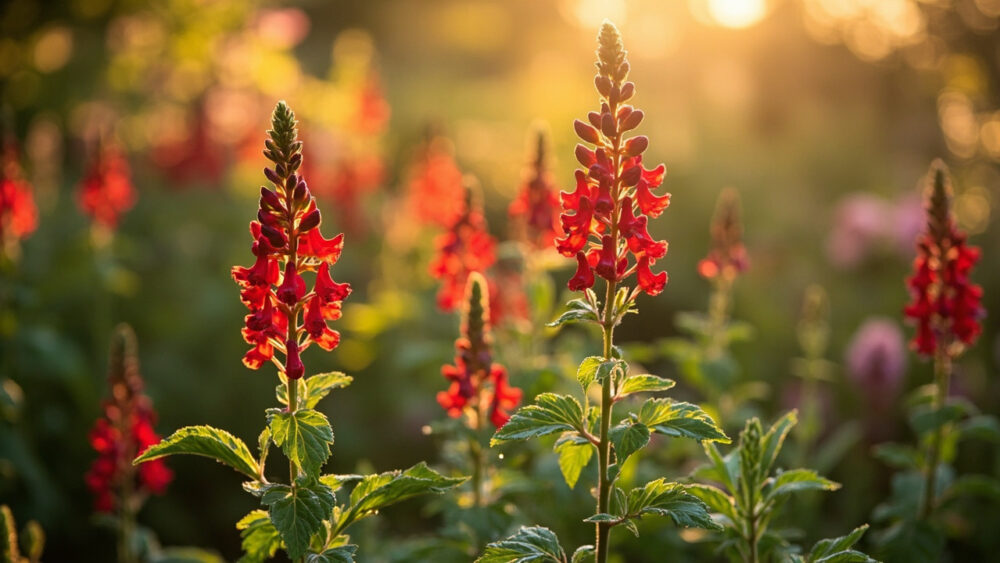
Cardinal flower (Lobelia cardinalis) blooms from mid to late summer into early fall, typically July through September, with the peak show usually landing in August. In warmer zones it can start as early as June and keep going into October. That is the honest range, but your actual bloom window depends on a few things that most articles skip over entirely.
The biggest one: whether your plant flowered last year at all, or whether this is its first season. First-year plants from seed often skip blooming completely, and that is not a failure, it is just how this plant grows.
Below you will also find the fix for the single most common reason established plants stop blooming mid-season, plus how deadheading changes the story here in a way that is different from most perennials. Stick around to the bottom for a saveable quick-reference card with the bloom window, the light and moisture needs, and the honest troubleshooting checklist all in one place.
The Bloom Window and How Long It Actually Lasts
A single cardinal flower spike blooms from the bottom up, opening a few flowers at a time over 4 to 6 weeks. That is the lifespan of one flower stalk, not the whole plant’s season.
Established, healthy clumps often send up multiple stalks that stagger their timing, which is why a good patch can look like it is blooming for two months or more rather than a few weeks.
If you planted this year, expect a shorter, later show, sometimes just a few weeks in early fall, since the plant is spending its first-year energy on roots.
Next season on the same plant almost always looks different, and here is why.
What Actually Controls When It Blooms
Cardinal flower is a short-lived perennial that responds hard to day length and temperature, not a fixed calendar date. Once nights start staying reliably above about 55°F and days are at their longest, the plant shifts from leafy growth into flowering mode.
Zone matters more than most people expect. In zone 8 or 9, bloom can start in June. In zone 4 or 5, you are often waiting until late July or August for the first color.
Soil moisture plays a supporting role too. This plant is native to streambanks and wet meadows, and consistently damp soil pushes bloom timing earlier and holds the show together longer than soil that dries out and stresses the plant into rushing or stalling.
That moisture requirement is also the key to getting more flowers, not just earlier ones.
How to Get More Blooms, and Bigger Ones
The single biggest lever is sun. Cardinal flower blooms heaviest in full sun to light shade, at least 4 to 6 hours of direct sun a day. In deep shade it survives and even flowers a little, but you will get thin, floppy stalks and half the color.
Water is the second lever, and it is non-negotiable. Let this plant dry out repeatedly during bud formation and it will abort flowers or bloom sparsely. Aim for soil that stays evenly moist, never bone dry, never standing in stagnant water.
A layer of mulch helps hold that moisture and keeps roots cool through summer heat, which matters more the farther south you garden.
Feeding is optional but effective: a light application of balanced fertilizer or compost in spring, when new growth first appears, gives you more stalks per clump by midsummer.
- Full sun to part sun, minimum 4 hours direct
- Consistently moist soil, never allowed to dry out for long
- Compost or light balanced fertilizer in spring
- Mulch to hold moisture and moderate soil temperature
- Division or fresh basal offsets every 2 to 3 years to keep clumps vigorous
If you are doing all of that and still not seeing flowers, the answer is almost never more fertilizer.
Why It Might Not Be Blooming
If you assumed a non-blooming cardinal flower just needs more food, that guess is usually wrong and can actually make things worse by pushing leafy growth at the expense of flowers.
The most common real cause is simply age and timing. First-year plants often put all their energy into establishing roots and skip flowering, or bloom late and lightly. That is normal, not a problem to fix.
The second most common cause is too much shade. If your plant has gotten shadier over the years as nearby trees or shrubs filled in, that alone can shut down flowering even in an otherwise healthy plant.
Drought stress during bud set is third. A few weeks of dry soil right when flower buds should be forming can cause the plant to abort them entirely, and you will not get a second chance that season.
Lastly, cardinal flower is genuinely short-lived, often just 2 to 4 years per individual plant, so an old clump that bloomed beautifully for years and then quit may simply be declining and due for division or replacement.
Once you know why it stalled, the next question is how to stretch the good weeks you do get.
Deadheading and Aftercare That Extends the Show
Deadheading spent flower spikes right after the bottom flowers fade encourages side shoots and secondary spikes, genuinely extending bloom time by several weeks in a lot of gardens.
Cut the spent stalk back to just above a set of healthy leaves rather than all the way to the ground, and new flowering side branches often follow within a couple of weeks.
Leave the very last flush of the season alone, though. Cardinal flower reseeds itself readily, and letting those final seed heads mature is often how you get a bigger, self-sustaining patch next year instead of a single aging clump.
That tradeoff, deadhead early for more flowers now versus let seed drop late for more plants next year, is worth deciding on purpose rather than by accident.
Cardinal Flowers: Quick Reference
- Bloom window: mid to late summer into early fall, typically July through September, earlier in warm zones and later in cool ones
- Individual spike duration: 4 to 6 weeks per stalk, blooming bottom to top
- First-year plants: often bloom late, lightly, or not at all while roots establish
- Light needs: full sun to light shade, at least 4 to 6 hours direct sun for best flowering
- Water needs: consistently moist soil, never allowed to dry out during bud formation
- To extend bloom: deadhead spent spikes above healthy leaves to push side shoots, but let the final flush go to seed
- Plant lifespan: typically 2 to 4 years per plant, so divide or let it reseed to keep a patch going
Give it sun, keep its feet wet, and cardinal flower will hold up its end of the bargain most summers.
The plant is telling you exactly what it needs, you just have to check soil moisture before you reach for fertilizer.