The short answer: plant sunflowers in North Carolina after your last frost date has passed and soil temperature has warmed to at least 55 to 60°F, which lands most of the state somewhere between mid-April in the eastern coastal plain and mid-to-late May in the mountains. Mountain gardeners in zone 6b can push into early June and still get a full bloom season. That window matters more than the calendar date because sunflower seed rots in cold wet soil faster than almost anything else you’ll plant this spring.
Here’s what trips people up. Most gardeners assume you can plant sunflowers the same week you plant tomatoes, and that guess is close but not exact, since sunflowers actually tolerate a touch more cold than tomato transplants do. Others assume a hot June planting is “too late,” when for many varieties it’s actually fine. And almost nobody realizes that the real threat to a North Carolina sunflower patch isn’t frost at all, it’s a wet spring that keeps soil cold and soggy for weeks after the air feels warm.
Stick around for the mistake that ruins the most plantings, how to read your own yard instead of a generic date, and the save-able Sunflowers at a Glance card at the bottom with everything worth keeping on your phone this weekend.
The Real Planting Window for North Carolina
North Carolina spans three very different last-frost timelines. The coastal plain (Wilmington, Greenville, most of the east) usually clears frost by early to mid April. The Piedmont (Raleigh, Charlotte, Greensboro) typically clears by mid to late April. The mountains (Asheville, Boone) often hold frost risk into mid May.
Sunflower seed germinates poorly below 55°F soil and barely at all below 50°F. Waiting for warm air isn’t enough, the soil itself needs to catch up, which usually takes one to two weeks after your last frost date passes.
That gives you a practical target: two weeks after your average last frost, once you’ve confirmed soil temperature with a simple soil thermometer pushed 2 inches down.
Your actual planting day depends on what the dirt is doing, not what the date on the seed packet says.
How to Read Your Own Yard Instead of Guessing
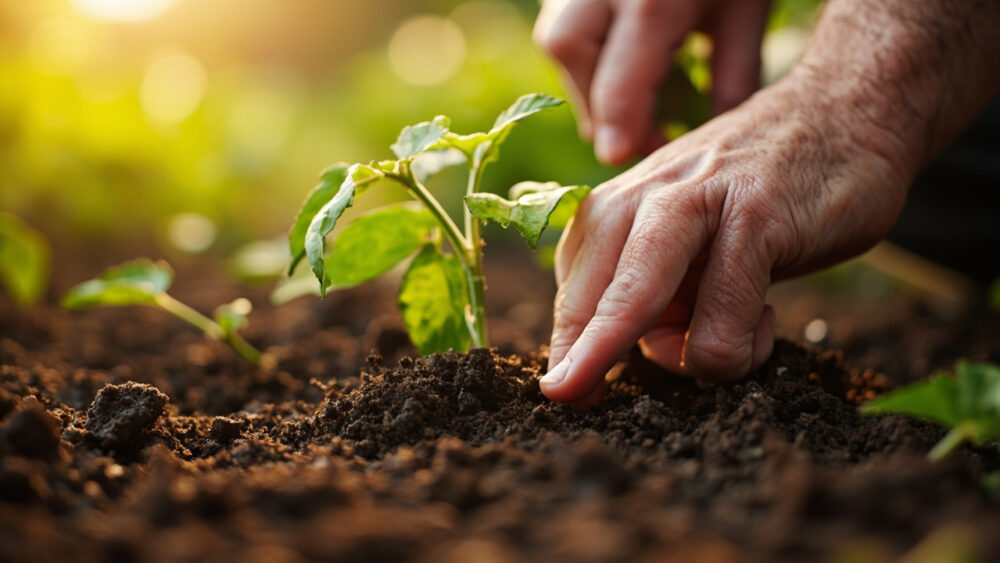
Forget the calendar for a minute and check three things where you actually intend to plant. First, grab a handful of soil from 2 inches down. It should feel like a wrung-out sponge, damp but not muddy, and it should crumble rather than clump into a cold, dense ball.
Second, check soil temperature directly. A cheap probe thermometer reading 60 to 65°F for three consecutive mornings is a green light almost anywhere in the state.
Third, look at what’s already growing. If your local dandelions and henbit are blooming and the ground has firmed up from winter mud, you’re usually within a week or two of safe sunflower planting.
If your soil still squelches underfoot or feels cold to the touch past your wrist, wait, no matter what the date says.
What Happens If You Plant Too Early, or Too Late
Plant too early, into cold wet soil, and the seed simply rots before it ever sends up a shoot. This is the single mistake that kills the most sunflower attempts in North Carolina, and it’s rarely diagnosed correctly. Gardeners assume birds or bad seed, when the real culprit was soil that never got past 50°F.
A late frost after emergence is a smaller worry than people expect. Young sunflower seedlings can shrug off a light frost down to around 30°F for a short stretch, though a hard freeze will still kill them.
Plant too late and the tradeoff is different: shorter plants, smaller heads, and a bloom that lands during the hottest, driest stretch of a Carolina summer, which stresses the plant during flowering. Most varieties still finish fine if you plant by late June in the Piedmont and coast, giving you 70 to 100 days before the first fall frost.
Late plantings aren’t ruined, they’re just a different, smaller version of the plant, and that’s worth knowing before you commit a whole bed to a July start.
Prep to Do Before the Window Opens
Sunflowers want full sun, at least 6 to 8 hours, and loose soil they can send a deep taproot through. Work compost into the bed a few weeks ahead if your soil is heavy clay, which describes a lot of Piedmont red clay.
Direct-sow rather than transplant. Sunflowers resent root disturbance, and transplants rarely outperform direct-seeded plants by the time bloom rolls around.
Plant seeds 1 to 1.5 inches deep, spaced 6 inches apart for small branching types, up to 12 to 18 inches apart for the big single-stem giants, in rows 18 to 24 inches apart. Thin to final spacing once seedlings have two true leaves.
Stage your bed now, because once the soil hits temperature, you want seed in the ground that same week, not two weeks later while you’re still amending.
Zone and Region Notes That Actually Change Your Date
North Carolina runs roughly zone 7b to 8a along the coast, 7a to 7b through the Piedmont, and 6a to 6b in the higher mountains. That range is wide enough that “when to plant” genuinely shifts by three to five weeks state to state.
Coastal and eastern Piedmont gardeners often get a bonus: a second sowing in early July for a fall bloom, since your frost-free season runs long.
Mountain gardeners should resist the urge to rush a May planting just because it’s warm in town. Cold air pools in valleys and on north-facing slopes well after the official last-frost date passes.
Wherever you garden, the same rule holds: watch the soil in your specific bed, not the average for your county.
Sunflowers at a Glance
- When to plant: two weeks after your last frost date, once soil hits 55 to 60°F, roughly mid April on the coast, late April in the Piedmont, mid May in the mountains.
- Soil temperature check: use a probe thermometer 2 inches deep, look for 60 to 65°F for several mornings in a row before sowing.
- Depth and spacing: sow 1 to 1.5 inches deep, 6 inches apart for branching types, 12 to 18 inches apart for giant single-stem types, rows 18 to 24 inches apart.
- Sun and soil: full sun, 6 to 8 hours minimum, loose well-drained soil, work in compost ahead of time if you have heavy clay.
- Biggest mistake to avoid: planting into cold, wet soil, which rots seed before it germinates, far more common than frost kill.
- Latest safe planting: by late June across most of the state, giving 70 to 100 days to mature before fall frost.
- Bonus window: coastal and eastern Piedmont gardeners can often sow a second round in early July for a fall bloom.
Get the soil right and the date takes care of itself.
Everything else about growing sunflowers is easy by comparison.