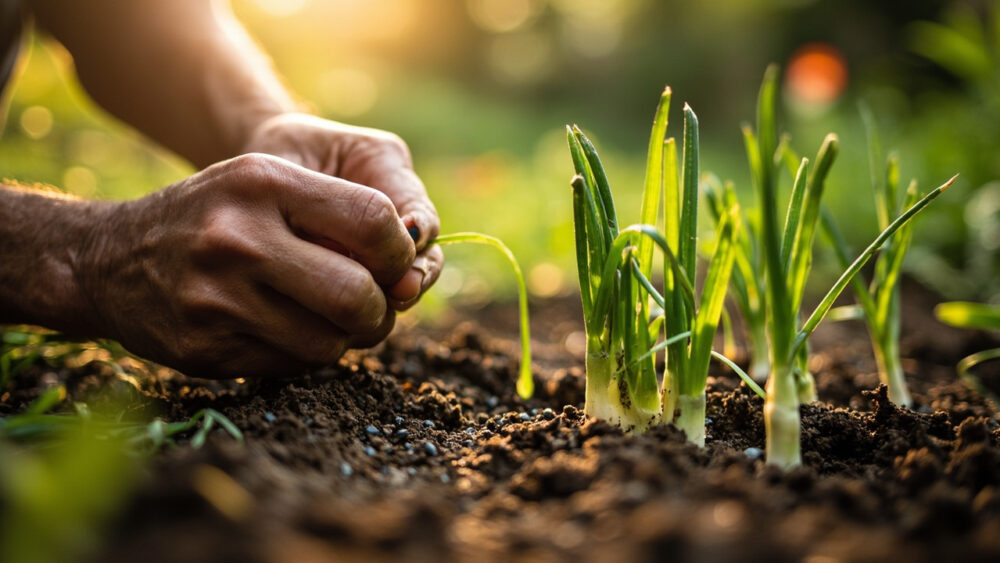
Growing green onions from seed comes down to this: sow them shallow, about a quarter inch deep, in cool soil around 50 to 70 F, and expect scallions ready to harvest in 60 to 80 days once the shoots reach pencil thickness. They are one of the easiest crops in the garden once you know the two or three details that trip people up. Get the timing and thinning right and you will have a steady, cut-and-come-again supply for months.
Here is where most attempts go sideways, though. It is not the sowing, it is what happens in the three weeks after, when the seedlings look like nothing but thin green threads and it is tempting to assume they failed or to drown them trying to help.
There is also a sign everyone misreads later in the season, when the tops start to bend over or fatten at the base, and it is easy to think that means trouble instead of what it actually means. And if you are wondering whether you should just buy sets or transplants instead, there is an honest answer to that too, further down. Stick with this and you will hit the save-able Green Onions at a Glance card at the very bottom, the kind of thing worth screenshotting before you head out to the garden.
When to Start Green Onion Seeds
Green onions are cold-tolerant, which gives you more flexibility than most vegetables. You can direct sow outdoors as early as 4 to 6 weeks before your last expected frost, as soon as the soil can be worked and isn’t waterlogged. They will tolerate a light frost once up, though a hard freeze on tiny seedlings can set them back.
If you want an earlier or more reliable start, especially in short-season climates, start seeds indoors 8 to 10 weeks before last frost and transplant out 2 to 3 weeks before that date. Indoor starts also let you get a jump on succession planting, since green onions mature fast and are worth sowing every 3 to 4 weeks for a continuous harvest.
Soil temperature matters more than the calendar date on your wall.
Once you know your window, the sowing itself is where precision actually pays off.
Sowing Green Onion Seeds Step by Step
Depth and Spacing
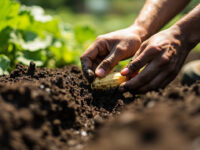
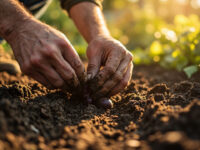
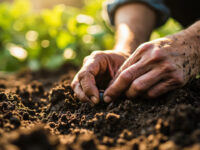
Sow seeds about a quarter inch deep, no deeper. Onion family seeds are small and don’t have the stored energy to push up through heavy cover.
Space seeds roughly half an inch apart in rows 4 to 6 inches apart if direct sowing, or scatter a pinch of seeds per cell if starting indoors in trays. You will thin later, so slightly dense is fine.
Medium and Moisture
Use a loose, well-draining seed-starting mix indoors, or fine, raked garden soil outdoors free of clumps and crusting. Keep the top inch consistently moist but never soggy. A crusted, dry surface is the single most common reason direct-sown onion seed fails to come up evenly.
Temperature and Light
Germination happens best between 50 and 70 F. Onion seed will germinate down into the 40s, just slowly, and stalls out above roughly 75 F.
Light isn’t required to germinate, but seedlings need strong light immediately after emergence, ideally a sunny window supplemented by a grow light held just a couple inches above the tops, or full sun outdoors.
Get the depth and moisture right, and the next test of your patience is the wait.
Germination: What to Expect (and When to Actually Worry)
Expect germination in 7 to 14 days, sometimes stretching to 3 weeks in cooler soil. The first sign is a thin, grass-like green loop pushing up, not a typical two-leaf seedling.
This is the mistake that ruins most attempts: people see those hair-thin, floppy shoots and assume something is wrong, then overwater trying to fix it. Onion seedlings are supposed to look fragile. Overwatering at this stage causes rot and damping-off far more often than underwatering causes failure.
Genuine cause for concern is different: no green at all after 3 full weeks in warm-enough soil, seed that never swelled, or a moldy, sour smell at the soil surface. Any of those means resow rather than waiting longer.
Assuming the seedlings are up and green, the next job is thinning, and this is where the season is actually won or lost.
Thinning, Hardening Off, and Transplanting
Thin seedlings to about 1 inch apart once they’re a couple inches tall. Crowded green onions stay thin and weak forever if you skip this, since they compete hard for root space in a way that most other vegetables don’t show as dramatically.
If you started indoors, harden off over 7 to 10 days: set trays outside in a sheltered, shaded spot for an hour or two the first day, adding an hour and more sun daily until they’re outside full-time.
Transplant into the garden 2 to 3 weeks before last frost, setting seedlings about half an inch deeper than they grew indoors, spaced 1 to 2 inches apart in rows 4 to 6 inches apart.
Skip hardening off and a week of strong sun and wind can wipe out an entire tray overnight.
Once they’re settled into the garden, care through the season is mostly about consistency.
Caring for Green Onions Through the Season
Green onions have shallow roots, so water regularly to keep the top few inches of soil evenly moist, roughly 1 inch of water per week, more in hot or sandy conditions. Letting them dry out repeatedly produces tough, fibrous, hollow-tasting stalks.
Feed lightly with a balanced fertilizer or compost tea every 3 to 4 weeks. Heavy nitrogen late in growth pushes soft, floppy tops at the expense of flavor.
Keep the bed weeded. Onion family plants have thin grass-like foliage and lose badly to weed competition, especially early on when seedlings are small.
Mulch lightly to hold moisture and keep weed pressure down between waterings.
Feed and water steadily enough, and you’ll be harvesting sooner than most vegetable crops in the garden.
Harvest Time, and the Sign Everyone Misreads
Harvest once stalks reach pencil thickness or slightly thicker, usually 60 to 80 days from sowing, by pulling whole plants or cutting an inch above soil level and letting the base regrow for a second flush.
Here’s the sign that gets misread: when the base of the stalk starts to swell and the tops flop over, gardeners often panic and think the plant is dying or diseased. It isn’t. That’s simply the plant shifting toward bulbing as it matures past the scallion stage, or beginning to bolt and flower if daylength and temperature triggered it. Harvest promptly once you see this, since flavor turns sharper and the texture gets fibrous fast.
As for buying sets or nursery transplants instead of growing from seed: it’s a legitimate shortcut, faster to harvest by a couple weeks and more forgiving of mistakes, but seed is cheaper, gives you far more variety choice, and lets you succession sow for months of scallions instead of one batch. Seed is more work up front and worth it if you want a steady supply rather than a single harvest.
That trade-off is worth weighing before you commit a whole season’s planting to one method.
Green Onions at a Glance
- When to plant: direct sow 4 to 6 weeks before last frost, or start indoors 8 to 10 weeks before and transplant 2 to 3 weeks before last frost.
- Sowing depth and spacing: about a quarter inch deep, thin to 1 inch apart in rows 4 to 6 inches apart.
- Ideal soil temperature: 50 to 70 F for germination, which typically takes 7 to 14 days.
- Water needs: about 1 inch per week, keeping the top few inches of soil consistently moist.
- Feeding: light balanced fertilizer or compost every 3 to 4 weeks, easing off nitrogen near harvest.
- Days to harvest: 60 to 80 days, once stalks are pencil thickness or slightly thicker.
- Harvest method: pull whole plants or cut an inch above soil for regrowth, and harvest promptly once bases swell or tops flop.
Get the seed shallow, the seedlings thinned, and the water steady, and green onions basically grow themselves.
The only real failure point is impatience, either with the thin early shoots or with a harvest left too long past its prime.