Arugula moves through five distinct stages in about 40 to 60 days: germination in 3 to 10 days, seedling growth for the next two weeks, rapid leafy growth from week three through five, flowering if you let it go that long, and seed set after that. If you’re standing over a seed tray or a patch of soil right now wondering whether what you’re looking at is normal, the answer is almost always yes, but the arugula growing stages that follow have a couple of traps most people don’t see coming.
Here’s the one that catches nearly everyone: the stage right before flowering looks like success but is actually the point of no return for flavor. Get that timing wrong and you’re eating something closer to horseradish than salad greens.
There’s also a stall that looks identical to a disease problem but isn’t, and a germination sign people misread as failure when it’s actually right on schedule. Stick with me through each stage and I’ll flag both, plus the honest truth about how long you actually have before arugula bolts on you. The save-it-to-your-phone Arugula at a Glance card is waiting at the bottom once you’ve got the full picture.
Germination: Days 1 to 10
Arugula seed is fast. In soil around 50 to 65°F you’ll see the first thread-thin sprouts in 3 to 5 days. Cooler soil, closer to 40°F, can stretch that to 10 days, and below that germination gets unreliable.
What you’ll see: tiny pale stems curling up out of the soil with the seed hull still attached to one side, followed by two small rounded leaves, the cotyledons. These are not the true leaves yet, and they often look almost yellow-green rather than the deep green you’re picturing.
Your job here is simple: keep the top half inch of soil consistently damp, never soggy, and don’t let it crust over. Seed sown a quarter to half an inch deep, spaced an inch apart for now, thin later.
Those pale cotyledons are not a nutrient problem, they’re just doing their job.
Seedling Stage: Days 10 to 21
Once true leaves appear, arugula shifts into its most vulnerable phase. This is where the season is actually won or lost, more than any later stage.
What you’ll see: the first true leaves are elongated and slightly lobed, already looking recognizably like the arugula leaves you’d buy at a store, just smaller. Growth is slow and steady, an inch or two of height over two weeks.
This is also thinning time. Crowded seedlings competing for space bolt earlier and grow spindly, so thin to 4 to 6 inches apart if you want full rosettes, or leave them closer if you’re planning to cut-and-come-again as baby greens.
Flea beetles show up here too, leaving small round shot-holes in the leaves. A few holes won’t hurt a mature plant, but heavy damage on seedlings this small can stunt them, so a floating row cover over the bed at this stage is the simplest fix, no spray needed for light pressure.
Get seedlings through this window intact and the rest of the growing gets much easier.
Rapid Growth: Weeks 3 to 5
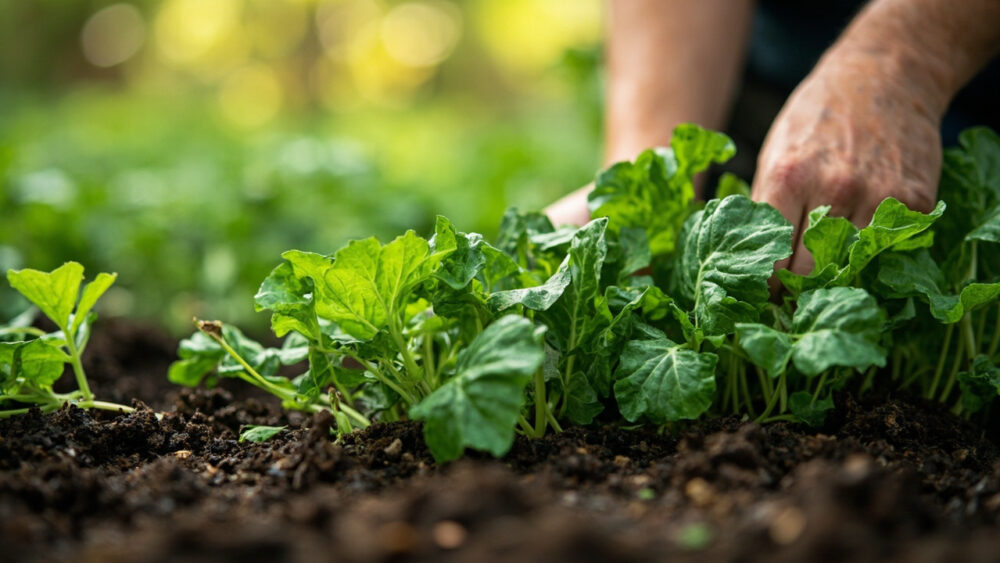
This is the stage everyone actually clicked for, the one where arugula finally looks like a crop instead of a science experiment. Leaves widen, deepen in color, and the plant starts pushing out new growth from the center every few days.
What you’ll see: full rosettes 4 to 8 inches across, leaves with a more pronounced deep lobing and a glossier surface, and a noticeably sharper smell when you brush against them. That peppery bite intensifies as the plant matures, which is normal and not a sign of anything wrong.
Feeding needs are light. Arugula grown in decent soil rarely needs supplemental fertilizer, and pushing it hard with nitrogen mostly just makes lush leaves that bolt faster in heat. Consistent moisture matters more than food here, aim for about an inch of water a week, more in hot or windy conditions.
This is also your harvest window. Cut outer leaves at 3 to 4 inches for baby arugula, or let whole rosettes reach 6 to 8 inches for mature leaves, cutting an inch above the crown so it regrows.
Enjoy this stage, because the next one arrives faster than most people expect.
The Stage Where It Goes Wrong: Bolting
If you assumed the plant just eventually “gets old” and that’s why it turns bitter, that guess is close but misses the actual trigger. Arugula bolts, meaning it sends up a flower stalk, in response to heat and long daylight, not simply age.
Once daytime temperatures push past 75 to 80°F for several days in a row, especially alongside long summer daylight, arugula will bolt even if it’s only three or four weeks old. Cool spring or fall weather can keep a plant in the leafy stage for six weeks or more.
What you’ll see: a central stem shooting up from the crown, noticeably thicker and taller than the surrounding leaves, often gaining several inches in just two or three days. Small white four-petaled flowers follow quickly.
Once that central stalk starts elongating, leaf flavor turns sharply more bitter and hot within days, and there’s no reversing it by cutting the flower stem off. You can still eat the leaves, but they won’t taste like they did a week earlier.
The honest fix isn’t fighting bolting, it’s timing your planting so you’re harvesting before the heat arrives.
Stall or Trouble: How to Tell the Difference
Slow growth for a week straight looks alarming, but it’s rarely the disease people fear. Cool soil below 50°F, low light in early spring, or a recent transplant shock will all stall arugula temporarily without hurting it long term.
True stall signs: leaves stay a healthy green, growth just pauses, and the plant perks back up once temperatures or light improve.
Actual trouble signs: yellowing that spreads from the bottom leaves upward, black or dark water-soaked spots on leaves, or a general wilting even when soil is damp. That combination points to downy mildew or a root rot issue from soggy soil, and the cultural fix is better drainage, wider spacing for airflow, and removing affected leaves promptly rather than reaching for a fungicide first.
A plant that’s merely stalled needs patience, not intervention.
With the full timeline in view, here’s the whole thing distilled into what’s actually worth remembering.
Arugula at a Glance
- When to plant: 2 to 3 weeks before your last frost for a spring crop, or 6 to 8 weeks before your first fall frost for a fall crop, since arugula tolerates light frost but not summer heat.
- Germination time: 3 to 10 days in soil between 40 and 65°F, faster in warmer soil.
- Spacing and depth: sow a quarter to half inch deep, thin to 4 to 6 inches apart for full rosettes.
- Days to harvest: 20 to 30 days for baby leaves, 40 to 50 days for full-size leaves.
- Water needs: about 1 inch per week, consistent moisture matters more than feeding.
- Bolting trigger: sustained heat above 75 to 80°F combined with long daylight, not simply plant age.
- Harvest method: cut leaves an inch above the crown to encourage regrowth for a second and third cutting.
Arugula’s whole life cycle runs on temperature more than the calendar, so watch the thermometer, not the date on your seed packet.
Get it in the ground while it’s cool and you’ll be eating salad long before the heat ever gets a vote.