You grow carrots by direct-seeding them into loose, rock-free soil about 1/4 to 1/2 inch deep, three to five weeks before your last frost, then thinning ruthlessly so the roots have room to swell. That last part is where most people quit halfway. How to grow carrots successfully really comes down to two things gardeners underestimate: soil texture matters more than soil fertility, and thinning feels wasteful right up until harvest day proves you wrong.
There is one mistake that wrecks more carrot beds than pests, weather, or bad luck combined, and it happens before the seed ever goes in the ground. There is also a sign at harvest time that half of gardeners misread completely, pulling carrots either weeks too early or leaving them in to crack and split. And if you are wondering why your seedlings came up looking like a lawn instead of a row, that answer is coming too.
Stick with me through planting, feeding, and the pests that actually show up on carrots, because the save-able Carrots at a Glance card at the bottom has every number you’ll want written down before you go out to the garden this weekend.
When to Plant Carrots
Carrots are a cool-season crop, and they go in the ground earlier than most people expect. Direct-sow three to five weeks before your average last frost date, once soil temperature has reached at least 45 F, though germination is faster and more even at 55 to 75 F.
Carrot seed will germinate in cold soil, just slowly, sometimes taking three weeks instead of one. In zones 3 to 6, that early spring window is your main shot, with a second sowing in mid to late summer for a fall crop. In zones 7 and warmer, carrots do best as a fall through winter crop, planted as the worst summer heat breaks.
Succession sow a short row every two to three weeks through spring if you want a steady harvest instead of forty carrots ready on the same day.
That timing only pays off if the ground underneath is actually ready for a root crop, and that is where most beds fall short.
Choosing the Spot and Prepping the Soil
Carrots need full sun, six or more hours a day, and soil that is loose, deep, and free of rocks and clumps for at least 10 to 12 inches down. This is the mistake that ruins most attempts. Gardeners pick a sunny spot, skip the deep tilling, and end up with forked, stubby, or twisted roots because the taproot hit compacted soil or a rock and had nowhere to go.
Work the bed down a full foot with a fork or tiller, breaking up clay and removing debris. Skip fresh manure and heavy nitrogen fertilizer in this bed. Rich, unfinished organic matter causes the same forking and hairy-rooted mess as compacted soil, just for a different reason. A light layer of finished compost worked into loose, sandy-loam soil is exactly what carrots want.
If your native soil is heavy clay, raised beds or containers at least 12 inches deep solve the problem faster than years of amending.
Once the bed is loose and clean, the planting itself is almost too simple, which is exactly why people rush it.
Planting Carrots Step by Step
Carrot seed is tiny, slow to germinate, and unforgiving about being planted too deep. Get these steps right and the rest of the season gets much easier.
1. Sow shallow
Plant seeds 1/4 to 1/2 inch deep. Any deeper and the seedlings struggle to push through.
2. Space generously, then thin harder than feels right
Sow seeds about 1 inch apart in rows spaced 12 to 18 inches apart, then thin seedlings to a final spacing of 2 to 3 inches once they have their first true leaves. This is the step everyone gets wrong. Crowded carrots stay pencil-thin or twist around each other underground, no matter how good your soil is.
3. Keep the seedbed constantly damp
Carrot seed needs consistent moisture to germinate, which can take 10 to 21 days depending on soil temperature. Water lightly every day or two if rain doesn’t do it for you, since a dried-out surface crust will stop germination cold.
4. Cover with a light mulch or board
A thin scattering of straw, or a board laid over the row until seedlings emerge, keeps the surface from crusting over in sun and wind.
Germination is the slowest, most suspenseful part of growing carrots, and what happens next in the ground matters just as much as what happened above it.
Watering and Feeding Through the Season
Carrots want steady, even moisture, about 1 inch of water per week, more in sandy soil or hot weather. Inconsistent watering, a dry spell followed by a soaking, is the reason perfectly healthy-looking carrots crack right down the middle.
Skip heavy nitrogen feeding once plants are established. Nitrogen pushes lush green tops at the expense of the root, which is the opposite of what you’re growing this for. If your soil was reasonably fertile at planting, a single light feeding of a low-nitrogen, potassium-and-phosphorus-leaning fertilizer partway through the season is plenty.
Keep the bed weeded, especially in the first month. Carrot seedlings are thin and slow, and weeds outcompete them for light fast.
Feed and water carrots wrong and you’ll never see the trouble on the surface, because it’s happening entirely underground.
Problems That Actually Show Up on Carrots
Carrot rust flies and carrot weevils are the most common pests, both leaving tunnels or scarring on the root that you usually don’t discover until harvest. Floating row cover placed over the bed right after sowing keeps the adults from laying eggs near your plants in the first place, and it’s the single most effective fix available to a home gardener.
Forked or stunted roots trace back to compacted soil, rocks, or fresh manure, not disease. Green shoulders happen when the top of the root pokes above soil and gets sun exposure, fixed by hilling a little soil over exposed tops as they grow.
Leaf blight and other fungal spots show up in humid weather with poor airflow. Space rows properly, water at the soil line instead of overhead, and remove badly affected foliage. For anything that escalates, a fungicide labeled for vegetable gardens and used exactly per the product label is the right call, not a home remedy.
Most of these problems are preventable at planting time, which just leaves the question of knowing when your carrots are actually ready.
When and How to Harvest Carrots
Carrots are ready to harvest 60 to 80 days from sowing, depending on variety, when the shoulders (the top of the root, visible at the soil surface) reach at least 1/2 to 3/4 inch across. If you assumed bigger green tops mean a bigger root underneath, that guess is exactly the misread that costs people either flavor or a cracked harvest.
Top growth and root size don’t track together reliably. The real tell is brushing back a little soil around a shoulder or two and looking at the actual root width before you commit to pulling the whole row.
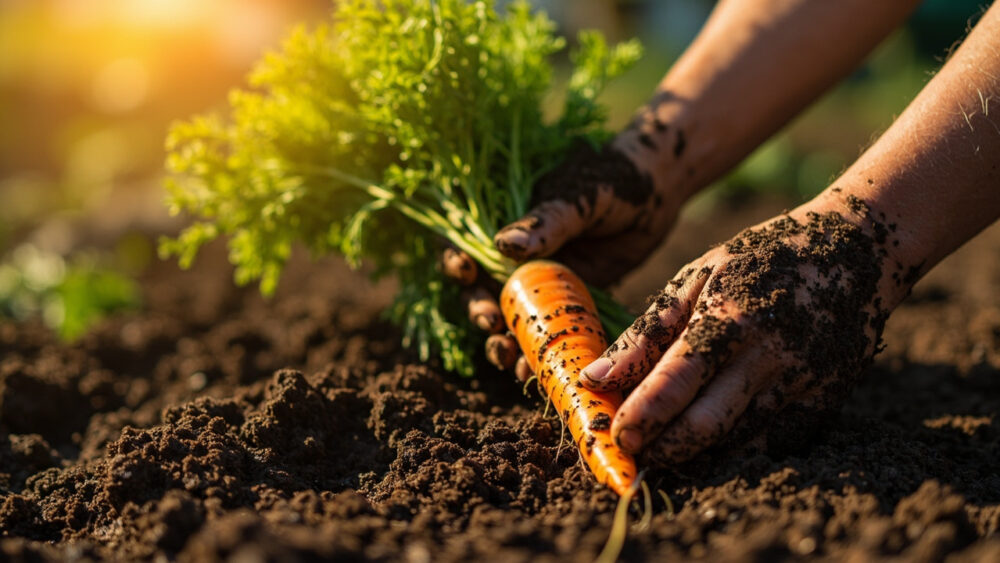
Water the bed the day before harvest if soil is dry, since damp soil lets roots slide out clean instead of snapping. Loosen with a fork alongside the row rather than yanking straight up by the tops.
A light frost or two before harvest actually improves flavor, sweetening the roots, which is why fall carrots often taste better than summer ones. Carrots left too long in warm soil tend to get woody, cracked, or oversized and bitter, so don’t mistake “bigger is better” for the right call here either.
Once you’ve pulled the first row, everything you need for next time is worth having in one place.
Carrots at a Glance
- When to plant: direct-sow three to five weeks before your last frost, once soil hits at least 45 F, with a second sowing in midsummer for a fall crop in cooler zones.
- Depth and spacing: sow 1/4 to 1/2 inch deep, 1 inch apart, then thin to 2 to 3 inches apart in rows 12 to 18 inches apart.
- Soil needs: loose, rock-free, well-drained soil worked a full 12 inches deep, light on nitrogen and fresh manure.
- Water: about 1 inch per week, kept consistent to prevent cracked or forked roots.
- Days to maturity: 60 to 80 days, harvest once shoulders reach 1/2 to 3/4 inch across.
- Main threats: carrot rust fly and weevil, prevented with floating row cover from sowing onward.
- Harvest tip: water the day before pulling, loosen with a fork, and let a light frost sweeten fall carrots before you dig them.
Get the soil loose and the thinning done, and carrots practically grow themselves from there.
Everything else on this list is just insurance against the two mistakes that actually cause the failures.