Before you pick a packet, know this: carrot varieties split first by shape and root depth, not by color or novelty. That single distinction, whether the variety wants deep loose soil or will tolerate shallow, heavy, or rocky ground, narrows your real choices faster than any flavor description. This roundup covers all the major carrot varieties for 2026 gardens, grouped by type so you can match one to your actual dirt.
Most people grab whatever orange Nantes-type carrot is on the seed rack because it is familiar, and that is not a wrong move, but it is often the wrong reason. There is a purple-skinned variety experienced growers plant every year that almost nobody buys on sight because it looks strange in the packet photo. There is also a widely loved carrot that fails constantly in clay soil for a reason most gardeners misread as bad luck instead of bad match.
Stick around for number 13, a carrot most people grow completely wrong from day one without realizing it, plus the final entries and a simple way to choose your variety that waits at the bottom of this page.
Nantes Types: The Reliable Everyday Carrot
Nantes carrots are cylindrical, blunt-tipped, and forgiving of average garden soil, which is why they dominate seed racks.
1. Scarlet Nantes
The default for a reason: this heirloom produces sweet, crisp 6 to 7 inch roots in 65 to 70 days and tolerates soil that is decent but not perfect. It suits new gardeners and anyone without deeply worked, stone-free beds.
2. Yaya
A modern Nantes hybrid bred for uniform size and strong disease resistance, Yaya holds its sweetness even if you leave it in the ground a little past maturity. Good choice if you want a forgiving harvest window.
3. Napoli
Built for cold starts, Napoli is often direct sown in very early spring or even late fall in mild climates because it germinates well in cool soil and stays sweet through light frost. It matures fast, around 55 to 60 days, and rewards gardeners who want an early crop.
4. Bolero
The storage specialist in this group, Bolero has thick, tapered roots and notably good resistance to leaf blight, so its tops stay healthy longer in humid summers. Choose it if you plan to store carrots through winter rather than eat them fresh.
Nantes types are the safe bet, but the shape story gets more specific from here.
Imperator Types: Long, Showy, and Soil-Dependent
Imperator carrots are the long, tapered, grocery-store-style roots, and they are the variety most likely to fail in the wrong soil.
5. Imperator 58
The classic long carrot, reaching 8 to 10 inches, this variety needs deep, loose, stone-free soil worked at least 10 to 12 inches down or the roots fork and twist. It suits raised beds and sandy loam far more than heavy clay.
6. Sugarsnax
Extra sweet and extra long, Sugarsnax can hit 9 inches with a high sugar content that makes it a favorite for fresh eating and juicing. It still demands the same deep, loosened soil as other Imperator types, so raised beds are the easier path.
7. Autumn King
A slow, cold-hardy grower that takes closer to 75 to 80 days but rewards the wait with large, sweet roots that hold well in the ground into cool fall weather. Good for gardeners who want a big fall harvest rather than a quick summer one.
If your soil is heavy or shallow, the next group is far less punishing.
Chantenay and Danvers Types: Built for Imperfect Soil
These shorter, thicker, tapered carrots are the honest answer for clay, compacted beds, or containers.
8. Chantenay Red Core
Short and stubby by design, this 5 to 6 inch carrot tapers quickly and tolerates shallow or rocky soil that would deform a longer type. It is the variety experienced gardeners quietly recommend when someone complains their carrots keep coming out forked.
9. Danvers 126
A dependable heavy-soil workhorse, Danvers has a conical shape that pushes through clay better than most, and it stores well after harvest. Choose it for in-ground winter storage in a root cellar or a well-insulated mulched bed.
10. Kuroda
Heat tolerant and reliably sweet, Kuroda is a Chantenay-type favorite in warmer climates where other carrots turn bitter or bolt under summer heat. It suits Zone 7 and warmer gardens with long, hot growing seasons.
Those three solve the soil problem, but color and novelty change the calculation too.
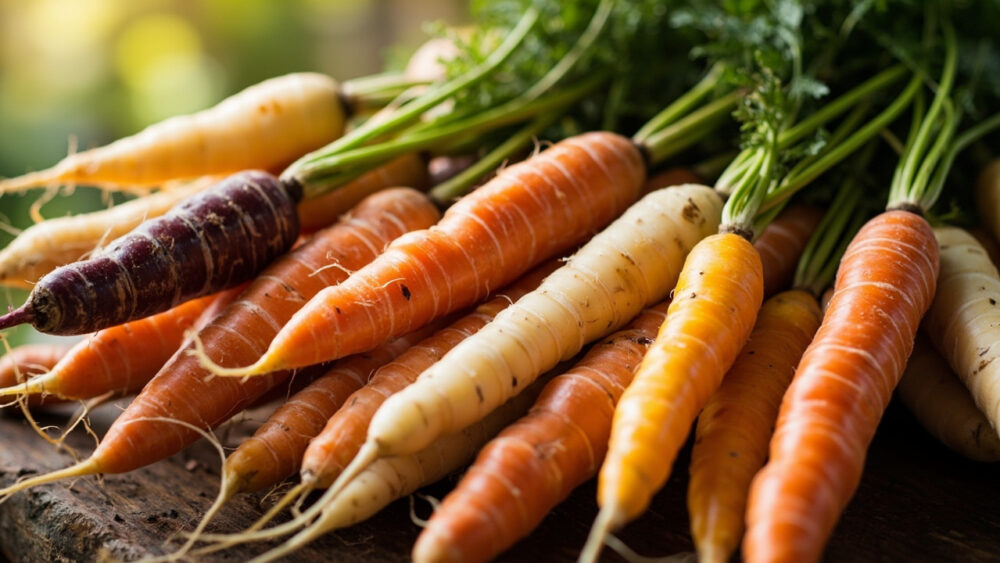
Specialty Colors: More Than a Gimmick
These are not just for looks, several genuinely shift flavor, and one is the variety serious growers plant every single year without fail.
11. Purple Haze
Purple skin, orange core, this Nantes-type hybrid holds its color well even cooked and has a slightly spicier, more mineral flavor than standard orange carrots. It is the strange-looking packet photo that puts off casual shoppers but earns a permanent spot in experienced gardeners’ rotations because it performs exactly like a Nantes in the ground.
12. Cosmic Purple
An open-pollinated purple heirloom with orange-yellow flesh and a deep purple skin that fades slightly when cooked. It grows like a standard Nantes in terms of soil needs, so it is an easy first specialty carrot to try.
13. Atomic Red
This is the one most people grow completely wrong. Atomic Red keeps its deep red-orange color best when cooked, not raw, because heat concentrates the lycopene that gives it the color, so gardeners who eat it fresh out of the ground often find it looks duller than promised and assume the plant failed. It is an Imperator-type root, so it also needs the same deep, loose soil that long carrots demand, a second detail that trips up buyers who picked it for color alone without checking the shape category.
14. Lunar White
Pale, mild, and genuinely sweet rather than bland, this white carrot surprises people who expect white varieties to taste watery. It grows to about 7 inches, performs like a Nantes in average soil, and works well for gardeners who want a novelty color without a soil-prep project.
15. Yellowstone
A bright yellow, mild-flavored carrot with less of the peppery bite some orange varieties carry, making it popular with kids and picky eaters. It is a dependable Nantes-type grower, forgiving of average garden beds and ready in about 70 days.
How to Choose the Right One
- Check your soil depth and texture first. If you have not worked your bed at least 10 inches deep and removed rocks, skip Imperator types and go with Nantes or Chantenay.
- Match to your climate. Cool-season, early-sowing gardeners lean toward Napoli or Autumn King; hot-summer growers do better with Kuroda or another heat-tolerant Chantenay type.
- Decide your purpose before you shop. Fresh eating favors sweeter Nantes and specialty colors; winter storage favors Danvers and Bolero, which hold texture and flavor longer in the ground or in cold storage.
- Be honest about your care appetite. Imperator types need consistent moisture and deep prep to avoid forking. Chantenay and Danvers types tolerate more neglect and irregular watering.
- Pick one specialty variety, not five. Purple, white, or yellow carrots grow like their shape-category cousins, so choose based on soil first and let color be the bonus, not the deciding factor.
Get the shape right for your soil and almost any variety on this list will reward you with straight, sweet roots by harvest day.
Start there, and the color and flavor decisions become the fun part instead of the risky one.