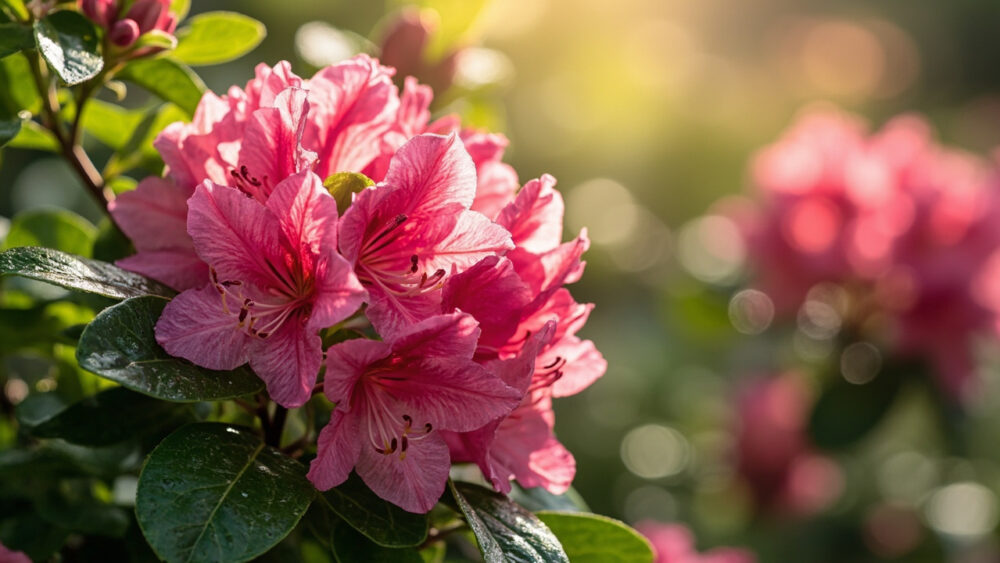
Most azaleas bloom in mid to late spring, roughly April through May in most of the country, with the flower show lasting two to four weeks per plant. Some reblooming varieties give you a second, smaller flush in summer or fall. That answer shifts depending on which type you own and where you garden, and I’ll get you to the exact window for your yard in a minute.
Two things trip people up every year. One is assuming a non-blooming azalea is dying when it’s usually just a pruning or light problem with a simple fix. The other is not knowing that a bad frost after buds swell can wipe out an entire season’s flowers overnight, and there’s nothing you can do to bring them back once that happens.
Stick with me through the next few sections and I’ll show you what actually controls bloom timing on your specific plant, how to coax out more flowers this year and next, and why some azaleas just refuse to bloom at all. Save-able quick-reference card is waiting at the bottom.
The Bloom Window and How Long It Actually Lasts
A single azalea shrub typically stays in bloom for two to four weeks before the flowers fade and drop. That’s the show for one plant, one bloom cycle.
But “azalea season” in a given region often stretches six to eight weeks, because early, mid, and late-season varieties are staggered. If you’ve got several different azaleas planted, you can string together a much longer bloom period than any one shrub gives you alone.
Warmer climates, like the Deep South and Pacific Northwest, often see azaleas start as early as March. Colder zones push that into May, sometimes even June for the latest bloomers.
Rebloomers are a separate case entirely, and they change this math completely.
What Actually Controls When Your Azalea Blooms
Three things drive bloom timing: variety, climate, and the previous year’s growing conditions. Variety matters most. Early bloomers like some Kurume types can flower weeks before late-season Satsuki types in the exact same yard.
Climate is the second lever. Azaleas set flower buds based on temperature and day length the summer and fall before, then those buds sit dormant through winter and open once spring temperatures warm up enough, usually once nights are reliably above the mid-40s Fahrenheit.
A late cold snap after buds have started to swell can brown them before they ever open. That’s not a disease or a care mistake, it’s just bad timing from the weather, and it’s the honest answer nobody wants to hear when their azalea skips a year.
If you assumed a warm winter means an earlier, better bloom, that’s not always true, since a string of warm days followed by a hard freeze is actually the worst combination for flower buds.
Next, the type of azalea you’re growing changes this whole timeline more than anything else.
One Plant, Two Seasons: Reblooming Azaleas
Reblooming varieties, like the Encore series and a handful of others bred for repeat flowering, bloom in spring and then push out a second, usually lighter, flush in summer or fall on new growth. If your azalea is flowering in August, this is almost certainly why, not a fluke.
These varieties need more sun than old-fashioned shade azaleas, generally four to six hours of direct sun, to have enough energy for that second round. Plant one in deep shade and you’ll get the spring bloom but never the encore.
Knowing which type you have tells you exactly what to expect for the rest of the year.
How to Get More Flowers, or a Longer Show
Bloom count comes down to sunlight, timing of pruning, and feeding, in that order. Sunlight first: azaleas flower best with morning sun and afternoon shade, or dappled light all day. Deep, dense shade gives you a leafy shrub with a handful of flowers.
Prune right after blooming ends, never in late summer or fall. Azaleas set next year’s flower buds during the summer following bloom, so a fall or winter pruning cuts off next spring’s flowers before they even form.
Feed lightly with an acid-loving shrub fertilizer in early spring, following the product label for rate. Azaleas want acidic, well-drained soil, roughly pH 4.5 to 6.0, and struggle to take up nutrients when the soil is too alkaline regardless of how much fertilizer goes down.
A layer of mulch, about two to three inches, keeps roots cool and evens out soil moisture, which reduces bud drop from drought stress. Skip fertilizing after midsummer, since a late push of soft new growth won’t harden off before frost and can cost you flowers too.
Get the light and pruning timing right and most of the “why won’t it bloom” problems disappear on their own.
Why Your Azalea Isn’t Blooming
If your azalea skipped bloom season entirely, the cause is almost always one of these:
- Wrong-time pruning: cutting it back in late summer, fall, or winter removes the buds already set for spring.
- Too much shade: deep shade keeps the plant alive but starves it of the energy needed to flower.
- A late freeze: cold weather after buds swelled can brown them before opening, and that season’s bloom is simply lost.
- Age or transplant stress: a young or recently moved azalea may skip a bloom cycle while it establishes roots.
- Over-fertilizing with the wrong product: heavy nitrogen feeding pushes leafy growth at the expense of flower buds.
None of these mean the plant is dying, and every one of them is fixable by next season except the frost damage, which you just have to accept and wait out.
Once you know the cause, aftercare is what protects next year’s show.
Deadheading and Aftercare That Stretches the Bloom
Azaleas don’t strictly need deadheading to survive, but removing spent flower clusters right after they fade keeps the plant’s energy going into next year’s buds instead of seed production. On smaller azaleas this is easy to do by hand, pinching off the whole faded truss.
Water during dry spells, especially the first two years after planting, since shallow-rooted azaleas dry out fast and drought-stressed plants drop buds early. A deep soak once a week beats frequent shallow watering.
Hold off on any pruning until the last flowers have dropped, then shape lightly if needed within a few weeks of bloom’s end.
Get through that window correctly and you’ve already set up a better bloom for next spring.
Azaleas: Quick Reference
- Bloom window: mid to late spring for most types, roughly April through May, with regional variation from March in warm climates to June in cold ones.
- Bloom length: two to four weeks per plant, longer overall if you grow several varieties with staggered bloom times.
- Rebloomers: varieties like the Encore series flower again in summer or fall on new growth, given enough sun.
- Sun needs: morning sun with afternoon shade, or four to six hours of direct sun for reblooming types, produces the most flowers.
- Pruning rule: prune only right after blooming ends, never in late summer, fall, or winter, or you remove next year’s buds.
- Soil and feeding: acidic soil around pH 4.5 to 6.0, light feeding with an acid-loving shrub fertilizer in early spring, following label rates.
Get the timing and light right, and your azalea will reward you with the same reliable flush every spring for decades.
That’s the whole picture, now go check your own shrub’s buds.