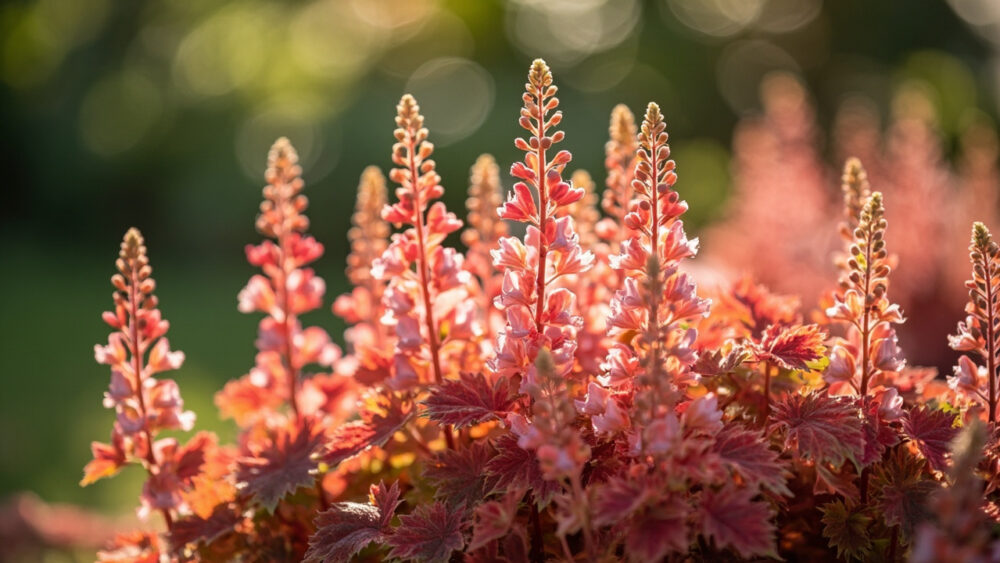
Coral bells (Heuchera) bloom in late spring through early summer, typically from May into June, with the thin flower spikes holding on for four to six weeks. In warmer zones the show can start earlier and stretch longer, and a second smaller flush sometimes shows up in early fall if the plant is happy.
That is the honest average, but your actual bloom date depends on something most people never check: how much direct sun those crown leaves got last summer. Skip that detail and you can have a gorgeous coral bells clump that never sends up a single spike.
Below you will find what actually controls the timing, why yours might be sitting there flowerless right now, and the deadheading trick that buys you extra weeks of color. Stick around for the save-able quick-reference card at the bottom with the whole bloom picture in one place.
The Bloom Window and How Long It Actually Lasts
Most coral bells push up their flower stalks in mid to late spring, once nighttime temperatures settle above the mid 40s consistently. The wiry stems rise 12 to 24 inches above the foliage mound, well above the leaves, holding small bell-shaped flowers in shades of pink, red, coral, or white depending on variety.
A single plant typically stays in bloom for four to six weeks, sometimes longer with good aftercare, which we will get to.
The foliage is not the flower show. Coral bells are grown as much for their colorful leaves, amber, purple, lime, near black, as for their blooms, and the flowers themselves are modest, airy, and better appreciated up close or by hummingbirds than from across the yard.
That modesty is exactly why so many people misjudge whether their plant is blooming well or not at all.
What Actually Controls When Coral Bells Bloom
Three things move the date around: your zone, your light exposure, and the age of the plant. In zone 4 or 5, expect blooms in June. In zone 7 or 8, late April or May is normal. In zone 9, bloom can start as early as March.
Light matters more than most gardeners assume. Coral bells tolerate shade and keep their leaf color there, but they bloom heaviest with at least a half day of sun, ideally morning sun with afternoon shade in hot climates. A plant crammed into deep, all-day shade will survive for years and rarely flower.
Age plays a role too. A coral bells plant in its first year after transplant often skips blooming entirely or gives a token spike or two while it establishes roots, then blooms fully from year two onward.
Next, the part almost everyone gets wrong when their plant refuses to flower at all.
Why Your Coral Bells Might Not Be Blooming
If you assumed a flowerless clump just needs more fertilizer, that guess is usually backwards. Too much nitrogen pushes leafy growth at the expense of flower stalks, so a heavy dose of lawn fertilizer drifting into the bed can shut down blooming even on a mature, well-sited plant.
The real culprits, in order of how often I actually see them:
- Too much shade: under six hours of light in most zones means fewer or no flower stalks, even with perfect leaf color.
- Overcrowding or an overgrown crown: coral bells left in place five-plus years without dividing often bloom weaker as the woody crown heaves up out of the soil.
- Excess nitrogen: lush leaves, no spikes.
- A too-young transplant: give it one full season before judging.
- Winter heaving: in cold zones, freeze thaw cycles can push shallow-rooted crowns up, stressing the plant right when it should be budding.
Fix the light or the crowding, and most non-blooming coral bells turn around within one season, not overnight.
How to Get More Flowers, and More of Them at Once
Divide crowded clumps every three to four years in early spring or fall. This resets the crown, encourages new root growth, and consistently produces more flower stalks the following season than an old, congested plant ever will.
Feed lightly, not heavily. A single application of a balanced, low-nitrogen fertilizer in early spring is plenty. Skip repeated feeding through the season, it encourages leaves over flowers.
Keep soil evenly moist but never soggy. Coral bells have shallow roots and dry out fast in containers or sandy soil, and drought stress cuts bloom time short. A 1 to 2 inch mulch layer keeps roots cool and steady through the bloom window.
Give at least a half day of sun if you want a real flower display, not just nice leaves.
Get those basics right and the next step, aftercare during bloom, is what stretches the show even further.
Deadheading and Aftercare That Extends the Show
Once individual flower spikes fade and turn brown, cut them down to the base of the plant, at soil level, not partway up the stem. This tidies the look and redirects energy into the crown rather than seed production.
Deadheading will not usually trigger a full second bloom the way it does on repeat-blooming roses, but on many varieties it does encourage a lighter follow-up flush in late summer or early fall, especially where summers are mild.
After bloom finishes, leave the foliage alone. The leaf mound stays attractive through summer and into fall in most climates, and cutting it back hard for no reason just stresses the plant heading into winter.
That is the whole cycle, bloom, fade, cut the spent stalks, let the leaves carry the display the rest of the season.
Coral Bells: Quick Reference
- Bloom window: late spring into early summer, typically May into June in most temperate zones, earlier in warm climates and later in cold ones.
- Bloom duration: four to six weeks per flush, sometimes longer with good aftercare.
- Possible second bloom: a lighter flush in late summer or early fall is possible, not guaranteed, and more likely with deadheading and mild summer weather.
- Light needed to bloom well: at least a half day of sun, morning sun with afternoon shade in hot climates.
- First-year plants: often skip or under-bloom while establishing, full bloom typically arrives year two.
- Main non-bloom causes: too much shade, an overcrowded crown needing division, or excess nitrogen fertilizer.
- Division schedule: every three to four years, in early spring or fall, to keep bloom strong.
Coral bells reward patience more than fuss, get the light and spacing right and the blooms take care of themselves.
Save this card, and check back on it next spring when the first spikes start climbing.