French lavender care comes down to three non-negotiables: full sun, fast-draining soil that stays on the dry side, and cool air circulation around the leaves. Get those right and this plant more or less takes care of itself. Get any one of them wrong and you will watch it rot, sulk, or bloom itself into exhaustion by August.
Here is what trips people up. Most French lavender dies from kindness, not neglect, and the leaf color everyone thinks means “thirsty” usually means the opposite. There is also a pruning mistake that quietly kills the plant a full year after you made it, and a temperature truth about French lavender that nobody tells you when you buy it next to the English lavender at the garden center.
Stick around for all of that, plus the “French Lavender at a Glance” card at the very bottom. It is built to save straight to your phone so you stop guessing every time you walk past this plant.
Light, Placement, and Temperature
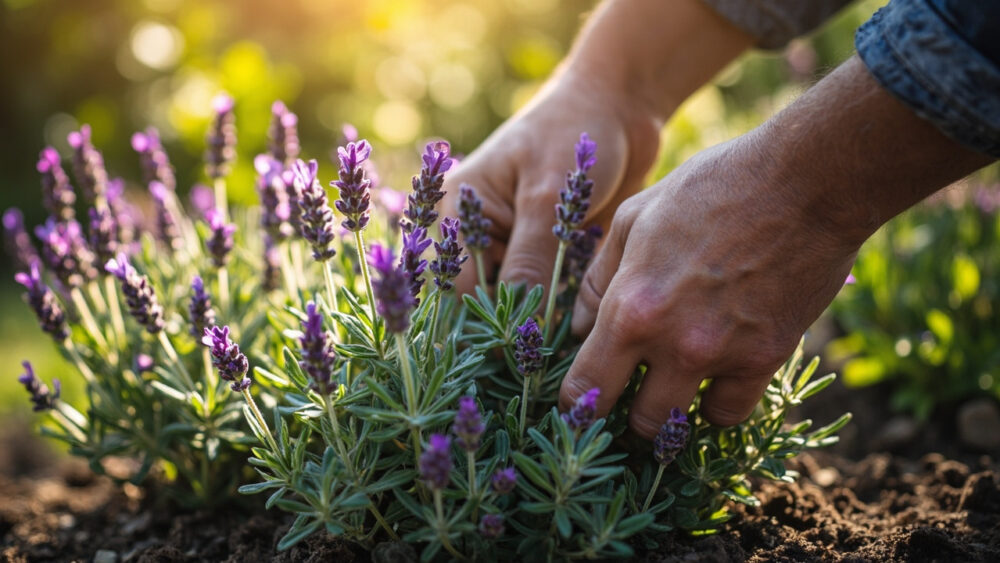
French lavender (Lavandula dentata, recognizable by its toothed, gray-green leaves and long-blooming purple spikes) needs a minimum of 6 hours of direct sun, and it is genuinely happier with 8 or more. Less than that and you get a leggy, sparse plant with soft growth that flops over.
Placement matters as much as sun hours. Give it open airflow, not a spot jammed against a wall or crowded by other plants. Still, humid air around the foliage is what invites fungal trouble later.
Here is the temperature truth: French lavender is noticeably less cold-hardy than English lavender. It’s reliably perennial outdoors only in USDA zones 8 through 10, and a hard freeze below about 20°F can kill it outright. If you garden colder than zone 8, treat it as a container plant you bring in before frost, not a permanent border plant.
Where you put this plant decides almost everything else it will need from you.
Watering French Lavender: How Much, How Often
Water established French lavender only when the top 2 inches of soil are dry, which in most climates means once every 7 to 10 days in summer and far less in cool or rainy weather. When you do water, soak it deeply, then leave it alone.
New transplants are the exception. Keep the root zone lightly moist for the first 3 to 4 weeks while roots establish, then taper off hard.
If you assumed pale, yellowing lower leaves mean the plant is thirsty, that guess is what kills more lavender than drought ever does. Yellowing plus soft, blackened stems near the base is almost always overwatering and early root rot, not dehydration. Lavender’s real drought signal is different: leaves that look grayer and feel dry and papery, not yellow and limp.
When in doubt, under-water. This plant evolved for lean, rocky, dry ground, not a daily drink.
Soil, Pots, and Feeding
French lavender wants soil that drains fast: a gritty, sandy mix with poor to average fertility. If you’re planting in ground soil that holds water after rain, work in coarse sand or fine gravel, or just plant in a raised bed or mound.
In containers, use a cactus or succulent mix, or a standard potting mix cut with 30 to 40 percent perlite or coarse sand. Drainage holes are mandatory, not optional, and a pot without one is a plant on a timer.
Skip rich, high-nitrogen feeding entirely. Heavy fertilizer pushes soft, leafy growth at the expense of flowers and makes the plant more prone to flopping and disease. One light application of a balanced, slow-release fertilizer in spring is plenty, or none at all if your soil is already reasonable.
Good soil solves most French lavender problems before they start, but the plant still needs regular upkeep to stay tight and full.
Pruning, Repotting, and Routine Upkeep
French lavender blooms nearly continuously in warm climates, so deadhead spent flower spikes as they fade to keep new ones coming. That part everyone gets right.
The mistake that costs a whole year happens at the bigger prune. Cut hard into old, bare, woody stems and lavender frequently will not resprout from that leafless wood at all. That branch is simply done. The plant then looks thin and gappy for the rest of the season, sometimes permanently on that side.
The fix: prune lightly and often instead of hard once a year. After the main flush of bloom, trim back by about a third, always cutting into green, leafy growth and leaving some green foliage on every stem you cut. Never cut into the bare, woody base.
Repot container plants every 2 to 3 years, or when roots crowd the pot, sizing up by only 2 to 4 inches in diameter. Do this in spring so the plant has a full growing season to settle in.
Get the pruning rhythm right and you rarely need to fight the problems in the next section at all.
Problems That Actually Show Up
Root rot from wet, heavy soil is the number one killer, showing up as blackened stem bases, wilting despite moist soil, and a musty smell at the roots. There is no reviving badly rotted roots; the honest move is to take healthy cuttings if any green growth remains and start over in better-draining soil.
Fungal issues like leaf spot or root fungus follow the same wet, crowded, poor-airflow conditions. Space plants generously, water at the soil line rather than overhead, and if a fungicide is genuinely warranted, follow the product label exactly.
Aphids and whitefly occasionally show up on new growth, especially on stressed or overfed plants. A strong water spray or insecticidal soap applied per the label handles most infestations; healthy, correctly watered lavender rarely gets a bad enough infestation to worry about.
Leggy, floppy growth with few flowers points to too little sun or too much nitrogen, not a pest or disease at all.
Most of these problems trace back to one root cause, which makes the next question easy to answer.
How to Tell It’s Actually Thriving
A thriving French lavender has tight, bushy, silvery-green growth, woody but not bare at the base, with flower spikes opening more or less continuously through the warm months rather than in one short burst.
New growth should feel slightly stiff and aromatic when brushed, not soft or floppy. Soft, dark green, lush-looking growth is not a sign of health here. It usually means too much water or fertilizer, the opposite of what people assume when a plant looks “lush.”
Bees and other pollinators working the flowers steadily is a genuinely good sign. It means the plant is blooming well and the site has the airflow and sun it needs.
If your plant matches that picture, you can stop tinkering and let it do what it does best.
French Lavender at a Glance
- Light: full sun, at least 6 hours daily, 8 or more is better.
- Hardiness: reliably perennial only in USDA zones 8 to 10, treat as tender or container-grown colder than that.
- Watering: let the top 2 inches of soil dry out between waterings, roughly every 7 to 10 days in summer, less in cool or rainy weather.
- Soil: fast-draining, gritty or sandy, low to average fertility, drainage holes required in containers.
- Feeding: little to none, one light balanced feed in spring at most.
- Pruning: deadhead spent blooms continuously, trim back by about a third after the main flush, always into green growth, never into bare woody stems.
- Warning sign: yellowing leaves with blackened, soft stems at the base means overwatering and root rot, not thirst.
Get the drainage and the sun right, and everything else about French lavender is forgiving.
When you do prune, cut into green wood and leave the bare stems alone, and this plant will keep rewarding you for years.