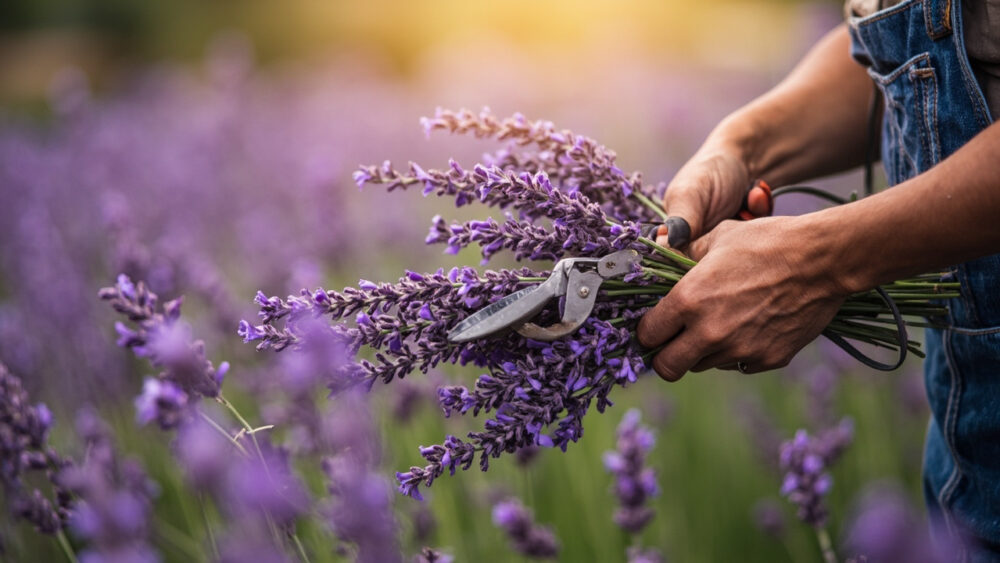
The right time to harvest lavender is when about half the buds on a flower spike have opened, not when the whole spike is in full bloom. Cut in the cooler part of the morning, after the dew dries but before the heat pulls the oils out, using clean shears to take the whole stem down to just above the woody base. Get this timing wrong in either direction and you lose most of the fragrance you grew the plant for.
Most people who ask about how to harvest lavender assume later is better, that a fuller, showier bloom means more oil. It is almost the opposite, and that single guess ruins more harvests than any pest or weather problem does.
There is also a cutting mistake that costs people next year’s flowers entirely, a sign on the stem that tells you exactly where to cut, and a drying step most guides skip that decides whether your lavender smells like a sachet or like dusty hay by winter. All of it is below, and the save-able Lavender at a Glance card is waiting at the very bottom once you have the full picture.
The Real Ready Signs
Forget “when it blooms.” Lavender starts opening flowers weeks before it is actually at peak oil content, and by the time a spike looks fully purple and lush, a good share of that fragrance has already faded and started dropping.
The bud-color test
Look at an individual flower spike. You want roughly one third to one half of the tiny buds along it showing color and starting to open, with the rest still tight and unopened.
That is peak oil concentration. It is a narrower window than most people expect, often just several days to a week or two depending on your weather.
The crush-and-smell check
Rub a flower spike gently between your fingers. If it releases a strong, sharp scent immediately, the oils are there and ready.
A weak or faint smell means you are early. Wait a few more days and check again rather than harvesting on a guess.
Once you know what “ready” actually looks like, the next question is when that window opens for your climate.
Timing: The Window, and What Happens If You Miss It
Lavender’s harvest window generally falls in early to mid summer, roughly six to eight weeks after the first flower spikes emerge, though English lavender types tend to bloom earlier than the longer-stemmed lavandin hybrids. There is no fixed calendar date that works everywhere. Watch the plant, not the month.
Harvest too early, before that one-third to one-half bud rule, and the stems will dry with less fragrance and a greener, grassier scent instead of the sharp floral one you want. Harvest too late, after most buds have opened and started browning, and the oils have already begun degrading. The flowers will shatter and drop during drying instead of holding their shape.
Weather matters too. Cut in the morning after dew has dried but before the day heats up, ideally on a dry day with no rain in the forecast for a day or two after. Wet stems mold in storage, and afternoon heat means you are harvesting oils that have already partly evaporated off the plant that day.
Missing the window on a few stems is not a disaster, but missing it on the whole plant means waiting until next year for another shot.
How to Cut Without Setting the Plant Back
Here is the mistake that quietly ruins next year’s bloom: cutting flower stems too high and leaving the plant looking untouched, then later giving it one hard whack down into bare wood because it got leggy. Either extreme causes problems. The fix is one clean rule applied every single harvest.
- Find the junction: follow the flower stem down to where it meets the mound of green, leafy growth.
- Cut just above the leaves: take the stem a half inch to an inch above where green foliage begins, never down into bare gray or brown woody stem.
- Work the whole plant: harvest most or all of the flowering stems at once rather than picking a few here and there, since lavender responds well to a fuller cut.
- Use clean, sharp shears: a clean cut heals faster and a dull blade crushes the stem and invites rot.
Cutting into old woody growth is the part almost everyone gets wrong eventually, usually out of impatience with a plant that looks overgrown. Lavender does not reliably resprout from bare wood, so a stem cut too low can simply die back instead of regrowing.
Staying in the green growth every time is what keeps a lavender plant productive for years instead of years plus one bad haircut.
Cutting correctly gets you a full basket of stems, but what you do in the next hour matters just as much.
Right After the Cut
Bundle stems in small groups of twenty to thirty, all cut ends lined up evenly, and secure each bundle with a rubber band rather than string. Rubber bands tighten as the stems shrink while drying, so bundles stay snug instead of loosening and spilling.
Get bundles out of direct sun immediately. Sitting in a hot car or on a sunny porch even for an hour will bake off fragrance you just spent weeks growing toward.
If you are harvesting for fresh arrangements rather than drying, put stems straight into water like any cut flower, though lavender’s woody stem does not last as long in a vase as soft-stemmed flowers do.
The next move decides whether that fragrance lasts eight months or eight days.
Curing and Storing So It Actually Keeps Its Scent
Hang bundles upside down in a dark, dry, well-ventilated space, not a sunny windowsill. Light is the enemy of dried lavender color and scent, so a closet, dark garage corner, or attic works better than anywhere pretty.
Drying takes roughly two to four weeks depending on humidity. You will know it is done when stems snap cleanly instead of bending and buds feel dry and papery rather than soft.
Once dry, strip buds off the stems by running your fingers down each stalk over a bowl, or leave stems whole for bundles and sachets. Store stripped buds in an airtight jar away from light and heat, and they will hold good fragrance for a year or more.
That first cut is not your only chance at lavender this season, and the next section is why.
Getting a Second Round of Blooms
Many lavender plants, especially the earlier-blooming English types, will push out a second, smaller flush of flower spikes after the main harvest if conditions stay warm enough. Lavandin hybrids generally bloom once and are done for the season.
Keep the plant in full sun and do not overwater while you wait. Lavender genuinely prefers dry, lean soil, and generous watering after a summer cut is a common way well-meaning gardeners rot the roots of a plant that just wanted to be left alone.
A light second harvest, when it comes, follows the exact same rules as the first: watch the buds, cut above the green growth, dry in the dark.
Everything above boils down to a handful of numbers worth keeping on your phone.
Lavender at a Glance
- When to harvest: when roughly one third to one half of the buds on a flower spike have opened, usually early to mid summer depending on climate and lavender type.
- Time of day: mid to late morning, after dew dries but before afternoon heat sets in.
- Where to cut: a half inch to an inch above where green leafy growth begins, never down into bare woody stem.
- Weather to pick: a dry day with no rain expected for a day or two afterward.
- Bundling: groups of twenty to thirty stems, cut ends even, secured with a rubber band.
- Drying: hang upside down in a dark, dry, ventilated spot for two to four weeks, until stems snap and buds feel papery.
- Storage: stripped buds in an airtight jar out of light, holding good scent for a year or more.
Watch the buds, not the calendar, and cut where the wood meets the green, never below it.
Get those two things right and lavender will reward you with a harvest for years, not just one good season.