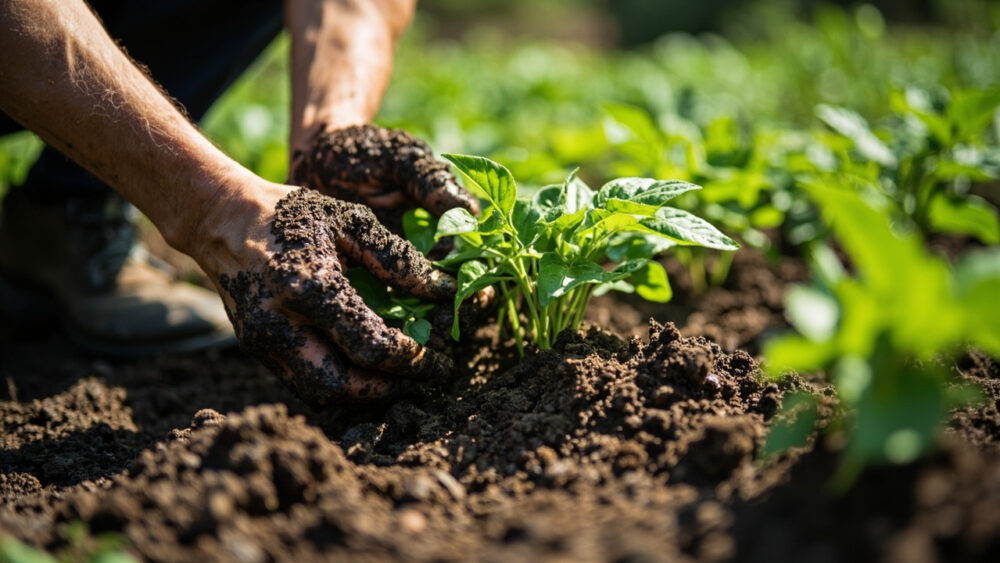
Space pepper plants 12 to 18 inches apart within the row for compact bell and hot pepper types, and 18 to 24 inches apart for sprawling varieties like large bells or bushy heirlooms. Set transplants no deeper than they were growing in the pot, burying the stem an extra half inch at most. Rows should sit 24 to 36 inches apart so you can actually get in there to pick.
That’s the number. But how far apart to plant peppers correctly depends on more than a ruler, and this is where most home gardeners lose part of their harvest without ever figuring out why. The plants that get crowded at 8 inches apart don’t die. They just quietly produce half of what they should, and you never get a clean answer for why this year was disappointing.
There’s also a mistake almost everyone makes with depth that has nothing to do with going too deep, a sign of overcrowding that looks like a disease at first glance, and a real fix if you already planted too tight this spring. Stick around for the Peppers at a Glance card at the bottom, it’s built to save to your phone before you head back out to the garden.
The Actual Spacing Numbers, and Why They’re Ranges, Not One Number
Pepper spacing depends on the plant’s mature size, not just the type. A compact jalapeño or serrano tops out around 18 to 24 inches tall and wide, so 12 to 15 inches between plants is plenty. A big bell pepper or a rangy heirloom like a Cubanelle wants 18 to 24 inches, because it puts out heavy side branches that need room to spread without shading each other out.
Tighter spacing isn’t free. It trades a little bit of per-plant yield for more total plants in a small bed, which is a fair trade if you’re short on space and know that’s what you’re doing. The problem is when it happens by accident.
Row spacing matters just as much as in-row spacing.
Planting Depth: The Part Everyone Gets Backwards
If you’ve grown tomatoes, you probably know to bury the stem deep because tomatoes root all along a buried stem. Peppers do not do this. Bury a pepper stem too deep and it just sits there, wet and vulnerable to stem rot, without pushing out the extra roots tomatoes would.
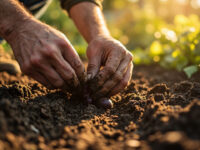
Plant pepper transplants at the same depth they sat in their nursery pot, give or take half an inch. The root ball should be just covered, with the lowest leaves sitting an inch or two above the soil line.
Wait until soil has warmed to at least 60°F, ideally 65 to 70°F, and nighttime air temperatures are reliably staying above 50°F, usually two to three weeks after your last spring frost. Peppers planted into cold soil don’t die, they just stall for weeks and never fully catch up.
Depth handled, now the spacing choice you’ll actually live with all season.
Row and Bed Layout: Single Rows, Double Rows, and Raised Beds
In a traditional garden row, space plants 12 to 18 inches apart in the row with 24 to 36 inches between rows. That gap isn’t wasted space, it’s walking room, airflow, and the space you’ll want when plants lean over mid-season loaded with fruit.
In a raised bed or block planting, use a staggered grid instead of straight rows. Space plants 15 to 18 inches apart in all directions, offsetting each row slightly like a checkerboard.
This staggered pattern uses space more efficiently than straight rows while still giving each plant enough airflow, which matters more for peppers than most vegetables since they’re prone to fungal issues in still, humid air.
Now here’s what actually happens when you ignore all of this and plant tight.
What Really Goes Wrong When Peppers Are Planted Too Close
If you guessed that crowded peppers just get smaller, that’s true but it’s not the real damage. The bigger problem is disease and rot you won’t connect to spacing until it’s too late to fix.
Crowded plants trap humidity around their lower leaves. That still, damp air is exactly what fungal diseases like bacterial leaf spot and various blights want. You’ll see it first as dark spots on lower leaves that spread upward, and it often gets misread as a watering problem when it’s really an airflow problem.
Overcrowded peppers also compete hard for root space, which shows up as slower growth and fewer, smaller fruit, sometimes with more blossom drop because the plants are stressed. And a dense canopy blocks the sun that ripening peppers need to color up properly, so you’ll get more green peppers sitting there longer than they should.
- Yellowing lower leaves that seem unrelated to watering, usually airflow and light competition, not thirst.
- Dark or spotted leaves starting low on the plant and climbing, a sign of fungal disease thriving in still, humid air.
- Fewer, smaller fruit than a plant of that variety should produce, a sign of root competition.
- Slow color change on ripening fruit, caused by shading from neighboring plants.
Planting too far apart has its own quieter cost, and it’s the one nobody warns you about.
The Honest Answer About Planting Too Far Apart
Wide spacing won’t cause disease or stunt growth, so it feels like the safe choice. But peppers planted 30 or 36 inches apart in a small garden waste space that could have grown more food, and in hot climates, wide-spaced plants can actually struggle more with sunscald on the fruit because there’s less leaf cover from neighboring plants to shade the peppers themselves.
Peppers benefit from a little bit of mutual shading once fruit starts to set, especially thin-walled types like jalapeños and cayennes. That’s the honest tradeoff nobody mentions when they tell you to give plants “plenty of room.”
Container growing has its own version of this same balancing act.
Container Spacing: The Rule Most People Skip
For containers, size the pot to the plant instead of thinking in inches between plants. A single pepper plant needs a container at least 12 inches in diameter and 12 inches deep, holding roughly 3 to 5 gallons of soil, more for large bell varieties.
If you’re growing multiple peppers in one large container or trough, keep 12 to 15 inches between plants, the same logic as tight in-ground spacing, since container soil dries and depletes nutrients faster than garden soil.
One plant per pot is the safer default if you’re new to container peppers, because it’s much easier to overcrowd a container than a garden bed and much harder to fix once roots have tangled together.
If your peppers are already in the ground and too close, here’s what you can still do about it.
Fixing an Overcrowded Planting You Already Made
You cannot un-crowd peppers by moving them once they’re established and flowering, transplant shock at that stage will cost you more than the crowding did. But there’s real damage control available.
Prune selectively to open up airflow. Remove lower leaves and small interior branches that aren’t getting light, which reduces the humid microclimate that invites disease without sacrificing much fruiting wood.
If two plants are genuinely tangled and it’s still early in the season, one can sometimes be dug and moved with a large root ball intact, watered heavily before and after, and given afternoon shade for a few days to recover. This works better with young plants than ones already setting fruit.
If it’s too late to fix this year, treat it as next season’s planting map, not this season’s emergency.
Peppers at a Glance
- When to plant: two to three weeks after your last frost, once soil is at least 60°F and nights stay above 50°F.
- In-row spacing: 12 to 18 inches for compact hot and bell types, 18 to 24 inches for large or sprawling varieties.
- Row spacing: 24 to 36 inches between rows for airflow and easy harvesting.
- Raised bed spacing: 15 to 18 inches apart in a staggered grid pattern.
- Planting depth: same depth as the nursery pot, stem covered by no more than an extra half inch.
- Container size: at least 12 inches wide and deep, 3 to 5 gallons of soil, one plant per pot as the safest default.
- Warning sign of overcrowding: dark spots or yellowing starting on lower leaves and climbing upward.
Get the spacing right once at planting and you won’t be troubleshooting leaf spots and small fruit all summer.
That’s the whole game with peppers, the effort is front-loaded, not ongoing.