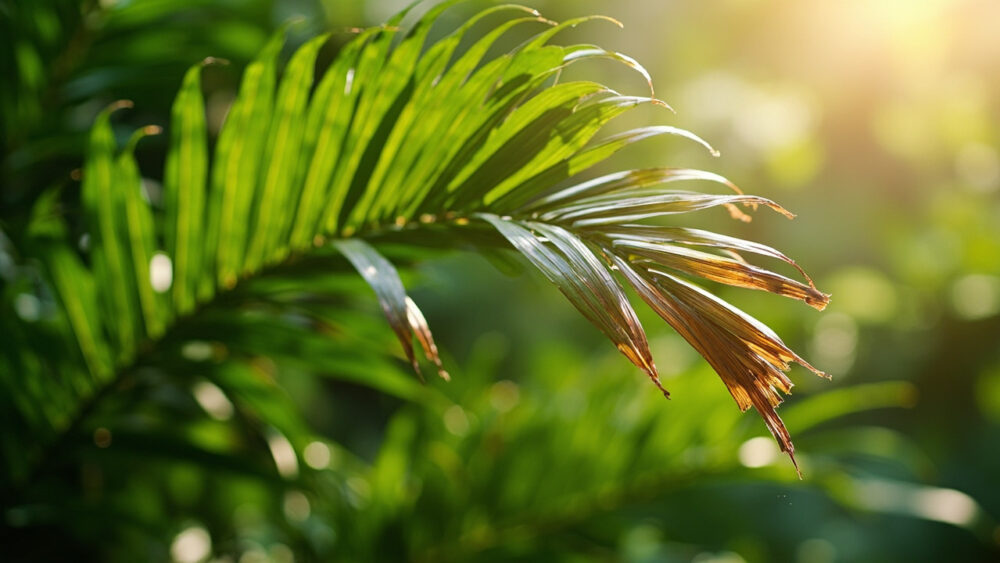
Majesty palm brown tips almost always mean low humidity or inconsistent watering, usually both working together. Fix it by watering more consistently and keeping the soil from ever fully drying out, then boosting the humidity around the plant. That combination clears up most cases within a few weeks, but not every brown tip has the same cause.
Everyone blames tap water first, and sometimes that is fair, but it is usually not the main driver. The real tell is on the plant itself: where the browning starts, whether it hits old fronds or new ones, and whether the tip is crispy and tan or soft and dark. That detail points you to the actual cause faster than any guess about your water.
Stick with this. Below is every plausible cause ranked by likelihood, the tell-apart guide, an honest recovery outlook, and a save-able diagnosis checklist at the very bottom you can run in two minutes standing right at the plant.
Most Likely Causes, Ranked
1. Low humidity
Majesty palms come from humid tropical conditions and struggle in average home air, especially near heat vents or in winter. Confirm it by checking if browning is concentrated on frond tips and edges, spread evenly across the whole plant, and worse in winter or near a heating vent. Fix it by grouping plants together, running a humidifier nearby, or setting the pot on a pebble tray with water below the pot’s base. Misting helps briefly but does not solve the underlying air dryness.
Air this dry rarely acts alone, so check your watering habits next.
2. Inconsistent watering
Letting the soil swing between bone dry and soaked is the single biggest majesty palm killer. Confirm it by feeling the soil two inches down right now. If it is dry and crumbly, or if you can recall a recent stretch where you forgot to water for a week or more, this is likely your cause. Fix it by watering when the top inch of soil feels dry, thoroughly, until water runs from the drainage holes, and keeping a steady schedule rather than reacting late. These palms want evenly moist soil, never swampy, never dry.
If the soil felt fine, the water itself might be the problem instead.
3. Mineral buildup from tap water
Majesty palms are genuinely sensitive to fluoride, chlorine, and salts common in tap water. Confirm it by checking for a white or yellowish crust on the soil surface or pot rim, and brown tips with a slightly yellow halo around the burn. Fix it by switching to distilled water or rainwater, and flush the soil thoroughly with plain water to leach out built-up salts before resuming a normal watering routine. Give it a few weeks; this fix is slow but reliable.
If there is no crust and the soil looks clean, look at the roots next.
4. Overwatering or poor drainage
Too much water, or a pot with nowhere for it to go, suffocates roots and shows up as brown tips even though the plant looks “wet.” Confirm it by checking if the pot has drainage holes, if the soil stays soggy for days after watering, or if you notice a sour smell or soft, dark patches at the base of fronds. Fix it by repotting into a container with real drainage, using a fast-draining palm or potting mix, and letting the soil dry slightly between waterings going forward.
Root damage from overwatering can look a lot like straightforward underwatering, which is exactly what trips most people up.
5. Too much direct sun or a sudden light change
Majesty palms want bright, indirect light. Direct afternoon sun through unfiltered glass can scorch fronds, and so can a recent move to a much brighter spot. Confirm it by checking if the browning is concentrated on the side of the plant facing a sunny window, or if you moved the plant recently. Fix it by moving it back a few feet from direct sun or adding a sheer curtain to diffuse the light.
If the light and location have not changed, feeding habits are worth a look.
6. Fertilizer buildup or over-fertilizing
Too much fertilizer, or fertilizing a stressed plant, causes salt burn that shows up as tip browning, often with new growth affected too. Confirm it by checking if you have fertilized heavily or frequently in the last month, or if a white crust sits on the soil surface. Fix it by flushing the soil with plenty of plain water, and cutting back to a diluted, half-strength feeding schedule during active growth only.
Once you have ruled these in or out, the pattern on the plant itself will settle the diagnosis.
How to Tell the Causes Apart
Where the damage starts matters more than how bad it looks. Old, lower fronds browning first points to watering inconsistency or root stress from overwatering. Even browning across old and new fronds points to humidity or mineral buildup. Scorching on one side only points to direct sun.
Texture matters too. Crispy, tan, papery tips usually mean humidity or water mineral issues. Soft, dark, almost mushy brown at the base of a frond means rot from overwatering, which is more serious.
A white crust on soil or the pot rim always points to mineral or fertilizer salt buildup, regardless of where the browning shows up.
Once you know which pattern matches your plant, the next question is whether it can actually bounce back.
Will It Recover?
Brown, dead tips do not turn green again. That part is not fixable, and no product reverses it. What you are actually treating is the next round of growth, not the damage already done.
For humidity, watering inconsistency, mineral buildup, and light scorch, the prognosis is good. Trim off the fully brown tips with clean scissors, cutting at an angle to mimic the frond’s natural shape, fix the underlying cause, and new fronds should emerge clean within a few weeks to a couple months depending on the season.
Overwatering with root rot is more serious. If only a few tips are affected and the roots still feel firm and white or tan when you check them, recovery is likely with a repot and drier habits. If large sections of fronds are soft, yellowing, or collapsing, and roots are black and mushy with a rotten smell, the damage may already be too extensive to reverse. That is a genuine cut-your-losses situation, and propagation is not an option since majesty palms do not root reliably from cuttings.
Prevention is what actually keeps you from doing this diagnosis again next season.
How to Keep It From Happening Again
Consistency beats intensity with this plant. Water on a check-first schedule, feeling the top inch or two of soil rather than watering on a fixed calendar day, and use distilled water or rainwater if your tap water is hard or heavily treated.
Keep humidity above what average home air offers, especially in winter, using a humidifier or pebble tray rather than misting alone. Place the palm in bright, indirect light well back from unfiltered direct sun, and feed lightly only during active growth, skipping fertilizer entirely in fall and winter.
Once these habits are in place, most majesty palms stop producing new brown tips almost entirely.
Here is the two-minute checklist to run right now at the plant.
Diagnosis Checklist
- Feel the soil two inches down: if dry and crumbly, suspect inconsistent watering, water thoroughly now and set a regular schedule.
- Check for white or yellow crust on soil or pot rim: if present, suspect mineral or fertilizer buildup, flush the soil with distilled water.
- Check the pot for drainage holes and soggy soil days after watering: if soil stays wet and smells sour, suspect overwatering, unpot and inspect roots.
- Inspect roots if repotting: white or tan and firm means recovery is likely, black and mushy means root rot is advanced.
- Note where the browning is on the plant: old lower fronds first suggests watering or root stress, even browning across the whole plant suggests humidity or minerals, one-sided scorch suggests direct sun.
- Touch the affected tips: crispy and tan points to humidity, water, or minerals, soft and dark points to rot.
- Check the light: if fronds face an unfiltered sunny window or the plant moved recently, suspect light scorch, move it back a few feet.
- Review your last month of feeding: heavy or frequent fertilizing points to salt burn, flush the soil and dilute future feedings.
- Trim confirmed dead, brown tips with clean scissors at an angle, then apply the matching fix and watch new growth over the next four to eight weeks.
Run through that list once and you will know exactly which fix to make today.
Most majesty palms forgive this mistake fast once the real cause is corrected.