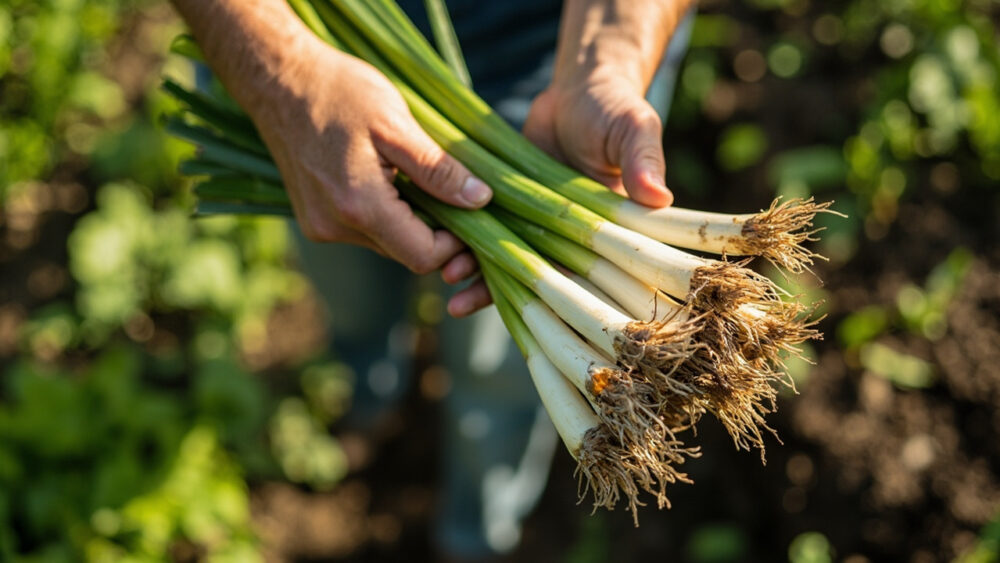
The best way to store green onions is standing up in a jar with an inch of water covering the roots, loosely covered with a produce bag, and kept in the fridge. Done right, they stay crisp for two to three weeks and will even keep growing a little. Change the water every few days and they will outlast almost anything else in your crisper.
That water-jar trick is only half the story, though. Most people who try it still lose their green onions early because of one small prep mistake made before the onions ever touch water, and it has nothing to do with washing them.
There is also a sign of spoilage that looks harmless and gets ignored until the whole bunch turns to mush, plus an honest answer about whether freezing actually works for these or just wrecks the texture. The full breakdown, including the mistakes that quietly ruin a good batch, is coming up, and the save-able Green Onions at a Glance card is waiting at the bottom.
The Jar Method, Step by Step
Trim the roots lightly if they look dried out or discolored, but leave them mostly intact. The roots are what keep the onion alive and drawing up water.
Stand the bunch upright in a small jar or glass with about an inch of water covering just the roots and the very bottom of the white stems.
Do not submerge the green tops. Cover loosely with a produce bag or beeswax wrap, not sealed tight, and set the jar in the fridge door or a shelf where it will not tip.
Swap the water every two to three days. Cloudy water is the first thing that ages green onions faster than anything else.
Get this part right and everything downstream gets easier.
How Long Each Storage Method Actually Keeps Them
On the counter in a glass of water at room temperature, green onions last only three to five days before the tops start going limp. Fine for a few days of cooking, not a real storage plan.
In the fridge in water, using the jar method above, expect two to three weeks of good, crisp onions, sometimes longer if your fridge runs cold and you are diligent about the water changes.
Wrapped dry in a paper towel inside a loose plastic bag in the crisper drawer, unwashed and untrimmed, they hold for about one to two weeks. Simpler, but shorter-lived than the water method.
Frozen, sliced and stored in a freezer bag with the air pressed out, green onions keep for eight to twelve months, but only for cooking. The texture goes soft and a little slick once thawed, so they are done as a raw garnish.
Curing is not really a thing for green onions the way it is for bulb onions or garlic. Their thin skins and high moisture mean they are built for short-term storage, not months on a shelf.
Which method wins depends entirely on how fast you will actually use them, and that is where most people guess wrong.
The Prep Mistake That Costs People a Week or More
If you assumed washing them right when you get home is the safe, responsible move, that is the guess that quietly shortens their life.
Wet green onions rot faster than dry ones, full stop. Any moisture trapped between the layers in the white base becomes the starting point for slime and mold, especially in a sealed bag.
Store them unwashed. Rinse only the amount you are about to use, right before you cook or eat it, and pat it dry if you rinsed the whole bunch by accident.
If you are using the water-jar method, a light rinse of just the roots and white base is fine since they are sitting in water anyway. It is the green tops that need to stay dry until use.
That single habit, wash less and later, is worth more than any container you buy.
The Sign Everyone Misreads as “Still Fine”
Yellowing tips on the green part are not spoilage. That is just the plant using up its own stored sugars, and you can snip the yellow bit off and use the rest without any worry.
The real warning sign is sliminess at the white base, right where the layers meet, combined with a sour or sulfurous smell that is sharper than a normal onion smell. That is bacterial breakdown, not normal aging.
A soft, mushy white end that leaves residue on your fingers when you touch it means that onion is done. Compost it rather than trying to salvage the greens above it, since the rot travels upward faster than it looks.
Mold shows up as fuzzy white, gray, or black patches, usually starting at the cut root end. Any visible mold means the whole onion goes in the trash, not just the spot you can see.
Green onions with true rot do not get a second chance, but the mistakes that cause it usually do.
The Mistakes That Ruin a Whole Batch
Sealing them airtight while they are even a little damp is the single most common failure. Trapped humidity with no airflow is exactly what slime needs.
Other habits that cut storage life short:
- Storing them near apples, pears, or other high-ethylene fruit, which speeds up yellowing and softening.
- Forgetting the water change in the jar method until it turns cloudy and starts to smell.
- Cramming a full bunch into a tiny jar so the tops bend and bruise against the fridge shelf above.
- Freezing them whole instead of sliced, which makes a solid clump you have to hack at later.
- Leaving them out on the counter “for a day” that turns into four.
Every one of these is fixable the moment you notice it, which is more forgiving than most vegetables get.
Once you have the storage right, the only thing left to memorize is the quick-reference version.
Green Onions at a Glance
- Best method: stand upright in an inch of water, roots down, loosely covered, in the fridge.
- Fridge life in water: two to three weeks, longer with regular water changes.
- Dry storage life: one to two weeks, wrapped loosely in the crisper drawer.
- Counter life: three to five days at most, treat as short term only.
- Freezer life: eight to twelve months, sliced first, cooking use only.
- Wash timing: never wash the greens until right before you use them.
- Spoilage signs: slimy white base, sour smell, or visible mold means toss it, yellow tips alone are fine to trim and keep.
Keep them dry until use and keep that jar water fresh, and green onions will outlast nearly everything else in your fridge.
Get those two habits right and you will rarely throw out a wilted bunch again.