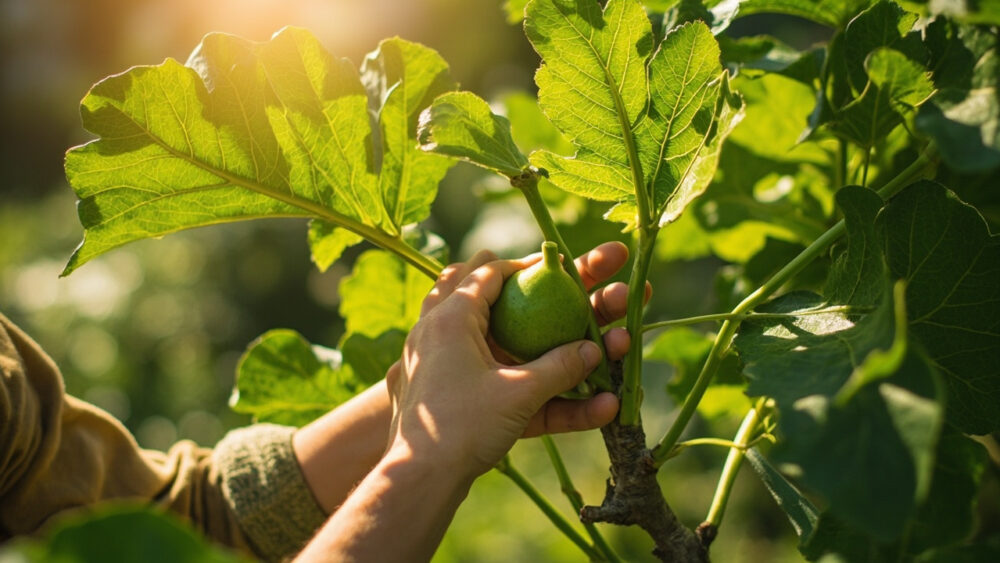
A healthy fig tree in the ground grows 1 to 3 feet per year once it’s established, and can go from a bare-root stick to a fruiting, shade-worthy tree in 3 to 5 years. A fig kept in a container grows slower, usually 6 to 12 inches a year, and stays smaller by design.
That range is honest but it hides the part that actually matters to you: whether your fig is fast or frustratingly slow depends on things you can check right now, today, standing next to it. Variety is one piece. Root space is a bigger piece than most people realize. And there’s a specific mistake, overwatering a young fig “to help it grow,” that does the opposite of what you want.
Below is the stage-by-stage version of this timeline, what actually speeds a fig up versus what’s a waste of money, and how to tell if your slow tree is normal or in trouble. Save-able quick-reference card is at the bottom.
The Realistic Growth Timeline, Year by Year
Year one is mostly root-building. Above ground you might see 6 to 18 inches of new growth, and that’s normal even though it feels slow. The tree is busy underground where you can’t see it.
By year two to three, growth speeds up noticeably, often 2 to 3 feet a season in decent soil and full sun. This is also when you’ll usually see your first small fruit crop, called the breba crop, on last year’s wood.
From year three to five a fig in the ground is usually fruiting reliably and filling out into a real tree, 8 to 15 feet tall depending on variety and how hard you prune it. Container figs plateau earlier and stay smaller on purpose.
The first year is the slow one, and that’s exactly when most people give up.
What Actually Controls the Speed
Climate does more than variety. Figs want heat. In zones 8 to 10 with long warm seasons, a fig grows and fruits noticeably faster than the same variety pushed to its limit in zone 6 or 7, where the growing season is shorter and winter dieback can set the tree back every spring.
Sun matters just as much. A fig getting less than 6 hours of direct sun grows slower and fruits later, full stop, no variety fixes that.
Soil drainage is the other half. Figs tolerate poor soil fine but hate wet feet, and a tree sitting in heavy clay that stays soggy will grow slower and be more prone to root problems than one in average, well-draining soil.
Get those three right and even an average variety outgrows a “fast” one planted wrong.
In-Ground vs Container: The Honest Trade-off
If you assumed a bigger pot just means a bigger fig eventually, that’s not quite how it works. Roots restricted by a container plateau on purpose, which is why container figs stay 4 to 8 feet tall instead of 15, and why growers in cold climates use pots specifically so they can move the tree indoors or into a garage for winter.
An in-ground fig has no such ceiling. It keeps growing until climate, pruning, or root competition slows it down, which is part of why in-ground trees eventually need real pruning discipline or they get away from you.
Neither path is wrong, but you should pick based on your winters, not your patience.
How to Speed Up Growth, Legitimately
Full sun and consistent water are the two levers that actually work. Water deeply once or twice a week through the first two growing seasons rather than a little every day, and mulch to keep roots cool and moisture even.
A balanced or slightly nitrogen-forward feeding in spring helps a young fig push growth, but stop feeding nitrogen by mid to late summer so the wood has time to harden off before frost.
What doesn’t work: heavy feeding all season long, which just produces soft, winter-vulnerable growth, and constant overwatering, which drowns roots and slows a fig down rather than speeding it up. More is not the fix here.
The real accelerant is boring: right light, even water, patience through year one.
When Slow Growth Is Normal, and When It’s a Problem
Under 6 inches of growth in year one is normal, especially for a tree transplanted that same spring. Give it the full first season before you worry.
A tree that stalls in year three or later, after it was growing well, is a different story. Check for these before assuming disease:
- Roots circling or girdled in a container that’s become too small
- Soil staying wet for days after watering, a sign of drainage trouble
- Winter dieback each spring in a marginal zone, forcing the tree to regrow from the base every year
- Heavy shade creeping in as nearby trees or structures have grown
Any one of those explains a stalled fig without anything being fundamentally wrong with the tree.
Fig Trees: Quick Reference
- Growth rate: 1 to 3 feet per year in ground once established, 6 to 12 inches per year in containers.
- Time to first fruit: often a small breba crop in year two to three, with reliable main crops by year three to five.
- Slowest stage: year one, while the tree builds roots before top growth speeds up.
- Biggest speed factor: full sun, 6 or more hours daily, more than variety choice.
- Second biggest factor: well-draining soil, since wet roots slow growth more than poor soil does.
- Container trees: stay smaller on purpose, useful for cold climates where you need to move the tree for winter.
- Feeding rule: nitrogen in spring, none by late summer, so wood hardens off before frost.
A fig that seems slow in its first year almost never is.
Give it one full season, get the sun and drainage right, and the fast growth you’re picturing shows up right on schedule.