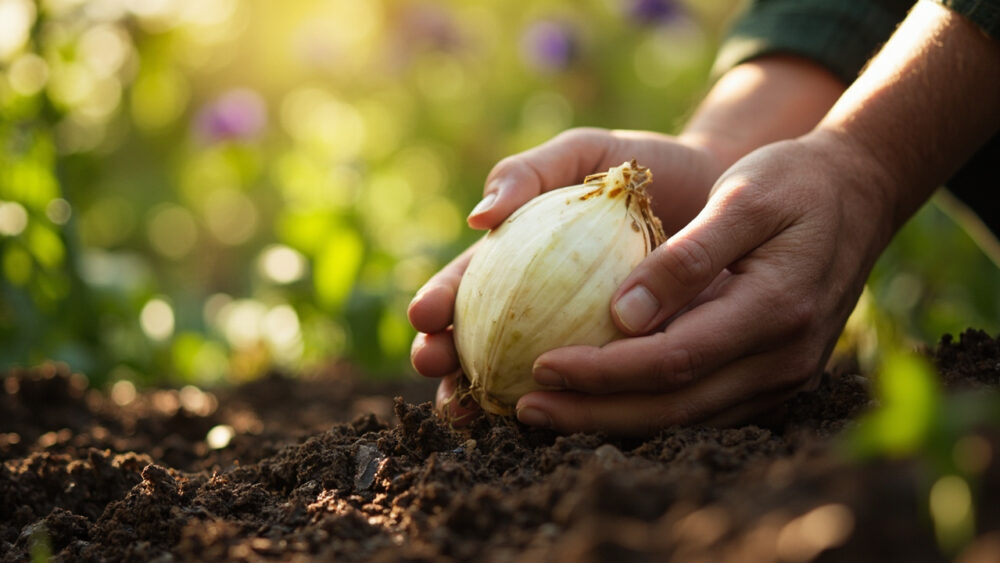
The short answer: plant lily bulbs in fall, about four to six weeks before your ground freezes solid, or in early spring as soon as the soil can be worked and is no longer waterlogged. Fall is the better window almost everywhere, because lily bulbs never go fully dormant and they want time to grow roots before winter. If you’re standing there right now holding a bag of bulbs wondering when to plant lilies, the honest rule is soil temperature and workability, not a date on the calendar.
Here’s what most people get wrong before they even open the bag: they treat lily bulbs like tulip or daffodil bulbs, which can sit in a paper sack for weeks with no harm done. Lilies can’t. There’s a mistake buried in that assumption that costs people their whole first season, and I’ll get to it.
There’s also a sign gardeners misread every spring, mistaking a slow-emerging lily for a dead one and yanking bulbs that were perfectly fine. And by the end you’ll have the full “Lilies at a Glance” card saved to your phone, the kind of thing you pull up standing in the driveway with a shovel in one hand.
The Real Planting Window, Anchored to Soil and Frost
Fall planting is the gold standard for lilies in most of the country. You want the bulbs in the ground while soil temperatures are still above roughly 45 to 50°F, ideally four to six weeks before your first hard freeze. That gives roots time to establish before the ground locks up, so the plant comes out of the gate strong the following spring instead of starting from scratch.
Spring planting works too, and it’s often the only realistic option if you’re buying bulbs that shipped late or you missed the fall window entirely. Plant as soon as the soil is workable, meaning it crumbles in your hand rather than forming a wet ball, and is no longer waterlogged from snowmelt or spring rain. Waiting for the soil to hit a bit above 40°F is a reasonable rule of thumb.
Either window beats the alternative of bulbs sitting in a bag on your porch.
Telling Your Actual Window, Not the Calendar’s
Forget the date on the seed packet rack. Your real signal is a soil thermometer or, honestly, your bare hand shoved two inches down. If the dirt feels cool but not cold and crumbles rather than clumps, you’re in business, whether that’s late September where winters bite early or November somewhere mild.
In fallcount backward from your average first hard freeze. If that date is mid-October, aim to have bulbs in the ground by early to mid September. Local frost date averages are easy to find and worth checking rather than guessing.
In springthe tell isn’t temperature alone, it’s texture. Wet, sticky clay soil that sticks to a shovel blade will rot a lily bulb before it ever roots. Wait until it breaks apart when squeezed.
Once you know your window, the next question is what happens if you miss it.
Planting Too Early or Too Late: What It Actually Costs You
Here’s the mistake that ruins most first attempts, and it’s not what people expect. It’s not planting too early. It’s letting bulbs sit around unplanted, drying out in a bag or box while you wait for the “right” weekend. Lily bulbs are not built for storage the way onion-type bulbs are. They have no protective dry skin, and their fleshy scales dehydrate fast. A bulb that feels firm and plump when it arrives can be soft, shriveled, and worthless within two or three weeks of neglect.
If you can’t plant the day you get them, pot them temporarily in slightly damp (not wet) potting mix, or tuck them in a paper bag with barely moist peat moss in the fridge’s crisper drawer. Don’t let them air-dry on a shelf.
Planting genuinely too earlymeaning into warm summer soil, isn’t really a lily problem since most people simply aren’t buying bulbs in July. The bigger real risk is planting into soggy, still-cold spring mud. Waterlogged soil around a lily bulb invites rot before a single root forms.
Planting too latedeep into a hard freeze or in truly frozen ground, means the bulb sits without rooting and often rots or gets heaved by frost. If you’re that late, your better move is often to hold the bulbs cool and slightly moist and plant first thing in spring instead of forcing them into frozen dirt.
Timing costs you the season, but bad prep costs you the bulb entirely, so let’s fix that next.
The Sign Everyone Misreads Come Spring
This is the loop worth closing properly. Every spring, gardeners see no green shoots by late April, assume the bulb died over winter, dig it up to check, and often kill a perfectly healthy bulb in the process.
Lilies are late risers. Depending on the variety and your soil temperature, shoots can take until late spring to break the surface, well after tulips and daffodils have already bloomed and faded. A firm, white-to-yellowish bulb with no soft or mushy spots is alive even with zero visible growth. Give it until early summer before you worry.
The real red flag isn’t slow emergence, it’s a bulb that’s gone soft, brown, and mushy when you check it, which signals rot rather than dormancy.
Patience solves more lily “failures” than any fertilizer ever will.
Prep to Do Before the Window Opens
Lilies want well-drained soil above almost anything else. Standing water around the bulb in winter or spring is the single fastest way to lose it.
- Site selection: full sun to light afternoon shade, at least 6 hours of direct sun for strong stems and good bloom.
- Soil prep: work in compost or aged organic matter to a depth of 12 inches; raise the bed slightly if your soil holds water.
- Depth: plant bulbs about 3 times as deep as the bulb is tall, generally 4 to 8 inches deep depending on bulb size.
- Spacing: 8 to 12 inches apart so mature clumps have room to breathe and you can divide them in a few years without disturbing neighbors.
- Orientation: roots down, pointed growth tip up; if you genuinely can’t tell, plant on its side and it will still find its way up.
Good drainage and correct depth do more for lily success than any amount of fussing after the fact.
Zone and Region Notes That Actually Matter
Most lilies (Asiatic, Oriental, Trumpet, and the tough LA and OT hybrids) are hardy roughly USDA zones 3 through 9, with specifics varying a bit by type. In colder zones (3 to 5), fall planting needs to happen earlier relative to your freeze date, and a 3 to 4 inch mulch layer after the ground starts to cool helps insulate new roots through their first winter.
In warmer zones (7 to 9)fall planting can happen later since the ground stays workable longer, and lilies appreciate afternoon shade in the hottest climates to avoid scorched foliage in summer.
In areas with wet wintersraised beds or mounded planting rows aren’t optional, they’re what keeps bulbs from rotting before spring ever arrives.
Get the zone-appropriate timing right, and everything else on this list just supports it.
Lilies at a Glance
- When to plant: fall, four to six weeks before your first hard freeze, or early spring once soil is workable and no longer soggy.
- Soil temperature cue: above roughly 45 to 50°F in fall, a bit above 40°F and crumbly (not muddy) in spring.
- Planting depth: about three times the bulb’s height, generally 4 to 8 inches.
- Spacing: 8 to 12 inches apart for healthy mature clumps.
- Sun needs: at least 6 hours direct sun, afternoon shade helpful in hot climates.
- Storage warning: never let bulbs sit unplanted and dry out. Pot temporarily or refrigerate in slightly damp peat moss if delayed.
- Hardiness range: most types thrive USDA zones 3 through 9, colder zones need earlier fall planting and winter mulch.
Get the bulb into well-drained soil at the right depth, in the right window, and the plant does the rest.
Everything else people worry about with lilies is a distant second to that.