Begonias want bright, indirect light, soil that stays lightly moist but never soggy, and warmth between 65 and 80°F. Get those three things right and the plant basically takes care of itself. Learning how to care for begonias really comes down to matching the light and water to the type you have, since a wax begonia and a rex begonia want noticeably different treatment.
Most people who kill a begonia do it with a watering can, not with neglect. There is also one leaf symptom almost everyone reads backward, and it sends people in exactly the wrong direction.
I will walk through light, water, feeding, the maintenance rhythm, the problems that actually show up, and the real signs of a thriving plant. Save-worthy specifics, including the exact things worth pinning to your phone, are in the “Begonias at a Glance” card at the bottom.
Light, Placement, and Temperature
Bright, indirect light is the sweet spot for almost every begonia type. An east-facing window, or a spot a few feet back from a south or west window with a sheer curtain, works well. Direct afternoon sun through glass will scorch the leaves, especially on rex and rieger begonias with thinner foliage.
Outdoors, part shade is the target: morning sun with afternoon shade, or dappled light under trees. Tuberous and wax begonias tolerate more sun than rex types, but even those will sulk in blazing full-day exposure in hot climates.
Begonias like warmth, ideally 65 to 80°F, and most stop growing well below 55°F. Keep them off cold windowsills in winter and away from heating vents, which dry them out fast.
Get the light wrong and every other care step just compensates for it, so it is worth getting right first.
Watering: How Much, How Often, and How to Tell
Water when the top inch of soil feels dry to the touch, then water thoroughly until it runs from the drainage hole. That is usually every 5 to 9 days indoors, more often in summer heat, less in winter.
If you assumed yellow leaves mean the plant needs more water, that guess kills more begonias than drought ever does. Yellowing, soft, translucent leaves almost always mean overwatering or poor drainage, not thirst. A begonia sitting in wet soil will drop leaves and rot at the base long before it shows any sign of drying out.
Underwatered begonias tell a different story: leaves go crispy at the edges and the whole plant droops but perks back up within an hour of a good drink. That quick recovery is your tell.
Rhizomatous and tuberous types especially hate wet feet, so always let the soil surface dry before the next watering.
Once you can read the leaves correctly, feeding and soil choices get a lot less confusing.
Soil and Feeding
Use a light, fast-draining potting mix, something like a standard potting soil cut with perlite or orchid bark. Straight garden soil compacts and holds too much water around the roots.
Feed lightly during active growthroughly every 4 to 6 weeks from spring through late summer with a balanced liquid fertilizer diluted to half strength. Stop feeding in fall and winter when growth slows.
Overfeeding shows up as pale new leaves, leggy stems, and a plant that grows fast but blooms poorly. Less is genuinely more here.
A pot with drainage holes is not optional; without one, even perfect watering habits eventually rot the roots.
Good soil and light feeding set the stage, but begonias also need a maintenance rhythm to stay full and healthy.
Pruning, Repotting, and Routine Care
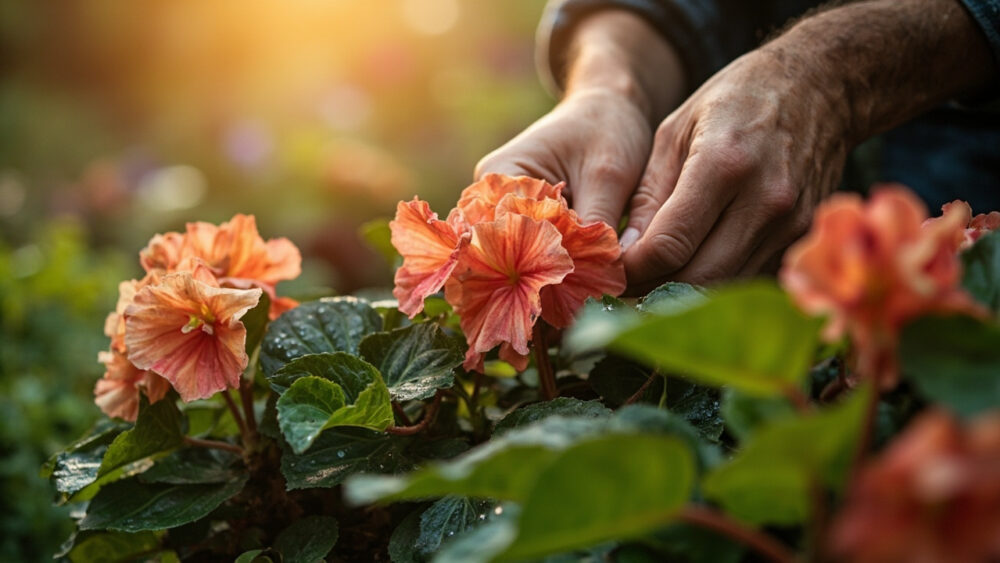
Pinch back leggy stems and deadhead spent flowers regularly to keep growth bushy instead of stringy. Cut just above a leaf node, and do not be shy about it, since begonias branch out readily after a trim.
Repot every 1 to 2 yearsor when you see roots circling the drainage hole or the plant drying out unusually fast. Spring, right as new growth starts, is the best window. Go up only one pot size at a time, since oversized pots hold excess moisture that rhizomes and tubers do not appreciate.
Wipe dust off larger leaves occasionally, and remove any yellowed or damaged leaves at the base rather than letting them sit and rot against the soil.
That habit of cleaning up debris matters more than it sounds like, because it is exactly what keeps most fungal problems from ever starting.
The Problems Most Likely to Show Up
Powdery mildew, a white dusty coating on leaves, is the most common begonia complaint, usually from poor air circulation and high humidity around crowded foliage. Space plants apart, water at the soil rather than overhead, and remove affected leaves. If it persists, a fungicide labeled for powdery mildew can help; follow the product label exactly.
Stem and root rot comes from soggy soil and shows up as blackened, mushy stems at the base. There is no reviving rotted tissue, so cut away affected parts, repot into fresh dry mix, and cut back watering hard. Sometimes the honest answer is that the plant is too far gone and a fresh start from a healthy cutting is faster than nursing it.
Mealybugs and spider mites turn up occasionally, especially on stressed indoor plants. Look for cottony clusters in leaf joints or fine webbing, and treat with insecticidal soap or a labeled miticide, following the instructions on the product.
Begonias are mildly toxic to pets, particularly the tuberous roots, and can cause irritation, drooling, or vomiting if chewed. If you suspect a pet has eaten part of one, contact your veterinarian rather than waiting to see what happens.
Once you know what the trouble looks like, spotting the opposite, a plant that is actually doing great, gets much easier.
Signs Your Begonia Is Genuinely Thriving
A healthy begonia pushes out new leaves steadily through the growing season, holds its color without pale patches, and stands upright between waterings rather than drooping daily. Flowering types should produce blooms in cycles, not just once and done.
Firm stems and leaves that feel slightly thick or waxyrather than papery, are a good sign the plant is well hydrated without being waterlogged. New growth emerging from the center or along rhizomes means the roots are happy underneath the soil, even though you cannot see them.
If your begonia has been sitting stagnant for months with no new leaves at all, that is not a disaster, but it is a sign to check light levels and roots before assuming it is simply resting.
Everything above adds up to a handful of numbers worth keeping close, so here they are in one place.
Begonias at a Glance
- Light: bright, indirect light indoors or part shade outdoors, no direct hot afternoon sun through glass.
- Temperature: 65 to 80°F, growth stalls below about 55°F, keep away from drafts and heat vents.
- Watering: water when the top inch of soil is dry, roughly every 5 to 9 days, always let the surface dry between waterings.
- Soil: light, fast-draining potting mix with perlite or bark, always in a pot with drainage holes.
- Feeding: balanced liquid fertilizer at half strength every 4 to 6 weeks during spring through summer, stop in fall and winter.
- Repotting: every 1 to 2 years in spring, moving up only one pot size at a time.
- Trouble signs: yellow, mushy leaves mean overwatering, crispy edges with fast recovery after watering mean underwatering, white dust means powdery mildew.
If you remember one thing, remember this: begonias fail far more often from too much water than too little.
Check the soil with your finger before every watering, and most other problems solve themselves.