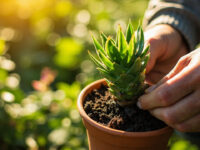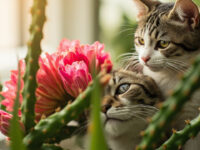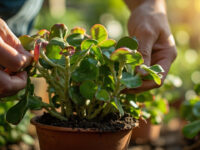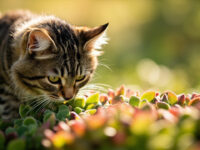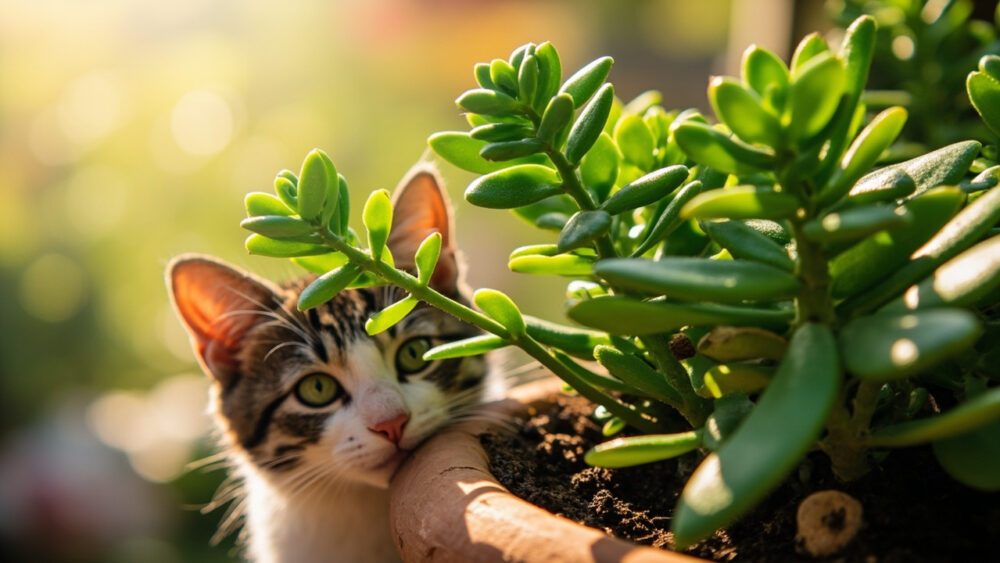
Yes, jade plant is toxic to cats. The ASPCA lists it as toxic to cats, dogs, and horses, and the classic signs are vomiting, depression, and a slow or uncoordinated gait. So is jade plant toxic to cats in a way that should scare you off owning one? Not necessarily, and that’s the nuance most pet owners never get.
What changes the real-world risk is exposure: a cat that occasionally brushes past a jade plant on a shelf is a very different situation than one that chews a stem and swallows it. The amount matters, the part matters, and your cat’s personal habits matter more than any of it.
Stick around for the quick-reference card at the bottom of this page. It’s built to save or screenshot, and it covers the exact signs, the safer plants to swap in, and what actually counts as a real exposure versus a non-event.
So Is Jade Plant Actually Toxic to Cats?
Plainly: yes. Jade plant (Crassula ovata) is on every major veterinary toxic-plant list for cats.
The exact toxic compound hasn’t been fully identified by researchers, which is unusual for a plant this common, but the clinical picture is well documented from decades of veterinary case reports. That uncertainty about the “why” doesn’t change the “what to do,” which stays the same regardless.
It’s rarely fatal on its own, but that doesn’t mean it’s harmless.
Next: how much your cat would actually need to eat before you should worry.
Which Parts, and How Much, Actually Matter
All parts of the plant are considered toxic, including leaves and stems. Cats are far more likely to nibble a leaf than dig into roots, so leaf exposure is what you’re really guarding against.
A single bite of a leaf is usually a mild, watch-and-wait situation rather than an emergency, but “mild” is a veterinary call to make, not a guess you make at home. Kittens and small cats are more sensitive per bite than a large adult cat, simply because there’s less body weight to dilute the exposure.
If you assumed a plant this common and this often sold as pet-friendly must be safe, that assumption is exactly how most exposures happen.
Here’s what the actual reaction tends to look like.
The Signs to Watch For
Watch for vomiting, lethargy or depression, loss of appetite, and an uncoordinated or wobbly walk. Some cats also show mild drooling.
Onset is usually within a few hours of chewing or swallowing plant material, not days later. That timing is actually useful: if your cat seems off and you know they were near the jade plant that morning, connect the dots quickly rather than waiting to see if it resolves.
- Vomiting, sometimes repeated
- Unusual quietness or hiding
- Refusing food or treats
- Stumbling, wobbliness, or a drunk-looking walk
- Drooling more than normal
None of these are specific to jade plant, which is exactly why context matters so much.
So what do you actually do when you catch it happening, or suspect it already has?
What to Do If Your Cat Ate Jade Plant
Call your veterinarian or an animal poison control line right away for any suspected ingestion, even if your cat seems fine. Symptoms can lag behind the actual chewing.
Before you call, try to note how much plant material is missing, whether it was a nibble or a real mouthful, and when you think it happened. If you can, bring a photo of the plant or a small clipping with you to the vet visit, since that helps confirm the species fast.
Don’t try to induce vomiting or give any home remedy on your own. That decision needs to come from a vet who knows the specifics of your cat’s case, not a guess made over the kitchen sink.
If your cat is a known chewer, the real fix isn’t watching more closely, it’s changing what’s within reach.
Safer Look-Alikes to Grow Instead
If you love the look of jade plant’s thick, glossy, tree-like form, you don’t have to give up the aesthetic to get a pet-safe home.
Haworthia and Echeveria are both non-toxic succulents with a similarly sculptural, low-water habit, though neither grows into the same woody “mini tree” shape. For that specific look, a Ponytail Palm (Beaucarnea) is non-toxic to cats and has real presence on a shelf or floor.
Parlor palm and most Peperomia varieties are also cat-safe if you want more of a leafy, jungly texture instead of a succulent one.
None of this means you must get rid of your jade plant. Plenty of households keep one successfully by putting it somewhere the cat genuinely can’t reach, like a high shelf with nothing to climb from nearby, rather than just “up on the table.”
Whatever you decide, keep the reference card below where you can find it fast.
Jade Plant: Quick Reference
- Toxic to cats: yes, confirmed toxic to cats, dogs, and horses.
- Parts affected: all parts, leaves and stems most commonly chewed.
- Typical signs: vomiting, lethargy, loss of appetite, wobbly or uncoordinated walking, sometimes drooling.
- Onset: usually within a few hours of ingestion, not days later.
- Severity: generally mild to moderate, rarely life-threatening, but always worth a vet call.
- If ingestion is suspected: call your veterinarian or an animal poison control line immediately, note the amount eaten and the time, bring a photo or clipping of the plant.
- Safer swaps: Haworthia, Echeveria, Ponytail Palm, parlor palm, Peperomia.
Jade plant and cats can coexist, but only with real distance between curious mouths and reachable leaves.
When in doubt about a bite you witnessed, the phone call to your vet costs you nothing and settles it fast.