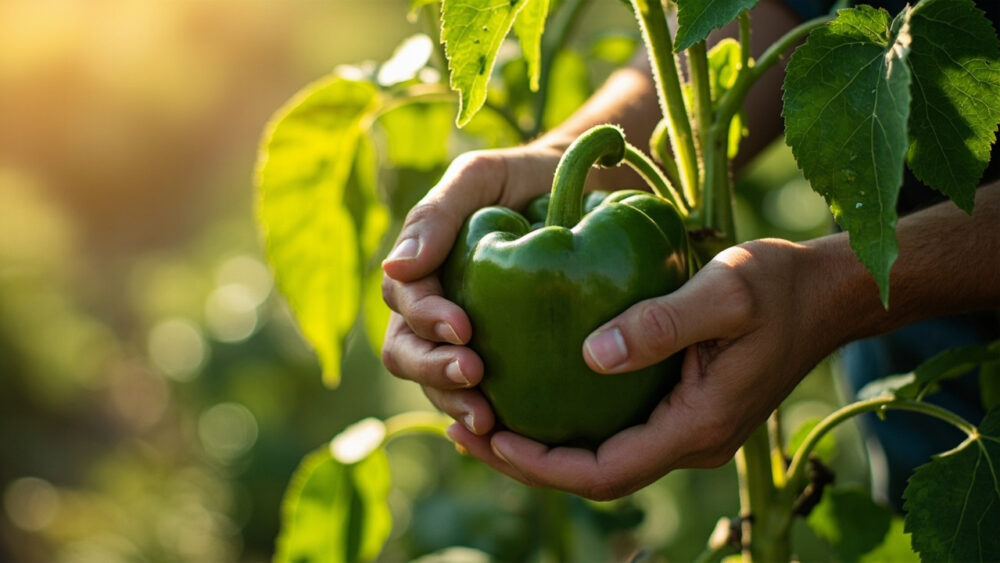
You can harvest peppers the moment they reach full size and firm up, even while still green, or you can wait for them to color up fully for a sweeter, milder, or hotter flavor depending on the variety. Both are correct harvests. The exact timing depends entirely on what you planted and what you’re after, and knowing when to harvest peppers really comes down to reading the fruit, not the calendar.
Here’s where most people trip up though. They either yank peppers too early because the plant “looks done,” or they leave a colored pepper hanging too long and lose the whole thing to rot or a hard frost overnight. There’s also a mistake with the cutting itself that snaps stems and costs you the next three peppers on that branch.
Stick around and I’ll walk through the exact ready signs for green versus colored peppers, the honest tradeoff of picking early versus late, the harvest technique that keeps your plant producing all season, and how to store what you cut. There’s a save-able Peppers at a Glance card waiting at the bottom with every number in one place.
The Ready Signs: What a Pepper Looks and Feels Like When It’s Time
A ready pepper feels firm all the way through, not soft or wrinkled anywhere on the skin. Size matters less than firmness. A bell pepper that’s technically full-grown but still slightly springy under light thumb pressure needs another few days.
For green or “mature but unripe” harvest
The pepper should have stopped growing in size for about a week and have glossy, taut skin with no soft spots. Most bells run 3 to 4 inches across at this stage, jalapeños run 2 to 3 inches long.
For fully ripe, colored harvest
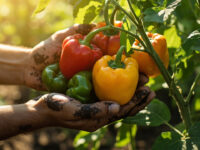
Wait for the pepper to turn its final color completely, no green patches left, whether that’s red, yellow, orange, or purple depending on the variety. This is also when sugars peak and heat in hot peppers intensifies noticeably.
Color is the obvious cue, but firmness is the one that actually tells you not to wait another day.
The Timing Window: Early, Late, and the One That Ruins the Season
If you assumed picking early just means a slightly less flavorful pepper, that guess undersells what actually happens. Pulling green peppers isn’t a mistake at all, it’s a legitimate harvest style used for bells, jalapeños, and poblanos everywhere. The real damage happens on the other end: peppers left too long on the plant past full ripeness start to soften, wrinkle, or split, and in hot, humid weather they can rot right on the stem within days.
The bigger risk is frost. Pepper plants are tender and die at temperatures near 32°F, and unlike tomatoes, a frost-touched pepper doesn’t ripen further once picked. If a cold night is forecast and you have colored or near-colored peppers still hanging, that’s your deadline, not a suggestion.
There’s a production tradeoff too. Peppers you pick green come off faster, and removing fruit early actually pushes the plant to set more blossoms. Let too many peppers ripen fully and hang, and the plant slows down, treating those ripe fruits as “mission accomplished.”
Timing isn’t just about the fruit, it’s about what the plant does next, and that’s where harvest technique comes in.
How to Harvest Without Wrecking the Plant
Pepper stems are surprisingly brittle where they meet the branch, and a hard tug snaps the whole branch, not just the fruit. That’s the mistake almost everyone makes at least once, usually on a jalapeño plant loaded with fruit.
- Use scissors or pruning snips rather than pulling by hand, cutting the stem about half an inch above the pepper’s cap.
- Support the branch with your free hand while you cut, especially on heavily loaded plants where the weight bends stems.
- Cut, don’t twist. Twisting is what tears the stem tissue and opens the branch to disease.
- Harvest in the morning when the plant is hydrated and fruit is firmest, avoiding the afternoon wilt.
Get the cutting right and you protect every pepper still coming behind this one.
Right After the Cut: What to Do With a Fresh-Picked Pepper
Peppers don’t need to be washed immediately, but they do need to cool down out of direct sun fast if it’s a hot day. Set them in a shaded spot or bring them inside within the hour.
Check each one for a soft spot near the stem cap, that’s usually the first place rot starts and it’s easy to miss in the field. Set any questionable ones aside to use first rather than storing them with the rest.
Unwashed peppers keep in the refrigerator crisper drawer for one to two weeks, longer for thicker-walled bells than thin-walled hot peppers. Wash them only right before you plan to use or preserve them, since extra moisture speeds up softening.
That handles today’s harvest, but the real payoff is keeping the plant producing through fall.
Keeping the Harvest Coming: Picking to Extend the Season
Here’s the honest answer to the question every pepper grower eventually asks: does picking peppers make the plant grow more? Yes, consistently and noticeably. A pepper plant with ripe or near-ripe fruit hanging on it slows new flower production, since the plant’s energy goes into finishing what it already has.
Pick regularly, even a little early, and you’ll get more total peppers over the season than if you let everything ripen fully before touching the plant. This matters most with prolific varieties like jalapeños, serranos, and shishitos.
Toward the end of the season, when frost is 2 to 3 weeks out, switch strategy entirely. Pick everything usable, ripe or not, since green mature peppers can often ripen indoors on a sunny windowsill over a week or two, even if the flavor won’t be quite as deep as vine-ripened.
All of that only matters if you know what to check the moment you’re standing at the plant, which is exactly what the card below is for.
Peppers at a Glance
- When to plant: set transplants out 2 to 3 weeks after your last frost date, once nighttime temperatures stay reliably above 55°F.
- Spacing and depth: space plants 16 to 24 inches apart, planting at the same depth they sat in the pot, no deeper.
- Days to harvest: 60 to 75 days from transplant for green harvest, add 2 to 4 more weeks for full color on most varieties.
- Ready signs: firm skin with no soft spots, full size held steady for about a week, full color if waiting to ripen.
- How to cut: snip the stem with scissors or snips half an inch above the cap, never pull or twist by hand.
- Storage: unwashed in the refrigerator crisper drawer, 1 to 2 weeks for bells, slightly less for thin-walled hot peppers.
- Frost deadline: harvest everything usable once frost is forecast, since peppers do not ripen further once picked and die at 32°F.
When in doubt, pick it. A slightly early pepper is dinner, a plant stripped by frost is a lost harvest.
Check firmness first, color second, and let the scissors do the work.