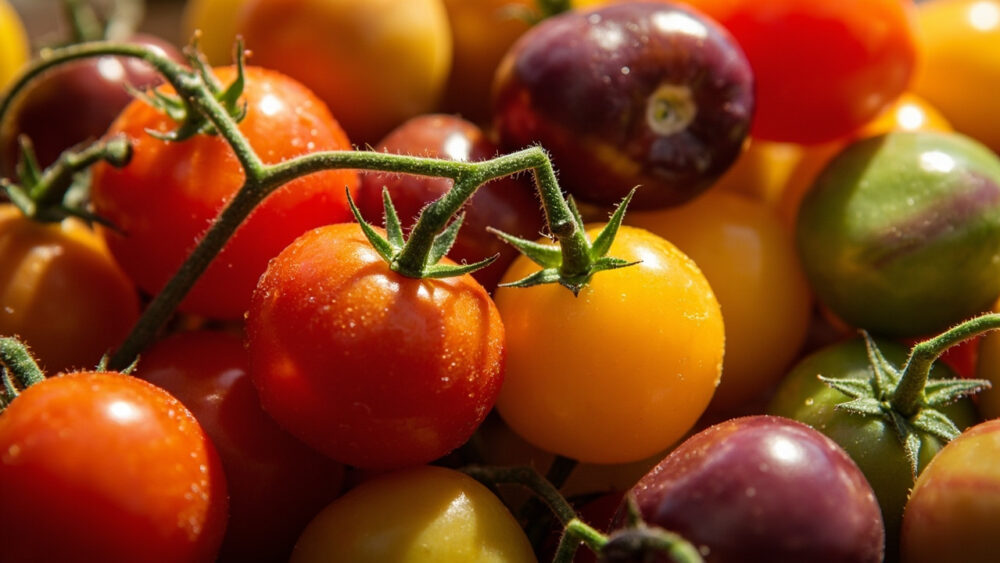
The fastest way to sort out types of cherry tomatoes is by color and growth habit, not name recognition, because two tomatoes both called “cherry” can differ completely in sweetness, plant size, and how much space they demand. Some grow on tidy 12 inch plants made for containers, others sprawl 8 feet and need a full trellis. Get the habit and color right first and flavor differences make sense fast.
Most people grab whatever cherry tomato has the prettiest seed packet photo, which usually means picking a rampant indeterminate vine for a patio pot that can’t hold it. Meanwhile, a lot of experienced growers quietly skip the famous names and grow one specific old variety every single year because nothing else tastes like it. Number 13 on this list is the one most gardeners misjudge completely, assuming it behaves like every other yellow cherry tomato when it does something entirely different.
The last few entries below, plus a straight method for picking the right one for your space and climate, are waiting at the bottom of this list.
Classic Red Cherry Tomatoes
These are the workhorses, the ones people picture when they hear “cherry tomato,” reliable and productive across almost any climate.
1. Sweet 100
Extreme productivity is the whole point here. This indeterminate vine throws long clusters of small, sweet red fruit nonstop from midsummer until frost, and it needs a sturdy 5 to 6 foot cage or trellis because it does not stop growing. Good for gardeners who want volume for snacking and salads and don’t mind constant picking.
2. Sweet Million
An improved, disease-resistant cousin of Sweet 100, bred for better resistance to fusarium wilt and cracking. Flavor and habit are nearly identical, so if Sweet 100 has struggled with disease in your garden before, this is the direct swap.
3. Red Robin
The true patio option in this group, a determinate dwarf that tops out around 8 to 10 inches tall. It fits a 6 to 8 inch pot on a sunny windowsill or balcony rail, produces modestly rather than heavily, and is the one to pick when space is the deciding factor, not yield.
4. Gardener’s Delight
An heirloom with real tomato flavor, less watery-sweet than the hybrid types and more balanced with acidity. It grows as a vigorous indeterminate vine 5 to 6 feet tall and rewards gardeners who want a cherry tomato that tastes like a full-size heirloom in miniature.
Reds cover the reliable middle ground, but color is where cherry tomatoes start telling you something about flavor.
Yellow and Orange Cherry Tomatoes
Lower acid, generally sweeter to the palate even when sugar content is similar to red types, which is why people who say tomatoes upset their stomach often do fine with these.
5. Sun Gold
The tomato most seed catalogs oversell, except in this case the hype holds up. Tangerine-orange, tropical-fruity, and genuinely the sweetest widely grown cherry tomato, it’s an indeterminate vine that needs full trellising and splits fast after rain, so pick it the moment it colors up.
6. Golden Nugget
A compact determinate bred for shorter seasons and smaller spaces, staying around 2 to 3 feet tall. Fruit is smaller and milder than Sun Gold, and this is the better pick for a raised bed with limited vertical room.
7. Snow White
Pale ivory-yellow, almost translucent, and one of the mildest, least acidic cherry tomatoes grown. It’s an indeterminate vine that needs full sun and steady moisture to avoid a mealy texture, suited to gardeners who find even yellow tomatoes too tart.
If yellow already surprised you, black and green tomatoes change the flavor conversation entirely.
Black, Purple, and Green Cherry Tomatoes
These get their color from anthocyanin pigments layered over the usual red, and they tend to carry a deeper, almost smoky sweetness that reds and yellows don’t have.
8. Black Cherry
Dusky maroon-purple skin with a rich, wine-like sweetness that tastes noticeably different from any red or yellow type. It’s a vigorous indeterminate vine, heat tolerant, and one of the most requested “have you tried this” tomatoes among people who grow a lot of varieties.
9. Chocolate Sprinkles
A striped mahogany-brown cherry bred from Black Cherry lineage, with the same deep sweetness plus visible dark speckling. Grows as a tall indeterminate vine and holds up well against cracking, better than its parent variety in wet weather.
10. Green Grape
Stays green even when ripe, which is the single biggest trap with this one. You judge ripeness by a slight color shift toward chartreuse-yellow and a gentle softening, not by waiting for red. Sweet and tart with a grape-like snap, on a compact 2 to 3 foot determinate plant.
Color has covered flavor, now shape and size change what these tomatoes are actually good for in the kitchen.
Grape and Elongated Types
Technically a different fruit shape than round cherry tomatoes, but sold and used the same way, and worth knowing apart because they behave differently on the vine.
11. Juliet
An oblong, mini-Roma shaped fruit that resists cracking better than almost any round cherry type, which makes it the reliable choice in areas with unpredictable summer rain. Indeterminate, heavy yielding, and good both fresh and roasted whole since the flesh holds together under heat.
12. Yellow Pear
Shaped exactly like its name, small teardrop fruit in pale yellow, mild and slightly tangy rather than sweet. It’s an old heirloom, indeterminate and sprawling, grown more for how it looks in a mixed harvest bowl than for standout flavor.
13. Tiny Tim
This is the one most gardeners get wrong, assuming any tomato this small and cute must be another patio-friendly dwarf like the pear or grape types above. It actually is the dwarf, topping out around 12 to 18 inches, but the fruit itself is round and red, not elongated, and it’s genuinely one of the only cherry tomatoes that thrives in a hanging basket or a 5 gallon pot with zero staking. Flavor is mild, not a showstopper, but for pure container practicality it beats every vine type on this list.
Shape sorted out, the last two entries cover the extremes: the earliest tomato you’ll pick and the biggest true cherry you can grow.
Specialty and Extreme Cherry Tomatoes
These two solve specific problems, short seasons and the desire for a cherry tomato with more bite per fruit.
14. Tumbling Tom
Bred specifically to cascade out of hanging baskets and rail planters rather than climb. Compact and self-branching, it needs no staking at all, produces smaller yields than a full vine type, and is the right call when the growing space is a balcony rail, not a garden bed.
15. Riesentraube
German for “giant bunch of grapes,” and that’s exactly the payoff, huge trusses of 20 to 40 fruits per cluster on a tall indeterminate vine. Individual fruits run larger than most cherry types, almost cherry-tomato-sized cocktail tomatoes, with a rich, tangy flavor suited to gardeners who want fewer, bigger clusters instead of constant small picking.
How to Choose the Right One
- Measure your actual space first: a 6 to 8 inch pot means Red Robin or Tiny Tim, a hanging basket means Tumbling Tom, a full bed with a trellis opens up everything indeterminate.
- Match habit to your climate: short or unpredictable seasons favor compact determinates like Golden Nugget, while long hot summers let vigorous vines like Sun Gold or Black Cherry hit full production.
- Decide the purpose before you buy seed: snacking and salads want high sugar types like Sun Gold or Black Cherry, roasting and sauces want crack-resistant shapes like Juliet.
- Be honest about rain and cracking in your area: if summer storms are common, prioritize Juliet, Sweet Million, or Chocolate Sprinkles over crack-prone types like Sun Gold.
- Weigh your appetite for staking and pruning: sprawling indeterminates need weekly attention on a trellis, dwarf and determinate types are closer to plant-and-forget.
- If you only have room or patience for one plant, pick based on flavor preference alone: mild and tangy points to a yellow or green type, deep and sweet points to a black or Sun Gold type.
Pick based on the space you actually have, not the plant tag photo, and almost any variety on this list will reward you by midsummer.