Desert rose (Adenium obesum) wants full sun, a fast-draining cactus mix, and long stretches of near-neglect on the water front. That’s how to care for desert rose in one sentence: bright light, a pot that dries out fast, and a heavy hand held back. Get those three right and the plant does most of the rest itself.
But there are details that trip people up badly enough to lose the plant entirely. The mistake that kills more desert roses than anything else has nothing to do with light or fertilizer, and it happens in the first month someone owns one. There’s also a sign of a happy desert rose that looks, at first glance, exactly like a sign of a dying one, and knowing the difference matters more than any watering schedule.
I’ll get to both, plus the honest answer to the question every new owner eventually asks about that swollen base. Save-able specifics, the kind you want on your phone before you’re standing at the plant wondering what to do, are in the Desert Rose at a Glance card at the bottom.
Light, Placement, and Temperature
Desert rose needs as much direct sun as you can give itminimum 6 hours, ideally more. A south or west-facing window works indoors, but this plant genuinely prefers to live outside in warm months and only comes in when nights drop into the 50s F.
It wants heat. Anything from about 65 to 95 F is comfortable, and it stalls out and sulks below 50 F. Frost kills it outright, so this is strictly a zone 11 to 12 outdoor plant year-round; everyone else grows it as a container plant that summers outside and winters indoors near the brightest window in the house.
Low light is the number one reason a desert rose refuses to bloom and gets leggy and pale.
Watering: The Mistake That Ruins Most Attempts
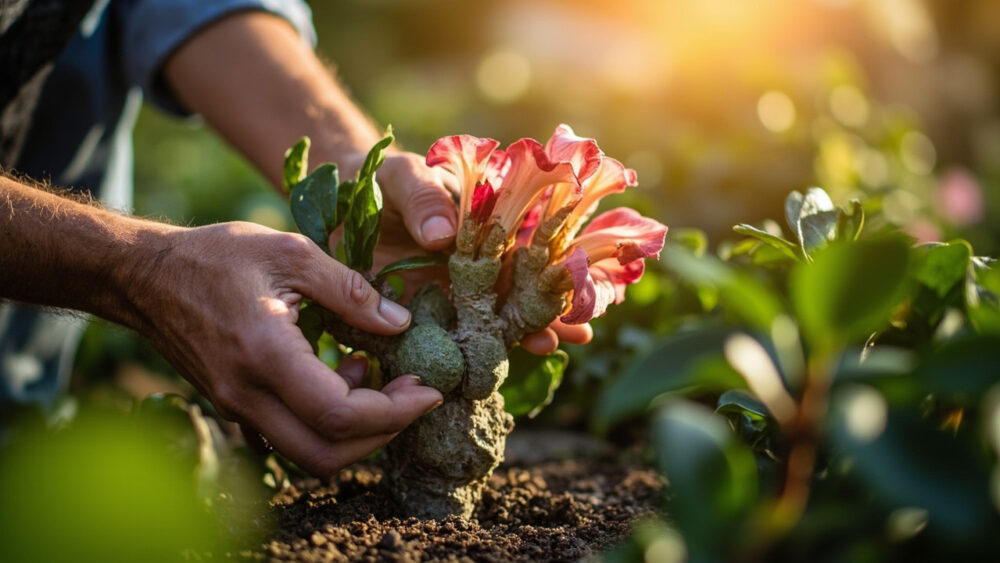
Here’s the mistake: treating desert rose like a normal houseplant on a weekly watering schedule. That fat, bulbous base (the caudex) is a water tankand if you’re guessing that more water grows a bigger, healthier-looking base faster, that guess is exactly backward. Overwatering rots the caudex from the inside, often before you see a single warning sign on top.
The real rule: water only when the top 1 to 2 inches of soil are completely dry, then soak thoroughly and let it drain fully. In summer heat that might mean every 7 to 10 days. In winter, when growth nearly stops, it can stretch to every 3 to 4 weeks, sometimes longer.
Check by feel, not by the calendar. Stick a finger in past the first knuckle; if you feel any dampness at all, wait.
A desert rose would almost always rather go too dry than too wet, which is the opposite of how most houseplants behave.
Soil, Pots, and Feeding
Use a cactus or succulent mixand if you want to be sure, cut it further with perlite or coarse sand until roughly half the mix is grit. Regular potting soil holds too much water around that caudex and is how rot starts.
The pot matters as much as the mix. Always use one with a drainage hole, unglazed terra cotta if you can, since it wicks moisture out of the soil between waterings.
Feed during the active growing season, spring through early fall, with a balanced or bloom-boosting fertilizer diluted to about half strength, every 4 to 6 weeks. Skip feeding entirely in winter.
Get the soil and pot right and watering mistakes become much harder to make in the first place.
Pruning, Repotting, and the Caudex Question
Prune after flowering or in early spring, cutting back leggy stems to encourage branching. The plant responds well and often blooms more the following season for it. Wipe leaves occasionally to keep dust off, since that’s basically the whole cleaning routine.
Repot every 2 to 3 years, always in spring as growth resumes, and go up only one pot size at a time. Desert rose actually prefers being slightly snug in its pot.
Now the question everyone eventually has: can you expose more of that swollen base above the soil line? Yes, and many growers do exactly that during repotting to show off the sculptural trunk, lifting it gradually over a couple of repottings rather than all at once.
Just don’t confuse a slowly, intentionally exposed caudex with one that’s suddenly gone soft, which is a different problem entirely.
Problems That Actually Show Up
Root and caudex rot is the big one, almost always from overwatering or a pot without drainage. A soft, mushy, or discolored base means cutting away the damage back to firm, white tissue and repotting into dry mix, but advanced cases often don’t recover.
Watch for mealybugs and spider mites, especially on plants kept indoors through winter. Both show up as fine webbing, sticky residue, or tiny cottony clusters in leaf joints. Treat with insecticidal soap or a horticultural oil, following the product label exactly.
Dropped leaves in fall aren’t a crisis. Desert rose is semi-succulent-deciduous and many go fully leafless through a cool, dry winter, which is normal dormancy, not death.
Every desert rose problem worth worrying about traces back to water, either too much of it or not enough light to use it well.
The Sign Everyone Misreads
Here’s the one that fools people: a desert rose that’s dropping leaves and looks bare can be either dying of rot or simply going dormant for winter, and the two look almost identical from across the room.
The tell is the caudex. If it stays firm, plump, and its normal color while leaves drop, that’s dormancy, completely normal, and watering should slow way down to match. If the base feels soft, spongy, or turns dark and mushy, that’s rot, and it needs attention now, not patience.
A genuinely thriving desert rose shows it through new growth: fresh green leaf tips in spring, a caudex that’s slowly thickening year over year, and flowers, typically pink, white, or red-and-white blooms, appearing anytime the plant gets enough sun and warmth, often for months at a stretch.
Learn to check the base instead of just the leaves and you’ll never confuse a resting plant with a dying one again.
One Safety Note Worth Knowing
Desert rose sap is toxic and has historically been used to make arrow poison, so it’s not a plant to have where curious pets or kids can chew on stems or leaves. If a pet or child ingests any part of the plant, contact a veterinarian or poison control right away rather than waiting to see what happens.
With that noted, here’s everything worth saving for the next time you’re standing in front of your own plant.
Desert Rose at a Glance
- Light: full sun, at least 6 hours daily, brightest window indoors or a sunny patio outdoors in warm months.
- Temperature: keep between 65 and 95 F, bring indoors before nights drop below 50 F, never expose to frost.
- Watering: soak thoroughly only when the top 1 to 2 inches of soil are fully dry, roughly every 7 to 10 days in summer, every 3 to 4 weeks or longer in winter.
- Soil and pot: fast-draining cactus mix cut with extra perlite or sand, always in a container with a drainage hole.
- Feeding: half-strength balanced or bloom fertilizer every 4 to 6 weeks, spring through early fall only, none in winter.
- Repotting: every 2 to 3 years in spring, one pot size up at a time.
- Warning sign: a firm caudex with dropped leaves is normal winter dormancy, a soft or mushy caudex is rot and needs action now.
If you remember nothing else, remember this: water by feel, not by schedule, and check the base, not the leaves.
Get that pair of habits right and desert rose is one of the easier, longer-lived plants you’ll ever grow.