The honest answer is every 10 to 14 days in spring and summer, and every 3 to 4 weeks (sometimes less) in fall and winter, but that number means nothing without checking the soil first. Desert rose (Adenium obesum) stores water in that swollen caudex at the base, which is exactly why so many people kill it with kindness. How often to water desert rose depends more on what the soil feels like and how the leaves look than on any calendar you tape to the wall.
Here is what nobody tells you upfront: the mistake that ends most people’s desert rose isn’t underwatering, it’s watering on a fixed schedule regardless of season. The second mistake is misreading yellow, dropping leaves as thirst when it’s usually the opposite problem entirely.
Stick with me and you’ll get the finger test, the pot-weight trick, the real tell between over and underwatering, and a save-able Desert Rose at a Glance card at the very bottom of this page. That card alone is worth screenshotting before you go outside.
The Real Schedule, and What Changes It
In active growth, roughly spring through early fall when temperatures sit above 65°F, water every 10 to 14 days. In dormancy, when temps drop below 60°F and growth stalls, stretch that to every 3 to 4 weeks, sometimes longer.
Pot size and material change the math fast. A desert rose in a small terra cotta pot dries out in half the time of one in a large glazed ceramic pot. Terra cotta breathes, glazed doesn’t, and that difference alone can shift your schedule by a week.
Light matters just as much. A desert rose baking in full, direct sun all day dries out faster than one getting bright but filtered light, even in identical pots.
None of these numbers replace checking the plant itself.
Check, Don’t Guess: The Finger Test and Pot Weight Trick
Push a finger 1 to 2 inches into the soil. If it’s bone dry at that depth, water. If there’s any dampness clinging to your skin, wait.
Pot weight is the trick experienced growers actually rely on. Lift the pot right after watering and remember roughly how heavy it feels. Lift it again in a few days. When it feels noticeably light, almost hollow, that’s your cue.
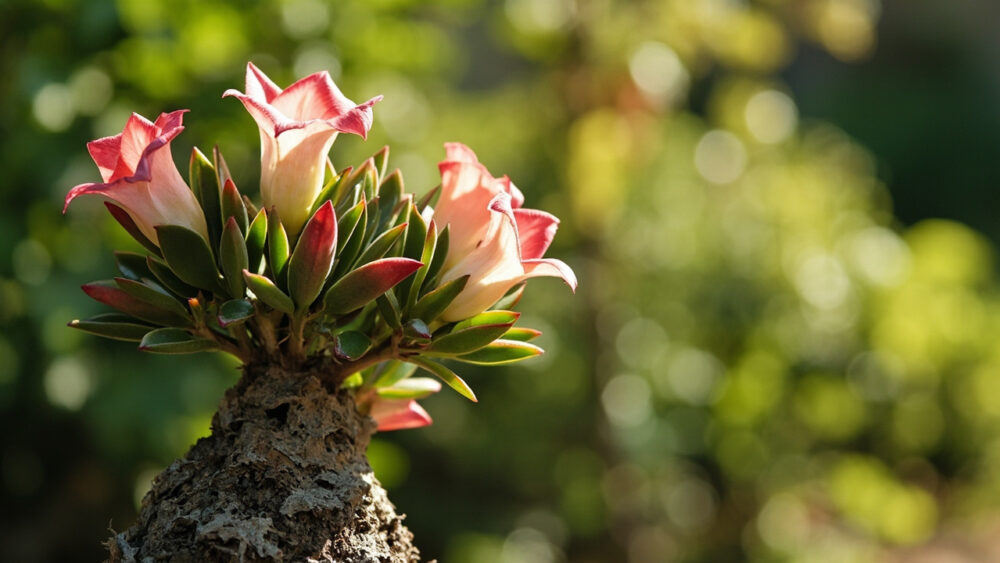
The caudex itself tells you something too. A plump, firm, rounded base means the plant has reserves. A caudex that looks shriveled, wrinkled, or visibly shrunk means it’s drawing down its water storage and it’s time.
Soil moisture meters work fine here too, but your finger and a lifted pot cost nothing and never need batteries.
Once you know it needs water, how you deliver it matters just as much as when.
How to Water Desert Rose Properly
Water thoroughly until it runs freely out the drainage holes, then let the pot drain completely before it sits back in a saucer or tray. Never let it sit in standing water.
A quick, shallow splash on top of the soil does more harm than good. It wets only the top inch, encourages roots to stay shallow, and leaves the deeper roots and caudex parched even though the surface looks damp.
Desert rose needs fast-draining soil for this to work at all. A cactus and succulent mix, ideally cut with extra perlite or pumice, is non-negotiable here.
In soil that drains poorly, even a “correct” watering schedule will rot the roots regardless of how carefully you time it.
Get the soil right and the watering interval finally starts to behave the way it’s supposed to.
Overwatering vs Underwatering: The Tell People Get Backward
If you assumed yellow, dropping leaves mean the plant is thirsty, that guess kills more desert roses than drought ever does. Yellowing leaves that drop while the soil is still damp are the classic overwatering signal, not underwatering.
Underwatering shows up differently. Leaves go soft, dull, and slightly wrinkled, and the caudex visibly shrinks and softens at the base. The plant looks deflated rather than yellow.
Overwatering shows up as mushy, dark, or black patches near the soil line, a caudex that feels soft or squishy instead of firm, and a sour or rotten smell from the soil. This is root rot territory, and it’s the harder problem to reverse.
If you catch soft rot early, unpot the plant, cut away any blackened or mushy roots and caudex tissue with a clean blade, let the cuts dry for a day or two, and repot into dry, fast-draining soil without watering for a week or more.
Once you can tell these two apart on sight, the schedule stops being a guess and starts being a response.
Seasonal Adjustments That Actually Matter
Desert rose is genuinely dormant in cooler months, and that’s the honest answer to the follow-up question most people are about to ask: no, you do not water it the same way all year.
Below about 60°F, growth slows or stops entirely, and the plant needs a fraction of the water it needed in July. Watering on a summer schedule through a cool, dim winter is the single fastest route to root rot.
If your desert rose drops most or all of its leaves in winter, that’s normal dormancy behavior, not a crisis, as long as the caudex stays firm.
Outdoors in USDA zones 10 to 12, plants can stay in the ground or in pots year round, but still need less water once nights cool. Everywhere else, this is a container plant that comes indoors before temperatures dip toward the mid 40s.
Get the seasonal shift right and the rest of the year mostly takes care of itself.
Desert Rose at a Glance
- Watering frequency, active season: every 10 to 14 days, spring through early fall, whenever soil is dry 1 to 2 inches down.
- Watering frequency, dormant season: every 3 to 4 weeks or longer, once temps drop below 60°F and growth slows.
- How to check: finger test 1 to 2 inches deep, pot weight after drying, and caudex firmness, not a fixed calendar.
- How to water: water thoroughly until it drains from the bottom, then empty the saucer, never let roots sit wet.
- Soil requirement: fast-draining cactus and succulent mix, cut with extra perlite or pumice.
- Overwatering signs: yellow leaves dropping with damp soil, soft or mushy caudex, sour smell at the roots.
- Underwatering signs: dull, wrinkled leaves and a visibly shrunken, softening caudex.
When in doubt, check the soil and lift the pot before you water, don’t just water because it’s been a while.
A firm caudex and a plant that’s slightly thirsty will always recover faster than one sitting in wet soil.