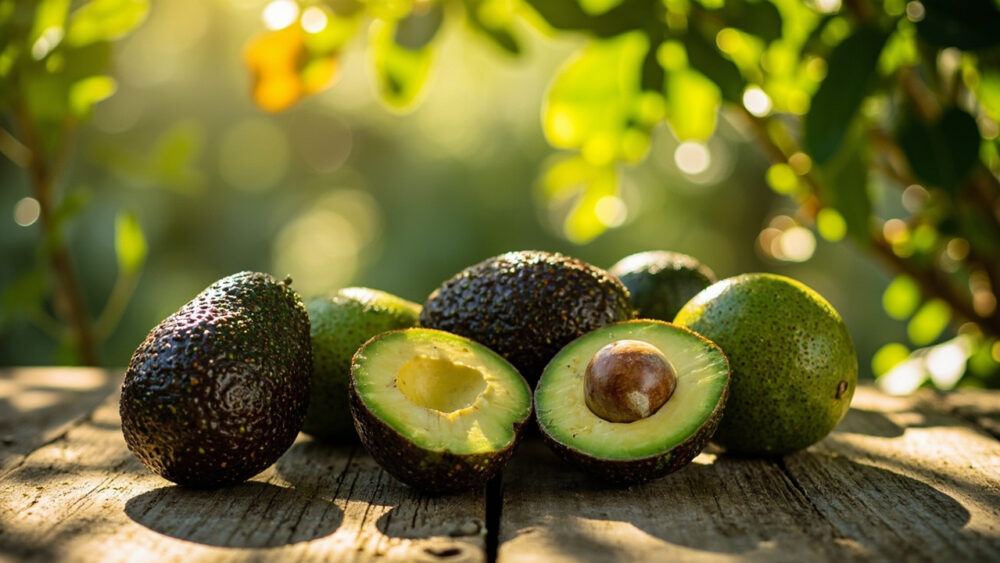
The fastest way to narrow down avocado varieties is by cold tolerance, not flavor. Mexican-type avocados handle temperatures down into the low 20s Fahrenheit, Guatemalan types sulk below the high 20s, and West Indian types want true tropical warmth with no frost at all. Almost everything sold at nurseries is a hybrid of these three, and knowing which lineage dominates tells you instantly whether a tree survives your winter or dies in it.
Most people pick Hass because it is the only avocado they have ever eaten, which is a fine reason at the grocery store and a weak one in the yard. Hass wants a warm, frost-light climate and a lot of patience, and plenty of gardeners plant it in conditions where a hardier variety would have fruited years sooner. Experienced growers quietly favor a couple of the less famous types below because they fruit younger, tolerate more cold, or simply taste better fresh off the tree than anything trucked to a store ever could.
Number 13 on this list is the one most people get completely wrong, usually by planting it alone and wondering why it never sets fruit. Stick with me through the categories below and the final entries, plus a straightforward method for choosing between them, are waiting at the bottom.
The Classics Everyone Knows
These are the varieties behind almost every avocado sold commercially, and for good reason.
1. Hass
The pebbly-skinned standard against which every other avocado gets judged, Hass is a Guatemalan-Mexican hybrid with rich, nutty flesh and skin that darkens to near-black when ripe. It grows best in USDA zones 9 through 11, needs protection below about 28°F, and typically takes three to four years to bear after planting a grafted tree.
2. Fuerte
A Mexican-Guatemalan cross with smooth, thinner green skin that stays green even ripe, Fuerte has a milder, less oily flavor than Hass and was the industry standard before Hass took over. It handles cold better than Hass, tolerating brief dips into the mid-20s, and makes a good choice for growers just outside true avocado country.
3. Bacon
One of the more cold-hardy grocery-store types, Bacon is a Mexican-dominant hybrid that survives down to around 24°F once established. The flavor is watery and mild compared to Hass, which is the honest trade-off for its toughness, and it works best as a pollinator partner rather than the main event.
4. Reed
A round, thick-skinned Guatemalan type that ripens in summer when most avocados are between seasons, Reed produces large, smooth-textured fruit on a compact, upright tree. It is a strong pick for small yards since it stays more contained than sprawling varieties, though it still needs a warm, frost-free spot.
Those four cover what most people already expect from an avocado, but the next group is where flavor actually gets interesting.
Cold-Hardy Types for Marginal Climates
If you garden anywhere winter temperatures flirt with freezing, this is the category that actually matters to you.
5. Mexicola
The toughest common avocado, Mexicola is nearly pure Mexican-type and survives short drops to around 20°F, sometimes lower once mature. The fruit is small, thin-skinned, and intensely rich with a faint anise note, and trees often bear in as little as two to three years from planting.
6. Stewart
A smaller, hardier cousin to Mexicola, Stewart tolerates similar cold and produces pear-shaped fruit with dark, almost black skin and creamy flesh. It is a good dooryard tree for zone 8b to 9 gardeners who assumed avocados were off the table entirely.
7. Mexicola Grande
A larger-fruited sport of Mexicola with the same cold tolerance and thin, edible skin, this one gives you noticeably more flesh per fruit without giving up any hardiness. It is the variety experienced cold-climate growers plant when they want Mexicola’s toughness but grew tired of its small size.
Cold hardiness solves half the planting problem, but the other half is whether the tree fruits reliably at all.
Varieties Bred for Better Fruit Set
Avocados flower in two complementary patterns, called Type A and Type B, and pairing one of each dramatically improves pollination and yield.
8. Zutano
A Type B pollinator with pale green, thin skin and mild flavor, Zutano is mostly grown to sit next to a Type A tree like Hass or Reed rather than for eating fresh. It is fast-growing, reasonably cold-hardy into the mid-20s, and bears young.
9. Pinkerton
A Type A variety with an unusually long, pear-shaped fruit, Pinkerton has a small seed relative to its flesh, which means more usable avocado per fruit than most varieties. It sets fruit heavily even without a dedicated pollinator nearby, making it a forgiving choice for a single-tree yard.
10. Sir Prize
A Type B avocado bred as a Hass-quality alternative, Sir Prize has similar rich, nutty flesh but ripens later in the season, stretching your harvest window if you already grow a Type A tree. It is less common at nurseries than the others here, so expect to hunt a bit for a grafted specimen.
11. Lamb Hass
A Hass-Gwen cross that keeps Hass flavor but produces on a more compact, upright tree and often bears more consistently year to year. Hass itself is notorious for alternating a heavy crop with a light one, and Lamb Hass smooths that out somewhat.
Pairing types is a real yield booster, but the next category is about avocados that break the usual rules entirely.
Specialty and Backyard Favorites
These are the varieties you rarely see for sale as fruit but that dedicated home growers plant on purpose.
12. Gwen
A dwarfing Type A variety related to Hass, Gwen grows on a noticeably shorter, denser tree, which makes it a genuinely good container or small-yard option where full-size avocado trees would overwhelm the space. Flavor is very close to Hass, rich and nutty, and it fruits at a younger age.
13. Wurtz (Little Cado)
The true dwarf of the avocado world, Wurtz tops out around 8 to 10 feet and is genuinely self-fruitful, meaning it does not strictly require a second tree nearby. The mistake nearly everyone makes is assuming self-fruitful means heavy-fruiting: yields are modest, and even a self-fruitful avocado sets more fruit with a second variety blooming nearby, so plant it expecting a light but reliable harvest, not a self-sufficient orchard in one pot.
14. Sharwil
An Australian-bred Guatemalan-Mexican hybrid prized for exceptionally smooth, buttery flesh with almost no fiber, Sharwil is considered by a lot of home growers to out-taste Hass entirely. It is more disease-prone in humid climates and less widely available as a grafted tree, which is the honest reason it never went commercial.
15. Nabal
A round, thick-skinned Guatemalan type with a long summer harvest season and excellent storage life on the tree, Nabal fruit can hang for weeks after ripening without dropping or spoiling. It is a strong pick if you want to stretch a harvest across a season rather than dealing with everything ripening at once.
How to Choose the Right One
- Check your winter lows first: below 28°F rules out most Guatemalan types, below 24°F narrows you to Mexican types like Mexicola or Stewart.
- Match the space you actually have: full-size trees need 20 to 30 feet of room eventually, while Gwen and Wurtz work in small yards or large containers.
- Decide if you’re growing for fresh eating, storage, or a long harvest window, since Nabal and Sir Prize stretch the season while Reed and Pinkerton hit hard in a shorter window.
- Plant a Type A and Type B pair if you have room for two trees, since cross-pollination reliably improves fruit set over a single tree alone.
- Be honest about your patience: grafted trees typically bear in two to four years, and a heavy-alternating variety like standard Hass will test you more than a steadier one like Lamb Hass.
Any of these will grow an avocado tree. The right one is the one matched to your winter, your space, and how long you’re willing to wait for the first fruit.