Pothos care comes down to five things: bright indirect light, water only when the top inch or two of soil is dry, a pot with drainage, warmth above 55 F, and an occasional trim so it doesn’t turn into a thin, leggy mess. Get those right and pothos will forgive almost everything else you do wrong. It’s one of the few houseplants that actually wants to be left alone more than fussed over.
Most people who kill a pothos do it with kindness, watering on a schedule instead of checking the soil. That’s the mistake that ends more pothos plants than neglect ever does. There’s also a sign nearly everyone misreads on this plant, and it’s not the leaves going yellow, it’s what the vine does right before it.
Stick around and I’ll also answer the question you’re probably about to ask next: whether those yellow or brown leaves mean you should repot immediately. Short answer, usually not yet. Full answer’s below, along with a save-able Pothos at a Glance card at the very bottom with everything on one list.
Light, Placement, and Temperature
Pothos wants bright, indirect light, a few feet back from an east or west window, or a north window if it’s not too dim. Direct hot afternoon sun will scorch the leaves into pale, papery patches. Too little light won’t kill it, but the vines stretch out with big gaps between small leaves, and any variegation fades toward solid green.
It tolerates lower light better than almost any common houseplant, which is exactly why people shove it in a dark corner and forget it. It’ll survive there. It won’t look like much.
Temperature between 65 and 85 F is the sweet spot. Below 50 F for any length of time causes dark, mushy patches on the leaves that don’t recover, so keep it off cold windowsills in winter and away from drafty doors.
Where you put it matters more than most people think, and watering is where the real damage happens.
Watering: How Much, How Often, and How to Tell
Water when the top 1 to 2 inches of soil are dry to the touch. In an average indoor room that’s roughly every 7 to 10 days, but light, pot size, and season swing that widely, so the calendar is a suggestion and your finger is the instrument.
If you assumed drooping leaves always mean the plant is thirsty, that guess is half right and half backward. Pothos droops from both underwatering and severe overwatering, and the two look almost identical from across the room.
The tell is the soil, not the leaves. Dry, crumbly soil with a droopy plant means water now. Wet, soggy soil with a droopy plant means you’ve got root rot starting and the fix is drier soil and possibly a repot, not more water.
Yellow lower leaves, one or two at a time, are normal aging and nothing to panic over. Multiple yellow leaves at once, especially paired with wet soil, means you’re overwatering.
Always water until it runs from the drainage holes, then dump the saucer. Standing water is the single fastest way to rot the roots on this plant.
Get the water right and the soil underneath needs to back it up.
Soil and Feeding
Any standard well-draining houseplant potting mix works fine. If you want to get particular, add a handful of perlite to a bagged mix to open it up further, since pothos roots hate sitting wet.
The pot needs a drainage hole. Decorative pots without one are fine as a cachepot the nursery pot sits inside, but never plant pothos directly into a sealed container.
Feeding is genuinely optional. A balanced liquid houseplant fertilizer at half strength once a month during spring and summer will speed growth and deepen leaf color. Skip feeding entirely in fall and winter when growth slows, since fertilizer on a dormant plant just builds up salts in the soil.
Underfed pothos still grows, just slower and with smaller leaves, so this is the one input you can genuinely skip without much consequence.
Soil and food are the quiet half of care, pruning is the visible half.
Pruning, Repotting, and Cleaning
Pinch or snip vines just below a leaf node any time they get leggy or bare at the base, which is most of the year with this plant. This is the fix for that thin, sparse look everyone blames on light when it’s often just an unpruned plant that needs cutting back to force new growth from the base.
Repot every 12 to 24 months, or whenever roots are circling the drainage hole or the plant dries out within a day or two of watering. Go up one pot size, not three, since an oversized pot holds excess moisture the roots can’t use fast enough.
Wipe the leaves down every few weeks with a damp cloth. Dust blocks light and slows the plant more than people realize, and this also lets you spot pests early.
Every cutting you snip roots easily in a jar of water on a windowsill, so pruning doubles as free propagation.
Now for the follow-up question everyone has after they see their first brown leaf.
Common Problems and What They Actually Mean
Here’s the honest answer to whether a few yellow or brown leaves mean you need to repot right now: usually not. A leaf or two browning at the tip is often just low humidity or slightly under-watering, not a root emergency. Trim the leaf off and adjust watering before you assume the worst.
Root rot is the real threat, and it shows up as a mushy, dark stem near the soil line, a sour smell from the pot, and leaves that yellow and drop in clusters rather than one at a time. That does mean act now: pull the plant, cut away black or slimy roots, and repot into fresh, dry mix.
Brown, crispy leaf edges point to low humidity or a build-up of fertilizer salts, not underwatering. Flush the pot with plain water occasionally to clear excess salts.
- Small webs and stippled leaves: spider mites, treat by rinsing foliage and isolating the plant, follow any miticide label exactly if it persists.
- White cottony spots in leaf joints: mealybugs, dab with rubbing alcohol on a cotton swab or use an insecticidal soap per the label.
- Sticky residue on leaves or the floor below: scale or aphids, wipe leaves and treat per label if it spreads.
Pothos is toxic to cats, dogs, and people if chewed or swallowed, causing mouth and throat irritation, drooling, and vomiting. If a pet or child eats a significant amount, call a veterinarian or poison control rather than waiting to see what happens.
Once you’ve ruled out the scary stuff, it’s worth knowing what genuinely healthy growth looks like.
Signs Your Pothos Is Actually Thriving
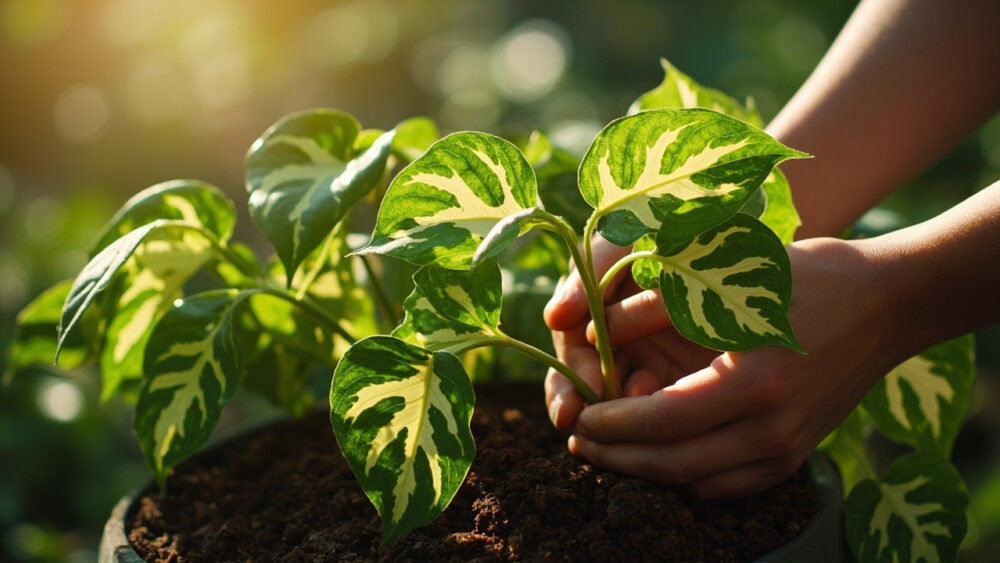
A thriving pothos pushes out new leaves regularly, spring through fall, each one slightly bigger than the last on a healthy vine. The variegation, if the variety has any, stays crisp and high-contrast rather than fading to solid green.
Vines lengthen steadily and the leaves along them stay close together instead of spacing out with bare stem between them. That tight leaf spacing is the single best visual proof that light levels are correct.
Firm stems and roots that just barely show white at the drainage hole, not a tangled mat, mean the pot size is still right.
Everything above boils down to one card worth saving.
Pothos at a Glance
- Light: bright, indirect light is ideal, tolerates low light with slower, leggier growth and faded variegation.
- Watering: water when the top 1 to 2 inches of soil are dry, roughly every 7 to 10 days indoors, adjust for season and light.
- Temperature: keep between 65 and 85 F, protect from anything below 50 F.
- Soil: any well-draining houseplant mix with a pot that has drainage holes.
- Feeding: balanced liquid fertilizer at half strength monthly in spring and summer, skip fall and winter.
- Pruning and repotting: trim leggy vines anytime, repot every 12 to 24 months or when roots circle the drainage hole.
- Toxicity: toxic to pets and people if ingested, contact a veterinarian or poison control for suspected ingestion.
Check the soil with your finger before you water, and prune it back before it gets leggy.
That’s genuinely most of what separates a thriving pothos from a struggling one.