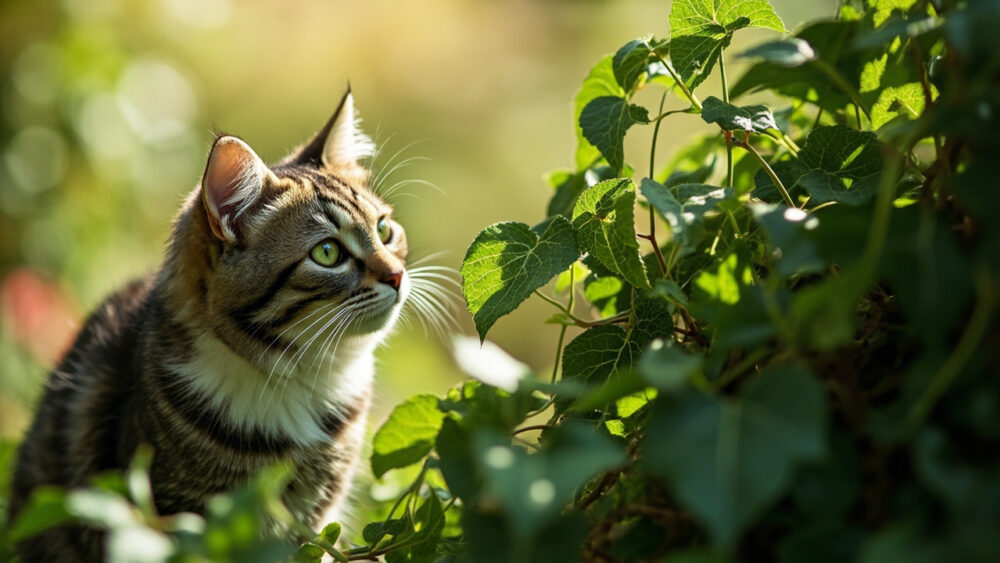
Yes, English ivy (Hedera helix) is toxic to cats. Every part of the plant contains compounds that irritate the mouth, throat, and gut, and the leaves are the most concentrated source of trouble. Most cats that nibble a leaf or two get mild digestive upset, not a life-threatening emergency, but that does not mean you should shrug it off.
What changes the answer is how much your cat actually ate and which part. A curious sniff or a single chewed leaf tip is a very different situation from a cat that stripped several leaves off a hanging basket. There is also a mistake a lot of new plant parents make about which houseplants are “safe” simply because they are common, and English ivy is a good example of why that guess backfires.
Stick with me through the next few sections and I will walk you through the signs to watch for, what to actually do if your cat ate some, and a few genuinely cat-safe look-alikes that give you the same trailing green look without the risk. There is also a save-able quick-reference card at the very bottom you can screenshot before you forget.
So Is English Ivy Actually Toxic to Cats?
Yes, plainly. The ASPCA and veterinary toxicology references both list English ivy as toxic to cats, dogs, and horses. The culprits are triterpenoid saponins, concentrated most heavily in the leaves, with the berries and stems carrying some as well.
This is not one of those “technically toxic but basically harmless” plants people wave off. It is also not one that causes organ failure or is commonly fatal in a healthy adult cat from casual nibbling. It sits in the middle: genuinely unpleasant, occasionally serious, rarely catastrophic.
The dose and the part chewed decide which end of that range you land on.
Which Part, and How Much, Actually Matters
Leaves are the main concern, especially mature, dark green ones, since that’s where the saponin concentration runs highest. A cat that licks a leaf or gets a small taste while playing usually experiences mild mouth irritation and maybe some drooling.
A cat that chews and swallows several leaves is a different story. That’s enough plant material to trigger real gastrointestinal upset, and it’s the scenario that most often ends in a vet visit.
Berries and stems contain the same compounds but cats rarely eat enough of either to matter much, since the taste and texture put most cats off after one try. Kittens and small cats are the exception, since a smaller body means a smaller amount goes further.
Next, here’s what that irritation actually looks like in your cat.
The Signs to Watch For
Mouth and throat irritation shows up first, often within a couple of hours of chewing. Watch for:
- Drooling or pawing at the mouth
- Vomiting
- Diarrhea
- Loss of appetite
- Lethargy or unusual quietness
- Skin redness if the plant sap touched bare skin
Most of these resolve within a day once the plant material is out of the system. That said, persistent vomiting, refusal to eat for more than a day, or visible distress is not something to wait out at home.
If you catch your cat mid-chew or find chewed leaves nearby, don’t wait for symptoms to decide your next move.
What to Do If Your Cat Ate English Ivy
Call your veterinarian or an animal poison control line right away, even if your cat seems fine. Mild cases often need nothing more than monitoring, but a vet is the one who should make that call, not a guess based on how the cat looks right now.
Have a few things ready when you call: roughly how much plant material is missing or how many leaves look chewed, when you noticed it, and any symptoms so far. If you can, snap a photo of the plant and the damage before you clean it up.
Do not try to induce vomiting or give your cat anything at home unless a vet specifically tells you to. Some home remedies people reach for do more harm than the ivy itself.
Keep your cat away from the plant while you’re on the phone, and separate them from any other pets who may have had access too.
Once the immediate scare has passed, the smarter long-term move is rethinking what’s growing in that pot.
Safer Look-Alikes if You Love the Trailing Look
English ivy’s whole appeal is that cascading, leafy trail off a shelf or hanging basket, and the good news is you don’t have to give that up. Several genuinely cat-safe plants do the same job:
- Spider plant (Chlorophytum comosum): non-toxic, trails nicely, and famously hard to kill
- Boston fern (Nephrolepis exaltata): non-toxic, lush texture, likes humidity
- Hoya (many species): non-toxic, slow trailing vine with waxy leaves
- Peperomia (many species): non-toxic, compact and trailing depending on variety
None of these are a perfect visual match for ivy’s lobed leaf shape, but all of them give you green, trailing, low-maintenance houseplant energy without a call to poison control.
If you’d rather keep the ivy itself, the placement matters just as much as the plant choice.
If You Keep the Ivy Anyway
Some readers aren’t going to get rid of a plant they love, and that’s fair. In that case, hang it well out of jumping range, since cats are far better climbers than people expect.
Trim off any low-hanging trails a cat could reach from a shelf or windowsill.
Watch for dropped leaves on the floor, especially after repotting or pruning, since those are often what actually gets eaten, not the plant itself.
None of this makes the plant safe, it just lowers the odds of an accidental bite.
English Ivy: Quick Reference
- Toxic to cats: yes, confirmed toxic per veterinary toxicology sources
- Most toxic part: leaves, due to concentrated saponins, with lower amounts in stems and berries
- Typical severity: mild to moderate gastrointestinal upset in most cases, rarely severe in healthy adult cats
- Common signs: drooling, vomiting, diarrhea, lethargy, appetite loss, skin redness from contact
- What to do: call your veterinarian or a poison control line immediately for any suspected ingestion, no home treatment
- Higher risk pets: kittens and smaller cats, due to lower body weight relative to dose
- Safer alternatives: spider plant, Boston fern, hoya, peperomia
English ivy and cats simply don’t mix well, but a little placement sense and the right backup plants close that gap fast.
Save this page, and keep your vet’s number somewhere faster to find than your phone’s search bar.