Nine times out of ten, a pothos that has stalled out is simply not getting enough light. It will survive in a dim corner for months, sometimes over a year, but it will not push new growth without decent brightness, and low light is the answer to “why is my pothos not growing” more often than every other cause combined.
But light is not always it, and the fix depends on which cause you actually have. Everyone blames the water schedule first, and that guess is wrong more often than it is right. Rootbound pots, tired soil, and even a plant that is quietly fine and just resting all get misdiagnosed as watering problems.
There is one detail on the plant, where the newest growth is and what it looks like, that tells you which cause is yours. Keep scrolling and you will find a two-minute diagnosis checklist at the very bottom that walks you through it at the plant, right now.
Most Likely Causes, Ranked
1. Not enough light
Confirm it: look at where the pot sits relative to windows. If it is more than 6 to 8 feet from the nearest window, or the window faces north, or curtains stay drawn most of the day, this is almost certainly your answer. Vines will still look green and healthy, they just will not lengthen, and any new leaves come in small and pale.
Fix it: move it within a few feet of an east or west window, or a bright north-facing one, out of direct hot midday sun. If a better window is not available, a basic grow light run 10 to 12 hours a day will restart growth within a few weeks.
The next most common cause hides in the soil itself, not the light.
2. Rootbound pot
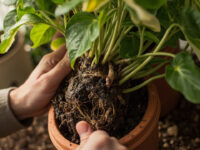
Confirm it: slide the plant out of its pot. Roots circling the outside in a dense mat, or roots poking out the drainage holes, mean it has run out of room. Growth typically stalls gradually over several months as this develops, rather than stopping suddenly.
Fix it: repot into a container 2 inches larger in diameter, tease apart the outer roots a little before setting it in fresh potting mix. Spring through summer is the easiest time to do this, since that is when the plant is naturally inclined to grow into the new space.
If the roots looked fine, the soil itself might be the problem instead.
3. Depleted or wrong soil
Confirm it: if it has been more than a year since repotting or feeding, and the mix looks compacted, gray, or pulls away from the pot’s edge in a dry ring, the nutrients are likely used up. Old peat-heavy mixes also break down and hold less air over time.
Fix it: feed with a balanced houseplant fertilizer at quarter to half strength every 4 to 6 weeks during spring and summer, skip or cut way back in winter. If the mix itself looks spent, a full repot into fresh potting soil solves both problems at once.
Now for the cause everyone jumps to first, and why it is usually not the real issue.
4. Overwatering
Confirm it: stick a finger 2 inches into the soil. If it is consistently wet, feels cold and heavy, or the pot has no drainage hole, overwatering is a real suspect, especially if you also see yellowing lower leaves or a sour, swampy smell at the soil line.
Fix it: let the top 1 to 2 inches dry out completely between waterings, and never let the pot sit in standing water. If roots are brown and mushy when you check them, trim away the rotten parts and repot into fresh, dry mix.
Underwatering causes a stall too, but it looks almost nothing like this.
5. Underwatering
Confirm it: leaves that are curling inward, going crispy at the tips, or the whole plant looking limp right before a scheduled watering points here. Soil that has pulled completely away from the pot’s sides is a strong tell.
Fix it: water thoroughly until it runs from the drainage holes, then return to a regular schedule, usually every 7 to 10 days indoors, adjusted for your home’s humidity and light. Pothos recovers from underwatering faster than from overwatering.
Sometimes the plant is not struggling at all, it is just doing what pothos does in the cold months.
6. Seasonal dormancy
Confirm it: if this started in late fall or winter and the plant otherwise looks healthy, firm leaves, no yellowing, no dropping, it is probably just resting. Shorter days and cooler indoor temperatures slow pothos down naturally.
Fix it: nothing needs fixing. Keep watering lightly, hold off on fertilizer, and expect growth to pick back up on its own once days lengthen in spring.
One more overlooked cause worth ruling out before you assume the worst.
7. Temperature stress
Confirm it: pothos stalls below about 55°F and above roughly 90°F, and it hates cold drafts from windows or doors, or hot air blasting from a vent. Check if the plant sits near either.
Fix it: move it to a spot that stays between 65 and 80°F, away from drafts and heat sources, and growth should resume within a couple of weeks.
Once you know which cause fits, the next step is telling them apart when two seem to overlap.
How to Tell the Causes Apart
Where the symptom starts matters more than most people think. Low light shows up as small, far-apart new leaves at the vine tips, with older growth staying normal.
Overwatering hits older, lower leaves first, turning them yellow and sometimes mushy at the base.
Underwatering affects the whole plant evenly, curling and crisping leaves regardless of age.
Rootbound plants dry out unusually fast between waterings, often within a day or two, because there is more root than soil to hold moisture.
Dormancy is the odd one out, since nothing looks wrong at all, the plant just sits still.
With a cause narrowed down, the real question is whether the plant bounces back.
Will It Recover?
Low light and temperature stress reverse fully and fast once conditions improve, often within 3 to 6 weeks you will see new, larger leaves.
Rootbound and depleted soil recover well after repotting, usually resuming visible growth within a month during the growing season.
Underwatering bounces back within a week or two of consistent watering, and existing crispy leaf tips will not heal but new growth will be normal.
Overwatering is the one to watch closely. Caught early, before roots rot, recovery is straightforward. If most roots are brown and mushy, cut your losses on the worst-affected stems, save any firm, green cuttings by rooting them in water, and start fresh rather than nursing a badly rotted root system.
Dormancy needs no recovery, just patience.
Prevention going forward is easier than any of these fixes.
How to Keep It From Happening Again
Give it real light as the baseline, since almost every other problem gets forgiven when light is adequate. Bright, indirect light is worth more than a perfect watering schedule.
Water by feel, not by calendar, checking the top 2 inches of soil before every watering.
Repot every 12 to 18 months, or sooner if roots circle the pot, and feed lightly during spring and summer only.
Keep it away from cold windowsills in winter and hot vents year-round.
Check all of that against your own plant with the list below.
Diagnosis Checklist
- Check the light first: if the plant sits more than 6 to 8 feet from a window, or the window faces north with curtains often drawn, suspect low light before anything else.
- Slide the root ball out of the pot: if roots circle the outside in a dense mat or poke through drainage holes, it is rootbound.
- Press a finger 2 inches into the soil: if it is wet and heavy, suspect overwatering, if it is bone dry and pulled from the pot’s edge, suspect underwatering.
- Look at which leaves are affected: lower and older leaves yellowing means overwatering, the whole plant curling evenly means underwatering, only new tip growth looking small means low light.
- Smell the soil at the base: a sour or swampy smell confirms root rot, not just excess water.
- Note the season: if the stall began in late fall or winter and the plant otherwise looks healthy, it is likely dormancy, not a problem.
- Check placement near drafts or vents: cold windows and hot air vents both stall growth independent of watering or light.
- Recall the last repot or feeding date: past 12 to 18 months with no repot, or no fertilizer all growing season, points to depleted soil.
Match what you found to the fix above, and give it a few weeks before you judge the results.
Pothos is forgiving. Get the light and water right, and it almost always finds its way back to growing.