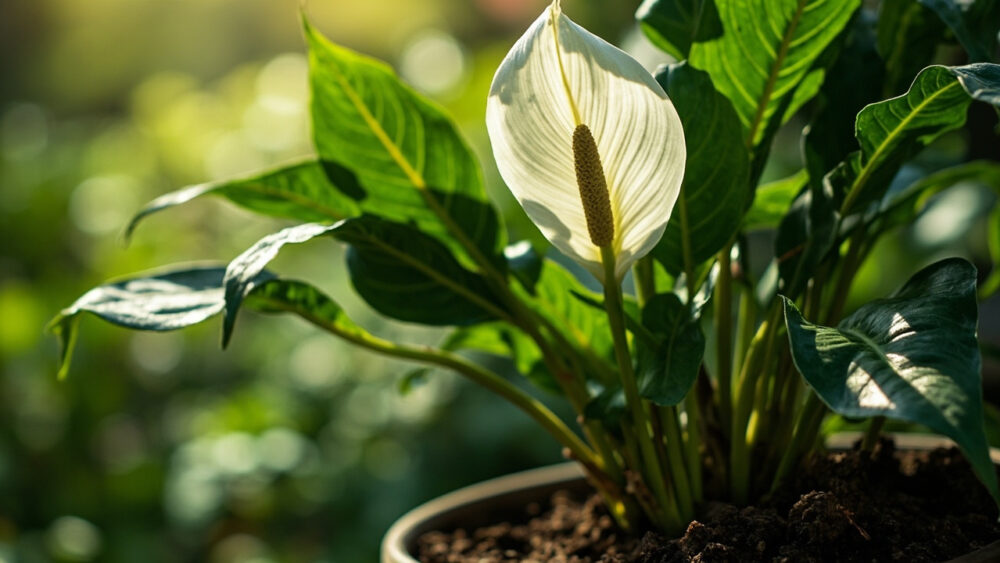
A drooping peace lily is almost always thirsty. This plant wilts dramatically the moment its soil dries out, and a good soak usually brings it back within a few hours to a day. But if you water it and it droops again next week, or the leaves stay limp even in soaked soil, something else is going on.
Most people assume drooping always means underwatering, and that guess is right often enough that it becomes a bad habit. Overwatering causes the exact same limp, sad look, and pouring on more water when the roots are already rotting is how a fixable plant becomes a dead one. The leaf itself gives you clues most people miss entirely: which leaves droop first, whether the soil is bone dry or swampy, and whether the pot feels lighter or heavier than it should.
Below is every real cause, ordered by how often it actually happens, with the exact test to confirm it and the fix. Save the diagnosis checklist at the bottom, it walks you through this at the plant in under two minutes.
Causes of a Drooping Peace Lily, Most to Least Likely
1. Underwatering (soil bone dry)
Confirm it: stick a finger 2 inches into the soil. If it is dry all the way down and the pot feels noticeably light when you lift it, this is your answer. Peace lilies droop as a dramatic, visible cry for water, that is actually their signature move.
Fix it: water thoroughly until it runs out the drainage holes, then let the pot sit in a saucer of water for 15 minutes so the dried-out root ball fully rehydrates. The leaves typically stand back up within 4 to 12 hours.
If that describes your plant, you are done, but read on before you assume every future droop is the same story.
2. Overwatering or root rot (soil wet, still droopy)
Confirm it: the soil is damp or wet, but the leaves are limp anyway, sometimes with yellowing lower leaves or a sour, swampy smell at the soil surface. Roots that have rotted can no longer pull up water even though it is right there.
Fix it: pull the plant out and inspect the roots. Healthy roots are firm and pale; rotted ones are brown, mushy, and slip off when you tug. Trim away the rotten roots with clean scissors, let the remaining root ball air out for an hour, and repot into fresh, well-draining potting mix in a pot with drainage holes.
This one is the trickiest to catch because the fix is the opposite of what your instinct tells you.
3. Underpotting or being severely rootbound
Confirm it: the plant droops within a day or two of watering even though you are watering on schedule, and roots are visible circling the surface or poking out the drainage holes. A rootbound plant dries out fast because there is barely any soil left to hold moisture.
Fix it: size up one pot size, roughly 2 inches larger in diameter, and repot with fresh soil. Do this in spring or summer when the plant is actively growing if you can.
A plant that droops fast after watering is telling you it has outgrown its home.
4. Low humidity or hot, dry air
Confirm it: soil moisture is fine, roots are healthy, but leaf edges look slightly crispy or the droop is worse near a heating vent, radiator, or a sunny window in summer. Peace lilies come from humid tropical understories and sulk in dry indoor air.
Fix it: move it away from vents and direct hot afternoon sun, group it with other plants, or run a humidifier nearby. Misting helps briefly but does not solve the underlying air dryness.
Environment problems are slower and subtler than watering problems, which is exactly why they get missed.
5. Transplant shock or recent repotting
Confirm it: you repotted, divided, or moved the plant in the last one to two weeks, and drooping showed up shortly after with otherwise normal soil moisture. Disturbed roots temporarily can’t keep up with the leaves’ demand for water.
Fix it: keep soil evenly moist, skip fertilizer for a few weeks, and give it steady indirect light. Most plants snap out of this within 1 to 3 weeks as new roots establish.
If none of these quite match what you are seeing, the tell-apart guide below will pin it down.
6. Cold shock or a chilly draft
Confirm it: the plant sits near a drafty window, exterior door, or was recently exposed to temperatures below 50°F, and the droop appeared suddenly, sometimes with darkened or water-soaked-looking patches on the leaves. Peace lilies are tropical and genuinely dislike cold air.
Fix it: move it away from the draft or window glass immediately and keep it somewhere steady between 65 and 80°F. Damaged leaves won’t heal, but new growth will be fine once conditions improve.
Cold damage looks alarming, but it is one of the easier causes to rule in or out.
How to Tell the Causes Apart
Where the droop starts matters. Underwatering droops the whole plant fairly evenly. Root rot often shows yellowing lower, older leaves first, with mushy dark stems near the soil line. Cold damage shows as localized dark or translucent patches on whichever leaves touched the cold surface or draft.
Check old versus new growth too. Transplant shock and underpotting tend to hit the whole plant generally, while nutrient or chronic overwatering issues usually show up as yellowing on the oldest, lowest leaves first.
The soil test settles most arguments. Dry and light means water it. Wet, heavy, and smelly means check the roots. Damp but otherwise normal means look at humidity, temperature, or pot size instead.
Once you know which category you are in, the recovery odds get a lot more specific.
Will It Recover?
Underwatering has the best odds by far. A dry, droopy peace lily that gets a thorough watering almost always stands back up within a day, with zero lasting damage, even if you let it get dramatically limp before catching it.
Root rot is a real gamble. Catch it early, with just a few brown roots, and trimming plus repotting saves the plant. Catch it late, with most of the root system black and mushy, and the plant likely won’t make it, though you can sometimes save a healthy offshoot or division if the crown is still firm.
Cold damage and transplant shock rarely kill the plant outright, but damaged leaves are permanent. Trim them off once new growth appears and don’t expect them to green back up.
Being honest about cutting losses: if the crown at the soil line is soft, dark, or smells rotten, no amount of repotting fixes that. That is the one sign that means starting over with a new plant.
Prevention is genuinely easier than any of these fixes, so let’s get the routine right.
How to Keep It From Happening Again
Water on the plant’s schedule, not the calendar. Peace lilies actually do well with a slight droop-and-revive rhythm between waterings, it is a built-in signal, but check soil moisture with your finger before assuming it needs water.
Always use a pot with drainage holes, no exceptions. A saucer catches the runoff; a sealed decorative pot with no drainage is where most root rot starts.
Keep it in bright, indirect light, out of direct hot sun and away from cold drafts or heating vents. Repot every 1 to 2 years as roots fill the pot, sizing up gradually rather than jumping to a much bigger container.
Get the routine right and this plant is genuinely low-drama, the drooping-recovery cycle is just how it talks to you.
Diagnosis Checklist
- Lift the pot: if it feels unusually light, suspect underwatering first.
- Stick a finger 2 inches into the soil: bone dry means water it now, wet or soggy means check the roots.
- If soil is wet, tip the plant out and inspect roots: firm and pale is healthy, brown and mushy is rot.
- If roots are rotten, trim the dead ones, let the root ball air dry an hour, then repot into fresh, well-draining soil.
- If soil moisture is normal but leaves still droop, check for root-bound roots circling the pot’s edge or draining holes.
- If rootbound, size up one pot size with fresh soil, ideally during active spring or summer growth.
- Check leaf damage for dark, water-soaked, or translucent patches: this points to recent cold exposure or a draft.
- Check placement: move away from heating vents, direct hot sun, and drafty windows or doors.
- If you repotted or divided the plant in the last two weeks, give it time: keep soil evenly moist and skip fertilizer for a few weeks.
- Inspect the crown at the soil line: soft, dark, or foul-smelling means the plant likely won’t recover, healthy and firm means your fix will work.
Run through these ten checks and you will know exactly which fix applies before you even reach for the watering can.
Most drooping peace lilies are simply thirsty, so the good news outnumbers the bad news here.