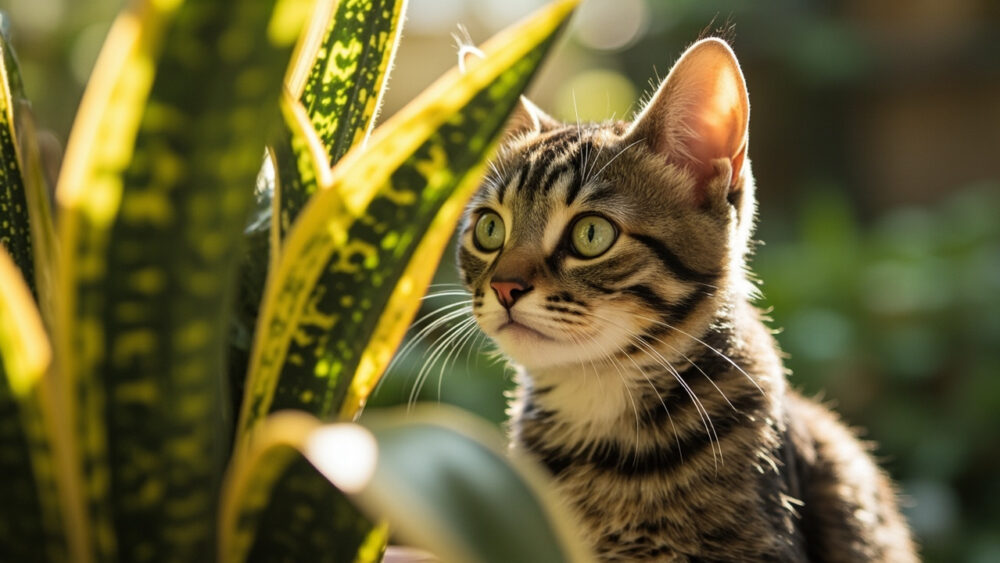
Yes, snake plant (Sansevieria, now often sold as Dracaena trifasciata) is toxic to cats. It contains saponins, the same class of compound found in a long list of common houseplants, and it will typically cause mouth irritation, drooling, and stomach upset if a cat chews on it. It is not the most dangerous plant in your house, but it is not a safe one either, and how bad the reaction gets depends on how much your cat actually ate.
That “how much” question matters more than most owners realize, and it is the first loop I want to open. A cat who takes one curious nibble and walks away is having a very different experience than a cat who shreds a leaf and eats half of it, and I will walk you through how to tell which situation you are actually looking at.
I will also cover the signs to watch for, exactly what to do in the next ten minutes if you catch your cat mid-bite, and a handful of cat-safe look-alikes that give you the same upright, architectural look without the risk. Save-able quick-reference card is at the bottom, the kind of thing worth screenshotting before you put the plant back on the shelf.
The Plain Answer: Toxic, Not Deadly
Snake plant is on the ASPCA’s list of plants toxic to cats, and for good reason. The saponins in its leaves are irritating to the mouth and digestive tract.
Most cases are mild. A cat that mouths a leaf tip or takes one bite usually ends up with some drooling and maybe a little vomiting, then recovers on its own within a day. Serious, life-threatening reactions from snake plant alone are rare.
That does not mean you can shrug it off, though.
Which Part, and How Much, Actually Changes the Outcome
Every part of the plant contains the same saponins, leaves, stems, and the thick fibrous roots if your cat ever digs into the pot. There is no “safe part” to leave exposed.
Exposure level is what actually shifts the answer. A single lick or a small nibble on a leaf tip almost always means mild, self-limiting irritation. A cat that chews through several inches of leaf, or one that seems to have made a habit of grazing on the plant regularly, is dealing with a bigger dose and a bigger risk of ongoing vomiting or dehydration.
Kittens and small cats are worth extra caution here, simply because the same bite is a larger relative dose for a smaller body.
So the real question is never just “is it toxic,” it is “what actually happened at your plant,” which is exactly what the signs below help you figure out.
Signs Your Cat Ate Snake Plant
Watch for these in the hours after suspected exposure:
- Drooling or foaming at the mouth
- Pawing at the mouth or face
- Vomiting
- Diarrhea
- Loss of appetite
- Visible chew marks on a leaf, or leaf fragments nearby or in vomit
If you assumed a toxic plant means dramatic, immediate symptoms, that guess is usually wrong here. Most snake plant reactions look more like a mildly upset stomach than an emergency, which is exactly why it is easy to under-react.
Mild-looking does not mean ignore it, and that is the next thing to get right.
What to Do If Your Cat Ate Snake Plant
Call your veterinarian or an animal poison control line right away for any suspected ingestion, even if your cat seems fine. Do this before you try anything at home.
While you are on the phone, or on your way to the clinic, gather what you can:
- How much of the plant is missing or chewed, roughly
- When you think it happened
- What symptoms you have seen so far, even mild ones
- A photo of the plant, or the plant tag if you still have it, so the vet knows exactly what you are dealing with
Do not induce vomiting, give milk, give any home remedy, or wait to “see how it goes” before calling. Let the vet make that call with full information, not you guessing at a dose or a treatment on your own.
Once you have made that call and know your cat is being looked after, it is worth thinking about whether this plant belongs where it was.
Cat-Safe Look-Alikes Worth Growing Instead
If you love the upright, sculptural look of snake plant but have a cat that treats every leaf like a chew toy, you do not have to give up the style.
Cast iron plant (Aspidistra elatior) gives you similarly tough, dark green, strappy leaves and is considered non-toxic to cats.
Spider plant (Chlorophytum comosum) is also non-toxic and, ironically, cats often prefer it to almost anything else in the house, so it can double as a decoy that pulls attention away from riskier plants.
Parlor palm and areca palm are both cat-safe options if you want height and a lusher look rather than the stiff, vertical lines of a Sansevieria.
None of these need to replace your snake plant entirely, moving it out of reach or into a room your cat cannot access solves the problem just as well.
Snake Plant: Quick Reference
- Toxic to cats: yes, due to saponins found throughout the plant
- Toxic parts: leaves, stems, and roots, no part is safe
- Typical severity: mild to moderate, drooling and stomach upset are most common, serious reactions are uncommon but possible with large amounts eaten
- Common signs: drooling, pawing at the mouth, vomiting, diarrhea, reduced appetite
- What to do: call your veterinarian or animal poison control immediately for any suspected ingestion, no home treatment or induced vomiting
- Safer alternatives: cast iron plant, spider plant, parlor palm, areca palm
Keep this plant, but keep it out of paw’s reach, and your cat gets to admire it from a safe distance.
That is really all snake plant safety comes down to: know the risk, watch for the signs, and call your vet without hesitation if you are ever unsure.