Here is how to care for peace lily in one breath: bright, indirect light, water only when it starts to droop or the top inch of soil goes dry, and keep it somewhere that never drops below 55°F. Get those three things right and the plant more or less takes care of itself. Get them wrong and you will see it, fast, because a peace lily is one of the most honest plants you can own.
Most people kill this plant with kindness, not neglect. There is one watering habit that quietly rots the roots of more peace lilies than drought ever does, and I will name it below.
There is also a droop everyone panics over that is not actually an emergency, plus the real answer to the question you are about to ask right after this one: why is it not flowering. Stick around, because the save-able Peace Lily at a Glance card is waiting at the very bottom, and it is worth screenshotting before you put the phone down and go touch the soil.
Light, Placement, and Temperature
Peace lilies want bright, indirect light, the kind you get a few feet back from an east or north window, or filtered through a sheer curtain on a south or west one. Direct sun scorches the leaves into pale, bleached patches that never green back up. Too little light and the plant survives but simply refuses to flower.
They are tropical, so they hate the cold. Keep them above 55°F, ideally in the 65 to 80°F range, and away from drafty windows, exterior doors, and heating vents that blast dry air directly on the leaves.
Placement matters as much as light quality itself.
Watering: The Habit That Ruins Most Peace Lilies
If you assumed a wilting peace lily means it needs water immediately, that guess is right about half the time, and the other half it is exactly the opposite problem. Overwatering is the real killer here, not underwatering. Soggy, always-wet soil suffocates the roots and they rot silently below the surface while the top growth still looks fine, for a while.
The test that actually works: stick a finger an inch or two into the soil. If it is dry there, water thoroughly until it runs from the drainage holes, then let the pot drain completely. If it is still damp, wait.
Most peace lilies want water roughly once a week, sometimes every 10 days in winter when growth slows. A droopy plant that perks back up within a few hours of watering was simply thirsty, that is normal and not a crisis. A droopy plant sitting in wet soil is a different, more serious problem, and it usually means you need to pull it from the pot and check the roots for brown, mushy tissue.
Get the water routine right and the soil underneath needs to back it up.
Soil and Feeding
Use a well-draining potting mix, a standard indoor potting soil is fine, ideally with some perlite or bark mixed in so water moves through instead of pooling. Whatever pot you use needs a drainage hole. No exceptions, this is where root rot starts for people who otherwise water correctly.
Feed lightly. A balanced houseplant fertilizer diluted to half strength, applied every 6 to 8 weeks during spring and summer, is plenty. Skip feeding in fall and winter when the plant is not actively growing.
Over-fertilizing shows up as brown, crispy leaf tips, a common mistake people mistake for underwatering and then make worse by adding more water on top of the salt buildup.
Feed too much and the leaf tips will tell you before anything else does.
Pruning, Repotting, and Cleaning
Snip off yellowing or brown leaves at the base with clean scissors as they appear, this is routine maintenance, not a sign of failure. Spent flowers turn green then brown; cut the whole stem off near the soil once a bloom is done.
Repot every 1 to 2 years, or whenever you see roots circling tightly at the bottom of the pot or the plant wilting again within a day or two of watering, a sign it has outgrown its space. Go up one pot size, not three, and spring is the best window for this.
Wipe the broad leaves down with a damp cloth every few weeks. Dust blocks light and slows growth more than people expect from something so simple.
A clean, right-sized plant handles problems better when they show up, and they will.
The Problems Most Likely to Show Up
Brown leaf tips usually mean fertilizer buildup or tap water high in minerals and chlorine; let water sit out overnight before using it, and flush the soil thoroughly every few months. Yellow leaves scattered through the plant, especially older lower leaves, are often just normal aging, but yellowing across the whole plant paired with wet soil points to overwatering.
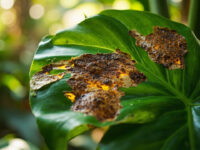
Brown spots with a papery, dry texture usually mean too much direct sun or low humidity. Move the plant back from the window and consider a nearby humidity tray or occasional misting, especially in dry winter air.
Pests are uncommon indoors but watch for mealybugs, small white cottony clusters at leaf joints, or spider mites, which show up as fine webbing and stippled leaves. Wipe pests off with a damp cloth or treat with insecticidal soap, following the product label exactly.
Peace lilies are toxic to pets and people if chewed or swallowed, causing mouth irritation, drooling, and vomiting from calcium oxalate crystals in the leaves. If a pet or child has eaten part of the plant, contact a veterinarian or poison control rather than waiting to see what happens.
Once you have ruled out the common culprits, the plant usually tells you plainly what it actually wants.
Why It Is Not Flowering, and What Thriving Actually Looks Like
Here is that follow-up question answered honestly: peace lilies do not need direct sun to survive, but they do need real brightness to bloom. A plant tucked in a dim corner will grow lush, glossy leaves for years and never send up a single white flower. That is not a disease, it is a light problem, and moving it closer to a bright window is the entire fix.
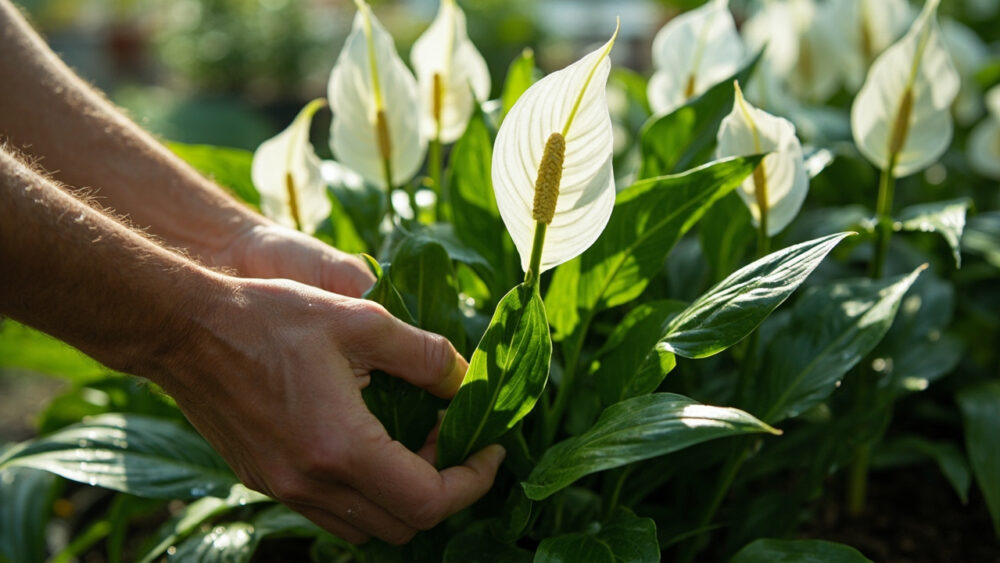
A genuinely thriving peace lily has deep green, glossy leaves standing upright rather than drooping, steady new growth from the center, and at least occasional white blooms during spring and summer if the light is adequate. Mature plants that get good bright light often flower two or three times a year.
No single leaf tells the whole story, but a plant with upright leaves and new shoots is a plant doing exactly what it should.
That is the whole system, now here is the version you actually keep.
Peace Lily at a Glance
- Light: bright, indirect light, a few feet from an east or north window, or filtered light from a south or west one, never direct sun.
- Temperature: 65 to 80°F, never below 55°F, kept away from drafts and heating vents.
- Watering: check the top 1 to 2 inches of soil, water thoroughly when dry, roughly weekly in summer and every 10 days in winter.
- Soil: well-draining potting mix with perlite or bark, always in a pot with drainage holes.
- Feeding: balanced fertilizer at half strength every 6 to 8 weeks in spring and summer, none in fall and winter.
- Repotting: every 1 to 2 years in spring, or when roots circle the pot or wilting speeds up between waterings.
- Warning sign to watch: drooping with wet soil means overwatering and possible root rot, not thirst.
If you remember nothing else, remember this: a drooping peace lily in dry soil just wants water, and a drooping peace lily in wet soil is already in trouble.
Check the soil before you reach for the watering can, every single time.