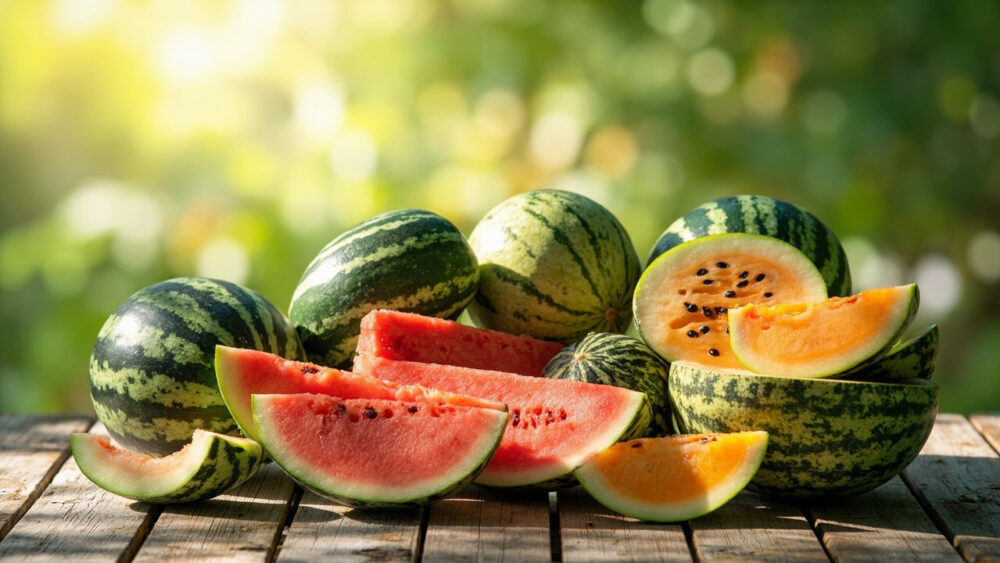
The fastest way to narrow down watermelon varieties is to decide seeded or seedless first, then icebox or full-size second. That one choice eliminates most of the list instantly and tells you how much garden space you actually need to give up this summer.
Most first-time growers reach for the biggest striped melon on the seed rack because it looks like the classic Fourth of July watermelon, then get frustrated when it needs 90 days and a sprawling 12 feet of vine to get there. Meanwhile there is a small, thin-rinded orange-fleshed type that most experienced gardeners quietly grow instead, because it ripens in half the time and fits a raised bed.
Down at the bottom of this list, number 13 is the one almost everyone misjudges by its color alone, and I will walk through exactly why that guess is wrong. The final entries and a real choosing method, the one I actually use when someone asks me what to plant, are waiting at the bottom too.
Classic Full-Size Reds
These are the picnic-table watermelons: big, sweet, red-fleshed, and needing real room to run.
1. Crimson Sweet
The reliable all-rounder that most seed catalogs use as their baseline for comparison. It produces 15 to 25 pound round melons with dark green stripes, ripens in about 80 to 85 days, and tolerates heat and some drought better than most heirlooms.
2. Charleston Gray
The old Southern standard, bred for tough rind and long storage rather than fast turnaround. Melons run 20 to 35 pounds, oblong, gray-green skin, and the thick rind means it ships and stores well but takes a full 85 to 90 days to get there.
3. Jubilee
The heirloom for people who want history and flavor over convenience. It is a 1963 introduction, needs 90-plus days, gets genuinely huge at 25 to 40 pounds, and rewards patient growers with dense, very sweet flesh.
4. Congo
The under-planted heirloom most seed swaps forget about. Dark green rind, bright red flesh, excellent disease resistance for an older variety, and a flavor that a lot of long-time gardeners rank above Crimson Sweet once they have grown both.
If you have the space and the season length, this group will not disappoint, but if your yard is small, the next category solves that problem completely.
Icebox and Small-Space Types
These fit raised beds, containers, and short seasons, and they are the ones I actually recommend to anyone growing their first watermelon.
5. Sugar Baby
The gateway watermelon for a reason. Round, 8 to 10 pound melons, dark near-black rind, sweet red flesh, and it matures in about 75 to 80 days on vines that stay manageable at 6 to 8 feet.
6. Golden Midget
The fastest watermelon most people have never tried. Small 3 to 4 pound melons ripen in as little as 65 to 70 days, and the rind turns golden yellow when ripe, which removes all the guesswork of thumping and sound-checking.
7. Mini Love
The container grower’s pick, a hybrid icebox type bred specifically for compact vines and personal-size 4 to 7 pound fruit. Seedless, crisp, consistently sweet, and forgiving of shorter, cooler seasons than full-size reds tolerate.
8. Blacktail Mountain
The cold-climate answer for gardeners north of zone 6 who assumed watermelon was off the table. It matures in about 70 days, handles cooler nights better than almost any other variety, and still delivers real sweetness in a 6 to 10 pound round melon.
Small vines do not mean small flavor, but the next group is where flavor gets genuinely unusual.
Yellow and Orange Flesh
Same watermelon plant, completely different eating experience once you cut inside.
9. Yellow Crimson
The traditional red-rind lookalike that hides bright yellow flesh underneath. It tastes closer to honey than a red watermelon does, matures around 80 to 85 days, and tends to surprise people at a potluck more than any other variety on this list.
10. Orangeglo
The deep orange heirloom with flesh that genuinely tastes like it was bred for aroma, not just sugar. It runs large at 20 to 30 pounds, needs a full 85 to 95 day season, and the vines are vigorous enough that they need real room.
11. Tendersweet Orange
The compromise pick between novelty and practicality. Smaller than Orangeglo at 15 to 20 pounds, matures a bit faster around 80 days, and holds its orange color and sweetness reliably even in average garden soil.
Color is the obvious hook here, but rind pattern is where the next real surprises show up.
Novelty and Specialty Rinds
These earn their spot for how they look in the field or on the counter, not just how they taste.
12. Moon and Stars
The rind you grow for the garden tour. Dark green skin covered in small yellow dots and one larger yellow moon, with red flesh underneath that is genuinely good, not just decorative. Vines get large and need 90-plus days, so this one is a commitment.
13. Densuke
The one people misjudge on sight, because the skin is nearly solid black with almost no stripe pattern, which makes most gardeners assume it is bitter, tough, or bred purely for looks. It is actually one of the sweetest, crispest red-fleshed watermelons you can grow, originally a prized Japanese variety, and it needs a long 90 day season plus consistent water to hit that reputation.
14. Cream of Saskatchewan
The pale-flesh heirloom from the Canadian prairies, bred for short, cool seasons rather than show. Round 8 to 10 pound melons, near-white flesh, surprisingly sweet, and it matures in about 80 days even where summers run short.
15. Moon and Stars Yellow-Flesh
The rarer sibling of entry 12, same dotted rind pattern, but yellow flesh instead of red. Harder to find seed for, worth hunting down if you already loved the original and want the novelty twice over in the same bed.
How to Choose the Right One
Run through these in order and you will land on the right watermelon in under a minute.
- Measure your space first: under 50 square feet of sprawl room means an icebox type like Sugar Baby, Mini Love, or Blacktail Mountain, not a full-size heirloom.
- Count your frost-free days next: anything under 80 days available rules out Jubilee, Charleston Gray, Orangeglo, and Densuke.
- Decide what you are growing it for: eating fresh and fast favors the icebox group, shows and conversation favor Moon and Stars or Densuke, storage favors Charleston Gray.
- Be honest about your water access: yellow and orange flesh types and Densuke specifically punish inconsistent watering with duller flavor.
- Check your zone for cold tolerance: Blacktail Mountain and Cream of Saskatchewan are the two to trust north of zone 6.
- Pick one variety this year, not three: watermelon takes real space, and one well-grown melon beats three stressed, undersized ones.
Any variety on this list will reward you if the season length and space actually match what it needs.
Match the melon to your garden honestly, and the flavor takes care of itself.