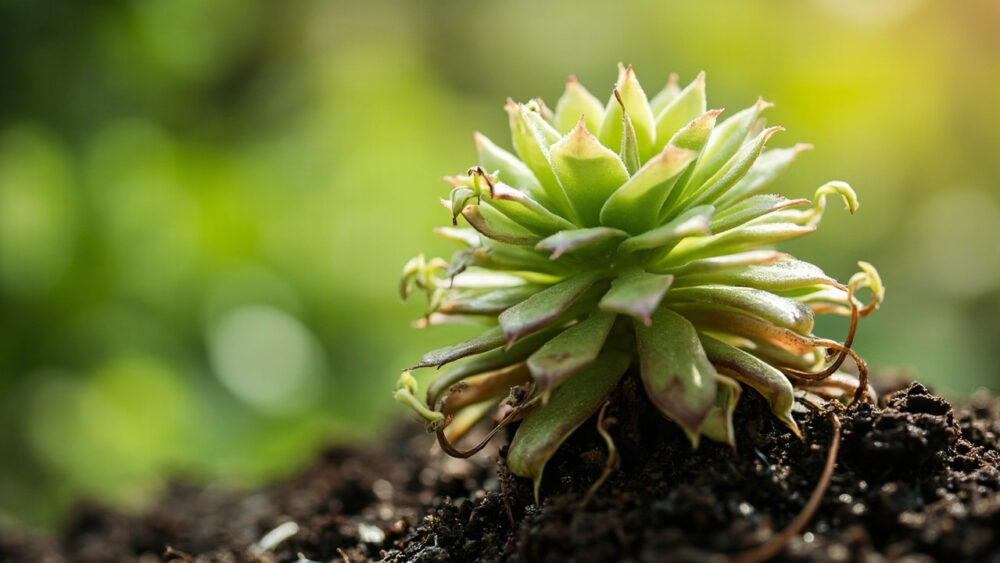
An overwatered mother of thousands shows mushy, translucent lower leaves and a soft, dark, or collapsing base first, and the fix is the same one that saves most succulents: stop watering, pull it from any soggy soil, check the roots, and repot dry if the stem or roots are rotting. Catch it while the leaves are just soft and the roots are still white, and this plant bounces back fast. Catch it after the main stem has gone black and mushy, and you are usually starting over from a leaf or plantlet.
Most people blame the watering can first, and half the time they are wrong. **Root rot from bad drainage** causes far more mother of thousands deaths than the actual amount of water poured on top, and a plant in fast-draining mix can shrug off more water than you’d think.
There is one detail on the plant that tells you exactly which cause you are dealing with, and it is not the leaves, it is where the damage starts. Whether this plant comes back at all depends on how far the rot has traveled up the stem, and I will give you the honest odds by stage further down. Keep going, because the two-minute diagnosis checklist you can run right now, standing next to the pot, is waiting at the bottom of this page.
What’s Actually Causing It, Most to Least Likely
1. Waterlogged Soil That Never Dried Out
This is the top cause, and it is usually a soil problem wearing a watering problem’s clothes. Confirm it by pressing a finger into the mix an inch down: if it feels wet, cold, or clumps like mud instead of falling apart, the soil is holding water far longer than a mother of thousands can tolerate. Regular potting soil, or a pot with no drainage hole, is almost always behind this.
The fix is to stop watering immediately and let the top two inches dry completely before you even think about the next drink. Longer term, repot into a cactus or succulent mix cut with perlite or pumice at roughly one part grit to two parts soil, in a pot with a real drainage hole.
Fixing the soil fixes the symptom, but only if the roots underneath haven’t already given up.
2. Root Rot From Standing Water
This is the consequence of cause one left unchecked, and it is the one that actually kills the plant. Confirm it by sliding the plant out of the pot and looking at the roots: healthy roots are white or light tan and firm, rotted roots are brown or black, mushy, and slip off in your fingers like wet thread.
The fix is to cut away every brown root back to healthy white tissue with a clean blade, let the cut ends air dry on a paper towel for a day or two, and repot into dry succulent mix. Do not water for at least a week after repotting.
How much you had to cut away tells you almost everything about the odds ahead.
3. Watering on a Schedule Instead of by Feel
A lot of overwatering isn’t one big mistake, it’s a habit. Confirm it by thinking back on your routine: if you water every Sunday regardless of how the soil feels, this is your cause even if no single watering seemed excessive.
The fix is to switch to checking the soil before every watering, not the calendar. Water only when the top two inches are fully dry, which in most homes stretches to every two to four weeks, longer in winter or low light.
Even a good soil mix can’t save a plant from a rigid schedule.
4. Pot Too Big for the Root System
An oversized pot holds far more wet soil than the roots can pull moisture from, so the center stays soggy long after the surface looks dry. Confirm it by comparing the plant’s root spread to the pot size: if there’s more than an inch or two of soil beyond the roots on any side, the pot is oversized.
The fix is to size down at the next repot, going only one or two inches larger in diameter than the current root ball, ever.
This one hides well because the surface can look perfectly dry while the danger zone below stays wet for days.
5. Low Light Combined With Normal Watering
In low light the plant uses water much slower, so a watering amount that would be fine in bright light becomes overwatering in a dim corner. Confirm it by checking placement: if the plant sits more than a few feet from a bright window, or gets no direct sun at all, this is likely compounding whatever else is going on.
The fix is to move it to bright, indirect or partial direct light and cut watering frequency to match the slower uptake.
Light and water are a pair here, and fixing only one half rarely holds.
6. Water Sitting in the Leaf Rosettes or Crown
Mother of thousands has a low, tight growth habit where water can pool at the base of the leaves or in the crown instead of running off. Confirm it by looking for a soft, discolored spot right where leaves meet stem, distinct from generalized mushy lower leaves.
The fix is to always water at the soil line, never overhead, and to tip the pot to drain any pooled water after a heavy rain if it lives outdoors.
That crown rot pattern is one of the clearest tells for separating causes, which is exactly where we’re headed next.
How to Tell the Causes Apart
Where the damage starts is your best clue. Rot beginning at the base or main stem and moving up points to root rot or waterlogged soil. Mushy spots isolated at the crown, right where leaves attach, point to water sitting in the rosette.
Old versus new growth matters too. Lower, older leaves turning soft and translucent first is classic overwatering. New growth emerging weak or pale, with older leaves fine, usually points elsewhere, often light or nutrients.
Check the pattern across the whole plant. Uniform mushiness everywhere suggests soaked soil and rot already spread through the roots. A single soft patch on one side often means localized crown or leaf-junction water damage rather than full root failure.
Once you know which pattern you’re looking at, the next question is the one that actually matters: does it come back.
Will It Recover?
Caught early is genuinely good news here. If leaves are just slightly soft, the base is firm, and roots are mostly white when you check them, trimming the rot and correcting the soil and watering routine usually brings the plant back within a few weeks.
Moderate rot, where you had to cut away a third or more of the root system but the main stem is still firm, has real odds too. Expect a slower recovery, sometimes a couple of months, and some leaf drop is normal as the plant redirects energy to root regrowth.
Be honest with yourself once the main stem has gone dark, mushy, or hollow feeling. That plant is not coming back, and further watering changes will not reverse it.
The workaround at that point is propagation, not resuscitation. Mother of thousands roots easily from a healthy leaf or from one of the tiny plantlets along the leaf edges, so take a few from any firm, undamaged growth before the rot reaches them.
Knowing when to cut losses is only half the job, keeping it from happening again is the other half.
How to Keep It From Happening Again
Get the soil right once and most future overwatering problems disappear on their own. A true cactus or succulent mix with generous perlite or pumice, in a pot with a drainage hole, forgives far more watering mistakes than any schedule ever will.
Water by feel, not by date. Push a finger or a wooden skewer into the soil, and only water when it comes out completely dry, which for most indoor mother of thousands plants lands somewhere between two and four weeks.
Give it real light. Bright indirect light or a few hours of gentle direct sun keeps growth active enough to actually use the water you give it, instead of letting it sit in the soil.
Size pots conservatively at each repot, and always water at the soil line rather than over the leaves.
Get all of that right and you’ll rarely need this page again, but here’s the fast version to run right now.
Diagnosis Checklist
- Press a finger into the soil one inch down: if it feels wet or muddy, stop watering immediately and move to the next check.
- Look at the lowest leaves: if they are soft, translucent, or mushy while upper leaves look normal, suspect overwatering or root rot.
- Check the main stem at the soil line: if it is firm, the plant is likely savable, if it is dark, mushy, or collapsing, prepare to propagate instead of repair.
- Slide the plant out of the pot and inspect the roots: white or tan and firm means good odds, brown, black, or mushy means active root rot.
- Trim any rotted roots back to clean white tissue with a sterile blade, then let the cuts air dry for one to two days before repotting.
- Repot into fresh cactus or succulent mix, in a pot no more than one to two inches wider than the root ball, with a drainage hole.
- Check for a soft spot specifically at the crown, where leaves meet stem: if that is the only damage, it points to pooled water rather than root rot.
- Confirm the plant’s light: if it sits far from a bright window, relocate it before you resume any watering.
- Withhold water for at least seven to ten days after repotting, then resume only when the top two inches test fully dry.
- If the main stem was already black and hollow, cut a few healthy leaves or plantlets from unaffected growth and start new plants rather than waiting on the original.
Run through those ten checks once and you’ll know exactly where your plant stands, no guessing required.
Fix the soil and the schedule, and this is one of the easier succulents to keep alive for years.