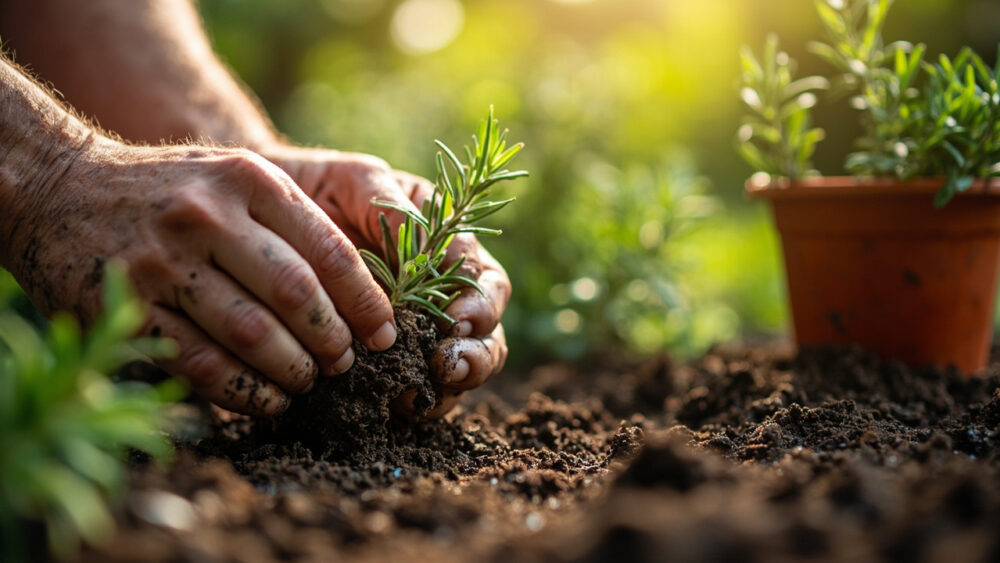
Growing rosemary from seed works, but you need to know this going in: germination is slow and unreliable, often 15 to 25 days, sometimes stretching to 6 weeks, and even under good conditions you can expect only 50 to 70 percent of seeds to sprout. Sow indoors 8 to 10 weeks before your last frost, keep the soil around 70°F, and expect a plant you can actually harvest from in 6 to 9 months, not weeks.
Most people who try this quit around week three because nothing is happening and they assume the seed is dead. That is usually wrong, and it is the first mistake we will fix.
There is also a sign at the seedling stage that scares people into overwatering, a hardening-off step almost everyone rushes, and an honest answer to the question you are already forming: why does the nursery rosemary at the garden center look so much better than yours? Stick around, because the full Rosemary at a Glance card is waiting at the bottom, saved-to-your-phone ready, once you have the reasoning behind each number.
When to Start Rosemary Seeds
Start indoors, not outside. Rosemary seed is slow and finicky enough without cold soil and outdoor pests working against it too. Direct sowing works only in warm climates, zone 8 and up, where soil has already reached 65 to 70°F.
For everyone else, start seeds indoors 8 to 10 weeks before your last expected frost date. That head start matters because rosemary seedlings grow at a crawl for the first two months regardless of what you do.
Rushing this stage is the mistake that ends most attempts before they even start.
Sowing Step by Step
- Medium: use a light, well-draining seed-starting mix, not garden soil or anything heavy and moisture-retentive.
- Depth: barely cover the seed, about 1/8 inch of mix on top, or press it into the surface and dust it lightly. Rosemary seed needs some light to germinate well.
- Moisture: mist rather than water heavily. Keep the mix evenly damp, never soggy.
- Temperature: maintain 65 to 75°F. A seedling heat mat helps a lot if your house runs cool.
- Light: bright light from day one, either a sunny south window or a grow light 2 to 3 inches above the tray once seeds are in.
Get the setup right once and you mostly just wait from here.
Germination: What to Expect and When to Actually Worry
Here is the part that trips people up. Rosemary germinates unevenly and slowly, typically 15 to 25 days, with stragglers popping up for weeks after that.
If nothing has emerged by day 14, you are not failing, you are on schedule. That is normal, not a warning sign.
The real warning signs are different: a sour or moldy smell from the tray, a fuzzy white coating on the soil surface, or seeds that have visibly rotted rather than simply not sprouted yet. That means the mix stayed too wet, not that you were too patient.
Once true worry-worthy signs show up, the fix is airflow and drier soil, not more water.
The real test of your nerve comes next, once the seedlings themselves start looking fragile.
The Seedling Stage: The Sign Everyone Misreads
Rosemary seedlings are thin, wiry, and slightly grayish green even when perfectly healthy. New growers see that pale, spindly look and assume the plant is starving or thirsty, so they water more and sometimes add fertilizer.
That guess is the second mistake that costs a season. Overwatering seedlings at this stage is the single most common way rosemary starts dies, through damping off, a fungal collapse at the soil line that kills seedlings almost overnight.
The actual fix is restraint. Let the surface dry to the touch between waterings, keep good airflow with a small fan on low, and thin overcrowded seedlings rather than feeding them.
Once your seedlings have 2 to 3 sets of true leaves and look sturdy rather than thread-thin, they are ready for the next transition.
Hardening Off and Transplanting
Do not skip or rush hardening off. Rosemary seedlings raised indoors have never felt real sun, wind, or temperature swings, and moving them outside cold will scorch or stall them.
Harden off over 7 to 10 days, starting with an hour of shade outside and building up gradually to a full day of sun and outdoor conditions.
Transplant outdoors only after your last frost has passed and soil has warmed to at least 60°F, with nighttime temperatures reliably staying above 45 to 50°F.
Space plants 18 to 24 inches apart. Rosemary gets shrubby and wants airflow around it; crowding invites fungal problems later.
Plant in full sun, at least 6 hours a day, in soil that drains fast. Rosemary in heavy, wet clay is a plant on borrowed time no matter how well you started it from seed.
Getting it in the ground is not the finish line, it is the start of the slow build to a real harvest.
Season-Long Care
Water new transplants regularly until established, then back off. Established rosemary is drought-tolerant and would rather be too dry than too wet.
Water only when the top 2 inches of soil are dry, and skip watering entirely during rainy stretches.
Skip heavy feeding. A light application of balanced fertilizer in spring is enough; rosemary grown too rich gets leggy and less aromatic.
Pinch growing tips regularly once the plant is 6 to 8 inches tall to encourage bushy growth instead of one long stem.
This is also the honest answer to that nursery comparison: garden center rosemary is usually a year or more old and grown from a cutting, not a seed started this spring, which is exactly why it looks fuller than yours right now.
Given time and the right conditions, your plant will catch up, and that catching up is what the next stage is about.
When Rosemary Reaches Harvest, and What Bloom Tells You
You can start snipping lightly once the plant is 6 to 8 inches tall, usually 6 to 9 months after sowing, taking no more than a third of the growth at a time so it keeps recovering.
Small pale blue, purple, or white flowers may appear in late spring to early summer once the plant matures, usually in its second year from seed. Bloom is a sign of a healthy, established plant, not a problem to fix.
Harvest in the morning after dew has dried, when the oils that carry rosemary’s flavor and scent are most concentrated.
From here, care is mostly maintenance, pruning for shape, watching drainage, and letting the plant do what it is built to do for years.
Rosemary at a Glance
- When to start seeds: indoors, 8 to 10 weeks before your last frost, at 65 to 75°F.
- Sowing depth: barely cover, about 1/8 inch, since seed needs light to germinate.
- Germination time: 15 to 25 days on average, sometimes up to 6 weeks, with uneven sprouting.
- Transplant timing: after last frost, once soil is at least 60°F and nights stay above 45 to 50°F.
- Spacing: 18 to 24 inches apart, in full sun with fast-draining soil.
- Watering: keep seedlings evenly moist but never soggy, then let established plants dry out between waterings.
- First harvest: light snipping once the plant hits 6 to 8 inches tall, typically 6 to 9 months from sowing.
Rosemary from seed rewards patience more than skill. Get the seedlings through their slow, fragile first two months, and the rest of the plant’s life is mostly easy from there.